

Cellar Spiders in Southern Maine:
Identification, Prevention, and Control
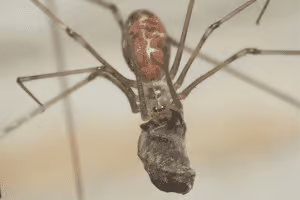
Cellar spiders are one of the most recognizable spiders in Southern Maine homes, mostly because of their striking appearance: an extremely small body suspended on legs that can span up to two inches. I find them regularly in the damp basements and crawl spaces of older homes throughout Biddeford, Westbrook, Standish, and Scarborough, where Maine’s humidity and abundant insect prey create ideal conditions year-round. They’re harmless, genuinely beneficial, and in modest numbers are not worth treating. When populations build throughout a structure, though, the underlying moisture and insect conditions driving that activity are worth a closer look. Browse the spiders pest library to compare other species found in Southern Maine, or contact me if you’d like a professional assessment.
What Are Cellar Spiders?
The longbodied cellar spider (Pholcus phalangioides) is the species most commonly found indoors in Maine. It belongs to the family Pholcidae and is sometimes called a daddy longlegs spider, though this name is also used for harvestmen, which are not spiders at all. The distinction matters: cellar spiders are true spiders with two distinct body segments, eight eyes, and silk glands. Harvestmen have a single fused body segment and produce no silk.
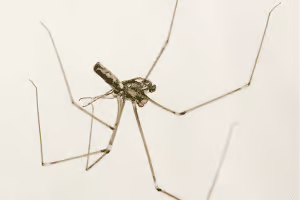
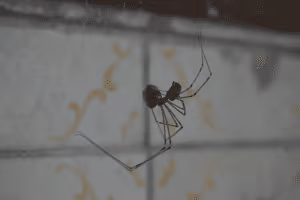
Cellar spiders have a small, pale tan to gray cylindrical abdomen and extremely long, delicate legs. They build loose, irregular webs in dark, undisturbed areas and hang upside down in them. When disturbed, they vibrate rapidly in the web, a behavior unique to this family. They feed on flies, mosquitoes, ants, and other small insects, and will also prey on other spiders, including species larger than themselves. According to the UMaine Extension cellar spiders fact sheet, cellar spiders are among the most frequently encountered indoor spiders in Maine and are completely harmless to people.
Signs of Cellar Spider Activity
Cellar spider activity is easy to spot because their webs and distinctive silhouette are hard to miss once populations are established:
- Loose, irregular webs in basement corners, crawl spaces, garage ceilings, and behind stored items
- Small pale gray spiders with disproportionately long, thin legs hanging upside down in webs
- Rapid vibrating movement in the web when the spider is disturbed
- Shed skins and small dark fecal spots below established webs
- Multiple egg sacs held loosely in the female’s jaws rather than attached to a surface
- Increasing web presence in damp utility areas, around pipes, and near foundation walls
In Biddeford and Scarborough homes with older basements, populations can build significantly through fall and winter as spiders settle into undisturbed corners and moisture levels remain high.
Risks in Southern Maine
Cellar spiders pose no meaningful risk to people or pets. They are not aggressive, their venom is harmless to humans, and bites are extremely rare. They cause no structural damage and do not contaminate food or surfaces.
The main concerns are cosmetic: accumulating webs in basements, crawl spaces, and corners give spaces an unkempt appearance, and for some people the spiders’ size and movement are simply unsettling. In commercial settings, visible webs represent a cleanliness concern regardless of the spider’s harmless nature.
As with house spiders, a heavy cellar spider presence is most usefully read as an indicator of underlying conditions. Persistent populations in a basement or crawl space almost always reflect elevated moisture and an active insect prey population, both of which are worth addressing directly. Cellar spiders feed on flies, fungus gnats, and other moisture-associated insects, so a significant cellar spider population often points to the same damp conditions that support those pest species.
Prevention Tips
Reducing cellar spider populations is primarily a matter of addressing the moisture and insect conditions that support them:
- Control moisture in basements and crawl spaces with dehumidifiers, improved ventilation, and attention to any water intrusion or drainage issues around the foundation
- Vacuum webs, egg sacs, and spiders regularly in basement corners, behind stored items, and along foundation walls
- Seal gaps around pipes, utility penetrations, windows, and foundation cracks to reduce entry for both spiders and their insect prey
- Address any fly or gnat activity in the structure, as these are the primary food source driving cellar spider populations
- Keep basement and crawl space storage organized and off the floor to reduce undisturbed harborage areas
- Improve lighting in persistently dark corners, as cellar spiders strongly prefer undisturbed, low-light areas
- Consider a year-round protection plan if spider activity is recurring season after season, as ongoing moisture and insect management is the most effective long-term approach
Commonly Confused With
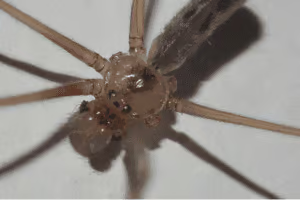
Cellar spiders are most commonly confused with harvestmen, which are also sometimes called daddy longlegs. The confusion is understandable since both have very long thin legs and a small central body, and both are frequently found in basements and damp areas. The differences are clear up close: harvestmen have a single fused oval body segment with no waist, while cellar spiders have two distinct body segments connected by a narrow stalk. Harvestmen produce no silk and build no webs. Cellar spiders always have a web nearby. Harvestmen are completely harmless arachnids that do not bite at all.
House spiders are occasionally confused with cellar spiders since both build cobwebs indoors, but house spiders are more compact with a clearly rounded abdomen and shorter, banded legs. House spiders tend to build webs higher up in room corners and around windows, while cellar spiders concentrate in lower, damper areas.
Professional Cellar Spider Control in Southern Maine
When cellar spider populations are heavy throughout a basement or crawl space, the most productive approach is treating the conditions driving them rather than the spiders themselves. I start every inspection by assessing moisture levels, entry points, and the insect prey activity supporting the population. From there I address the source, whether that’s a drainage issue, a fly or gnat infestation, or gaps in the building envelope, and apply targeted treatment only where evidence indicates it’s warranted. No broad spraying and no unnecessary chemicals. I’ve been doing this work for 16 years across Cumberland and York Counties, and as an Associate Certified Entomologist (A.C.E.) I can accurately assess what’s driving the activity and give you a clear picture of what it will take to resolve it. Visit my common pests control service page for a full overview, or contact me to schedule a free consultation.
Frequently Asked Questions
Both have very long thin legs and a small central body, but the differences are clear up close. Cellar spiders have two distinct body segments connected by a narrow stalk, and they always have a web nearby. Harvestmen have a single fused oval body with no waist and produce no silk at all. If there’s a web, it’s a cellar spider. If there’s no web and the animal moves with a distinctive bobbing walk, it’s a harvestman.
No. Cellar spiders are completely harmless to people and pets. Their venom is not medically significant, bites are extremely rare, and when they do occur the effects are milder than a mosquito bite. The persistent myth that cellar spiders are among the most venomous spiders in the world is false. Their fangs are capable of piercing human skin, but their venom poses no meaningful risk.
Recurring cellar spider populations almost always reflect persistent moisture and insect activity in the space. Cellar spiders don’t establish themselves without a reliable food supply, typically flies, fungus gnats, and other moisture-associated insects. Addressing the humidity and insect conditions in the basement is more effective long-term than repeatedly removing spiders.
Ready to Get Started?
If cellar spiders have taken over your basement or crawl space, reach out for a free consultation and I’ll assess the moisture and insect conditions driving the activity and put together a plan to address it.