

Rice Weevils in Southern Maine:
Identification, Prevention, and Control
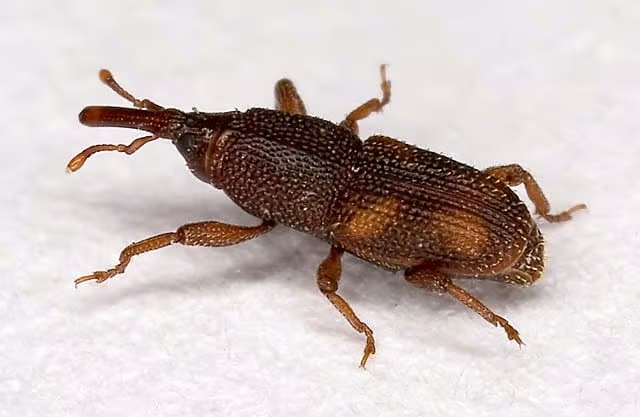
Rice weevils are one of the most significant whole-grain storage pests in Southern Maine, and like the granary weevil they have a biology that makes infestations easy to miss until they’re well established. Larvae develop entirely inside individual grain kernels, so a bag of infested rice or wheat can look completely normal until the round exit holes left by emerging adults begin to appear. I find rice weevils regularly in homes throughout Portland and Saco as well as in Scarborough and Westbrook, typically introduced through infested purchased grain products. The rice weevil and granary weevil are so similar that they’re regularly confused, but there are two practical differences worth knowing: rice weevils have four faint reddish or yellowish spots on their wing covers, and they can fly. As an Associate Certified Entomologist (A.C.E.) with 16 years of experience in the region, accurate identification shapes how I assess the scope of what needs to be inspected. Browse the stored product pests library to compare species, or contact me for identification and treatment help.
What Are Rice Weevils?
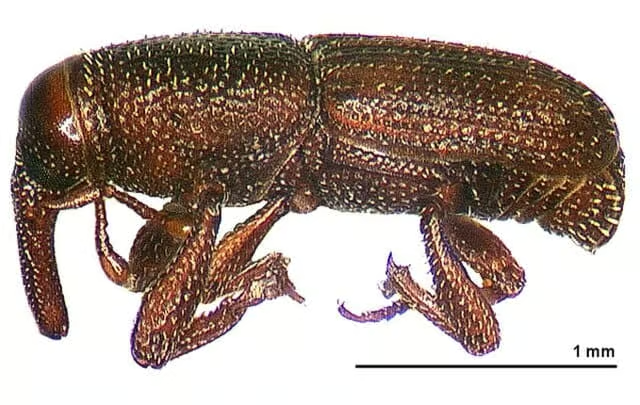
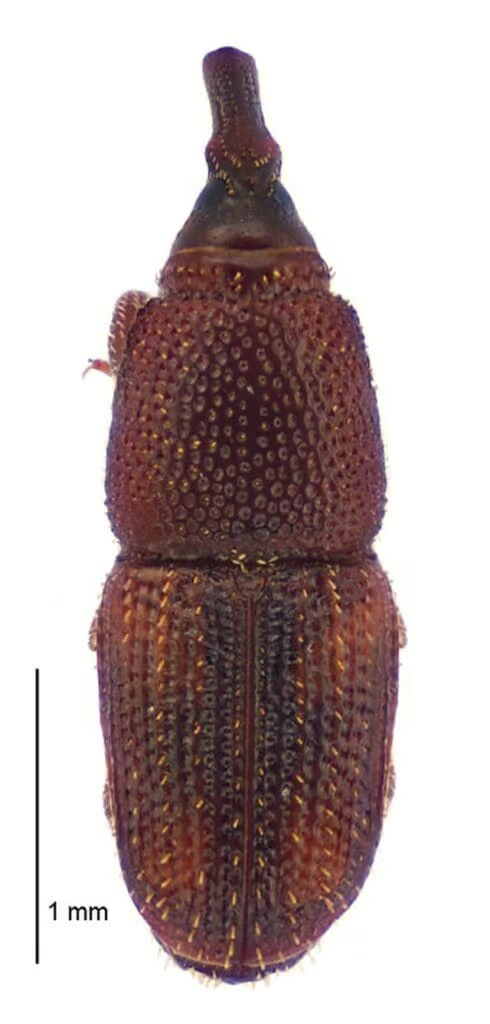
The rice weevil (Sitophilus oryzae) belongs to the family Curculionidae, the true weevils. Adults are 2 to 3 millimeters long, reddish-brown to dark brown, with the elongated snout characteristic of all weevils. The thorax shows a pattern of round pits. The four faint reddish or yellowish spots on the wing covers are the most reliable visual distinction from the granary weevil, which has no spots and is uniformly dark. Rice weevils have functional wings and can fly, unlike granary weevils.
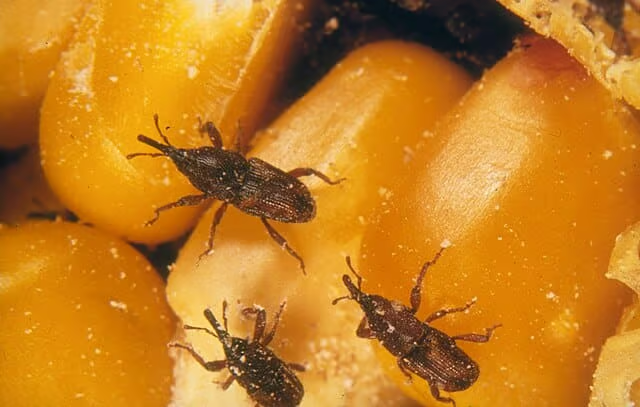
The larval biology is the same as granary weevils: females chew a small cavity into a whole grain kernel, deposit a single egg inside, and seal the hole. The larva develops entirely within the kernel, feeding on the interior starch and pupating inside the grain before chewing an exit hole to emerge as an adult. From the outside, infested kernels may look intact until exit holes appear. Rice weevils infest whole grains including rice, wheat, corn, barley, oats, and sorghum. They do not infest flour, pasta, or other processed or finely milled products, which distinguishes them from flour beetles. According to the UMaine Extension rice weevil fact sheet, rice weevils are among the most destructive stored grain pests in temperate regions and are most often introduced through infested commercially purchased grain products.
Signs of a Rice Weevil Infestation
Because larvae develop inside kernels invisibly, rice weevil activity is often more advanced than it appears when first discovered:
- Round exit holes in whole grain kernels, visible when grain is examined closely
- Hollow or lightweight kernels that feel empty when pressed between fingers
- Adult weevils crawling on pantry shelves, inside storage containers, or flying near windows
- Fine powdery frass accumulating at the bottom of grain storage containers
- A faint musty or off odor from heavily infested grain
- Flying adults found in areas removed from the obvious food source, since rice weevils can fly
- Activity concentrated in whole grain products rather than flour, cereal, or other processed goods
In Portland and Saco homes, activity is most commonly discovered when bulk grain products have been stored for an extended period or when adult beetles are noticed flying near windows during warmer months.
Risks in Southern Maine
Rice weevils pose no health risk to people or pets. They do not bite, sting, or spread disease. Grain contaminated with weevils, frass, and cast skins is unpalatable and should be discarded, but accidental consumption is not a meaningful health concern.
The primary risk is food loss, and the flying ability of rice weevils makes them a somewhat greater containment challenge than granary weevils. Adults emerging from infested grain can fly to other storage containers nearby, which is why an infestation that starts in one bag of rice can spread to other whole grain products in the same pantry. In commercial settings such as natural food retailers, restaurants using whole grain products, and any operation with bulk grain storage, rice weevil activity represents an immediate product integrity concern.
Prevention Tips
Rice weevil prevention follows the same principles as granary weevil prevention, with additional attention given their ability to fly between containers:
- Transfer all whole grains, rice, wheat berries, oats, corn, and barley into airtight hard-sided containers immediately upon purchase
- Inspect bulk grain purchases carefully before storing, looking for exit holes, frass, or adult weevils
- Freeze newly purchased grain for at least four days before storage to kill any eggs or larvae already present inside kernels
- Rotate grain stock consistently, using older products before newer ones
- Clean grain storage containers thoroughly between uses
- Keep indoor humidity below 50 percent, as warm humid conditions accelerate reproduction significantly
- Store birdseed in sealed outdoor containers rather than bringing large quantities indoors
- Because adults can fly, keep grain storage containers sealed at all times and inspect adjacent containers if adults are found away from the obvious source
- Consider a year-round protection plan for properties with persistent pantry pest activity or significant bulk grain storage
Commonly Confused With
Rice weevils are most commonly confused with two other stored grain pests:
Granary weevils (Sitophilus granarius) are nearly identical in size, shape, and behavior. The key distinguishing features are that rice weevils have four faint reddish or yellowish spots on their wing covers that granary weevils lack, and rice weevils can fly while granary weevils cannot. Both species develop inside whole kernels, infest the same grain types, and are treated identically. In practical terms, the flying ability of rice weevils means they may spread more widely through a pantry than granary weevils.
Confused flour beetles and red flour beetles are occasionally found alongside rice weevils but are easy to distinguish: flour beetles are flat, oval, and reddish-brown without the characteristic elongated snout that immediately identifies a weevil. Flour beetles also infest finely milled products rather than whole intact kernels. Finding both species simultaneously in a pantry is not uncommon when multiple grain products are stored together.
Professional Rice Weevil Control in Southern Maine
Effective rice weevil treatment starts with removing all infested grain products, since there is no practical way to treat grain containing larvae inside individual kernels. Because adults can fly, the inspection needs to cover not just the obvious infested container but all adjacent grain storage in the pantry. I start every job with a thorough inspection of all grain storage areas to identify every active source. All confirmed infested products are identified for disposal.
Targeted residual treatments are applied to storage area cracks, crevices, and shelf surfaces to address any adults or eggs outside of the grain itself. Storage recommendations are part of every job because reinfestation from newly purchased infested grain is the most common reason a resolved problem returns. I’ve been handling pantry pest calls across Cumberland and York Counties for 16 years, and my common pests control service covers rice weevils alongside the full range of stored product pests. Learn more about my background on the about page, or contact me to schedule a free inspection.
Frequently Asked Questions
Yes. Despite the common name, rice weevils infest a range of whole grains including wheat, corn, barley, oats, and sorghum. They require whole intact kernels to develop inside and do not infest flour, pasta, or other processed grain products. If you’re finding weevils in flour rather than whole grains, a flour beetle species is more likely.
They almost always arrive in infested purchased grain products. Because larvae develop inside kernels invisibly, infested grain can appear completely normal when purchased. Bulk grain purchases, whole grain products, and birdseed stored indoors are the most common introduction routes. Unlike granary weevils, rice weevils can fly, so adults can also spread from an infested container to other grain storage in the same pantry.
For a contained infestation in a specific grain product, removing and discarding the infested material combined with thorough cleaning of the storage container is often sufficient. Freezing new grain purchases for at least four days before storage kills any eggs or larvae already present and is a highly effective non-chemical preventive step. For a more widespread infestation involving multiple products, professional assessment and targeted treatment provides more reliable resolution.
Ready to Get Started?
If you’re finding weevils in your grain storage or noticing exit holes in whole grain products, reach out for a free inspection and I’ll locate all active sources and put together a plan to resolve it.