

Silverfish in Southern Maine:
Identification, Prevention, and Control
Silverfish are one of the few occasional invaders in Southern Maine that can genuinely establish as permanent indoor residents and cause real, cumulative damage over time. Unlike the overwintering species that enter in fall and die off by spring, silverfish breed indoors, live for two to eight years as adults, and will continue feeding on paper, book bindings, wallpaper, and natural fiber fabrics indefinitely if the conditions supporting them are not addressed. They are harmless to people but not to a library, a box of family photos, or a stored wool sweater. Older homes with damp basements and attics throughout Biddeford, Saco, Standish, and Scarborough tend to have the most consistent silverfish pressure, particularly where humidity has never been actively managed. As an Associate Certified Entomologist (A.C.E.) with 16 years of experience in the region, accurate identification is always my starting point. Browse the occasional invaders pest library to see other species found in the area, or contact me for identification and treatment help.
What Are Silverfish?
Silverfish (Lepisma saccharina) belong to the order Zygentoma, one of the most ancient insect lineages on earth. Fossil evidence places their ancestors over 400 million years ago, and modern silverfish have changed remarkably little from those early forms. They are wingless throughout their entire lives, representing a primitive condition that predates the evolution of wings in insects entirely. This ancient lineage is part of what makes them so well-adapted to indoor environments: they have been living in close proximity to stored organic materials for as long as there have been structures to inhabit.
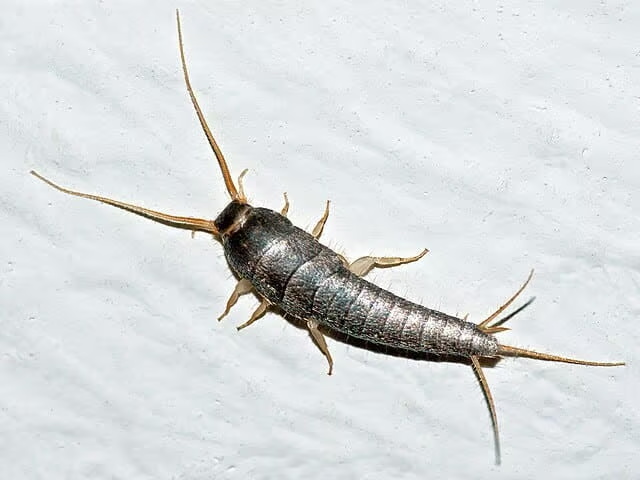
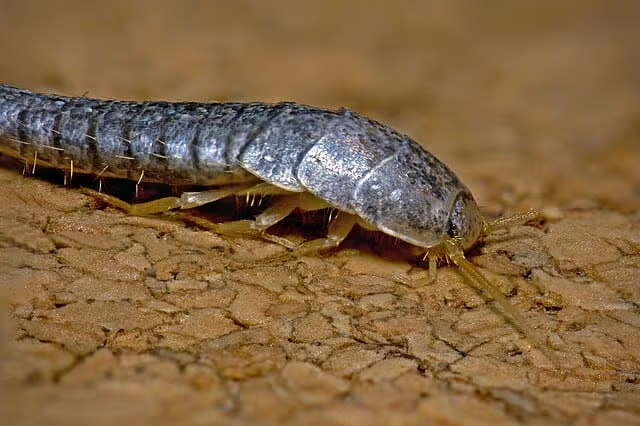
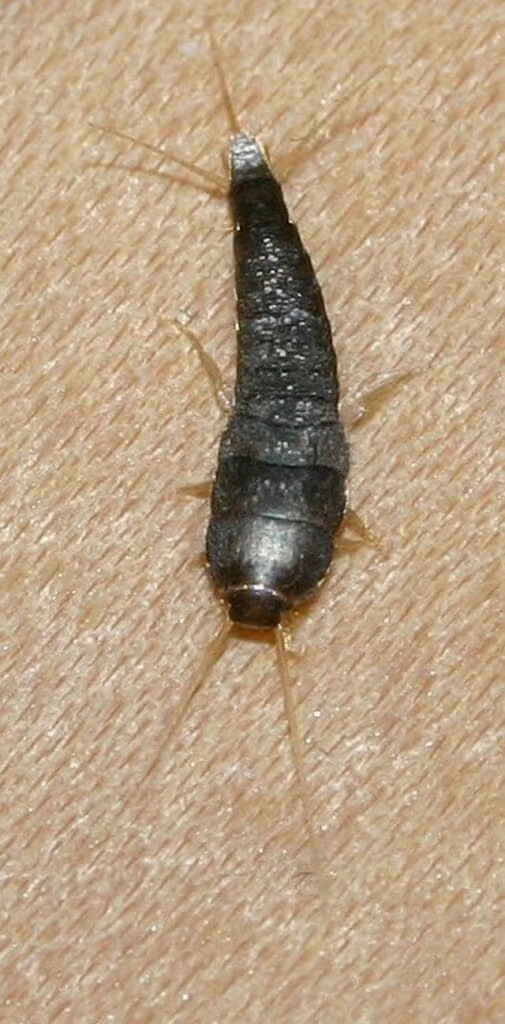
Adults are half an inch to three quarters of an inch long with a distinctly tapered, carrot-shaped body that is widest at the head and narrows toward the rear. The surface of the body is covered in fine scales that give the characteristic silvery-gray, metallic sheen. Three long tail filaments extend from the rear of the abdomen, one pointing straight back and one angling to each side, along with two long antennae at the front. The movement is distinctive: a rapid, wriggling side-to-side motion that resembles a fish, which is the origin of the common name.
Silverfish undergo ametabolous development, meaning they continue molting throughout their adult lives rather than going through a pupal stage. Adults can live two to eight years and continue reproducing throughout that period, making established indoor populations persistent without active management. They prefer cool to moderate temperatures between 70 and 80 degrees Fahrenheit and relative humidity above 75 percent, which describes many unmanaged Maine basements and attics during humid summer months. According to the UMaine Extension silverfish and firebrats page, silverfish are established throughout Maine and are common in older structures with elevated humidity.
Signs of a Silverfish Infestation
Silverfish are nocturnal and extremely fast, which means direct sightings are often the first indication but populations can be larger than sightings suggest since they spend most of their time in concealed locations.
Look for:
- Fast-moving, silvery, carrot-shaped insects found on bathroom floors, in bathtubs, in basement storage areas, or on bookshelves, typically at night when disturbed by turning on a light
- Irregular surface feeding damage on paper, book pages, wallpaper, cardboard boxes, and fabric, appearing as irregular scraped or yellowed areas rather than clean holes
- Small yellowish or pepper-like droppings scattered near feeding sites and hiding areas
- Shed skins in cracks, corners, and along baseboards, as silverfish molt repeatedly throughout their lives and leave the translucent exuviae behind
- Yellow staining on paper, book pages, or fabric adjacent to feeding damage
- Evidence of feeding on the glue binding of books, which appears as a scraped or pitted surface along the spine
- Damaged wallpaper with irregular surface scraping or loss of the paste layer
- Silverfish found in stored clothing, particularly natural fibers like wool, cotton, linen, and silk stored in damp conditions
Silverfish are most active in Shapleigh and Newfield homes with unfinished attics and basements where humidity goes unmanaged through Maine’s humid summers, creating the warm, moist conditions that support year-round silverfish activity.
Risks in Southern Maine
Silverfish do not bite, do not sting, do not transmit disease, and cause no structural damage to wood or building materials. The risk they pose is entirely to organic materials with starch, cellulose, or protein content.
The feeding damage is cumulative and often goes unnoticed until it is significant. Book collections stored in damp basements are particularly vulnerable, as silverfish will feed on the paper, bindings, and covers over time, causing irreversible damage to irreplaceable documents, books, and photographs. Wallpaper is another common target, particularly older wallpapers installed with starch-based paste. Natural fiber fabrics including wool, cotton, linen, and silk stored in humid closets or attic spaces are also susceptible.
The speed with which a silverfish population builds is the other practical concern. A single female can lay two to three eggs per day under favorable conditions, and with adults living up to eight years, an undetected population in a damp basement can grow substantially before the first obvious damage appears. Unlike most occasional invaders, treating the conditions that support silverfish without also treating the population itself is unlikely to fully resolve an established infestation.
Prevention Tips
Silverfish prevention requires both moisture management and elimination of the food sources that sustain indoor populations:
- Run a dehumidifier in basements and attics during humid months to maintain relative humidity below 60 percent, which is too dry for silverfish to thrive
- Store books, documents, photographs, and paper goods in sealed plastic bins rather than cardboard boxes in any space that experiences elevated humidity
- Store natural fiber clothing in sealed plastic containers or cedar-lined closets rather than loose in boxes or bags in humid storage areas
- Seal cracks and gaps along baseboards, around pipe penetrations, and at foundation sills where silverfish travel between wall voids and living areas
- Address any plumbing leaks, condensation issues, or water intrusion that maintains elevated humidity in storage areas
- Vacuum storage areas, bookshelves, and basement spaces regularly to remove the skin casings, droppings, and food debris that sustain populations
- Reduce paper clutter and cardboard accumulation in damp spaces, as stacked cardboard provides both food and harborage
- Seal around attic access hatches and ensure attic insulation is not retaining moisture from inadequate ventilation
Commonly Confused With
Silverfish are most commonly confused with firebrats, their close relative in the same order.
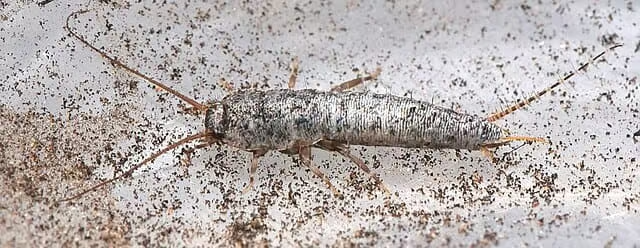
Firebrats are virtually identical to silverfish in body shape, size, and behavior, but differ in two key ways: color and preferred habitat. Firebrats are mottled gray-brown rather than uniformly silver, and they prefer hot, dry areas near furnaces, boilers, hot water heaters, and other heat sources rather than the cool, humid spaces that silverfish inhabit. Finding the insect near a basement furnace or hot water heater points to firebrats; finding it in a cool damp bathroom or book storage area points to silverfish. Both species feed on similar materials and are managed in similar ways, but the habitat preference guides where to focus control efforts.
House centipedes are occasionally mentioned in the same breath as silverfish because they prey on silverfish and are found in the same damp environments. They are easy to distinguish: house centipedes have 15 pairs of very long legs extending well beyond the body width, while silverfish have three pairs of short legs close to the body. A house centipede found in a damp basement may actually be an indirect indicator of a silverfish population present as its prey.
Professional Silverfish Control in Southern Maine
Unlike most occasional invaders where exclusion and moisture management alone are sufficient, established silverfish infestations generally require a combination of moisture reduction, food source elimination, and targeted treatment to achieve a lasting result. The long adult lifespan and continuous reproduction of silverfish means the population does not simply die off once conditions are improved, particularly in wall voids and concealed harborage areas where individuals persist even after humidity is reduced.
As an A.C.E.-credentialed pest professional I can confirm identification, distinguish silverfish from firebrats to focus control efforts in the right locations, assess the humidity and harborage conditions sustaining the population, and apply targeted treatment to the areas where silverfish are active rather than broad unnecessary applications. Learn more about my background and credentials on the about page, or visit the common pests service page for more detail. Contact me to schedule a free inspection.
Frequently Asked Questions
Given enough time, significant damage. A silverfish population in a book storage area will feed on paper, book bindings, and the glue along spines, causing irreversible surface damage and yellowing over months and years. The damage to any individual item in a single night is minor, but the cumulative effect of an established population feeding over several years can destroy irreplaceable documents, photographs, and books. Natural fiber fabrics stored in damp conditions are also vulnerable, particularly wool and linen, which silverfish will feed on readily.
Silverfish found in bathtubs have typically fallen in while foraging along the rim or walls and cannot escape the smooth porcelain surface. It is not an indication that they are coming up through the drain. Finding them in the tub on a regular basis suggests an active population in the bathroom walls or the floor space beneath, drawn by the humidity of the bathroom environment. Addressing the bathroom ventilation and any plumbing moisture issues is the starting point.
Both situations occur. Silverfish can enter from outside through foundation gaps and wall penetrations, particularly in older homes where weatherstripping and sealant have deteriorated. They are also commonly introduced unknowingly through infested books, cardboard boxes, or stored items brought in from another location. An established population that has been present for some time will have spread beyond the original entry point and may be active throughout wall voids, attic spaces, and any area with adequate humidity and food access.
Ready to Get Started?
If silverfish are damaging your books, documents, or stored clothing, or if sightings are frequent enough to suggest an established population, reach out for a free inspection and I will assess the conditions sustaining the infestation and put together a targeted plan to address it.