

House Centipedes in Southern Maine:
Identification, Prevention, and Control
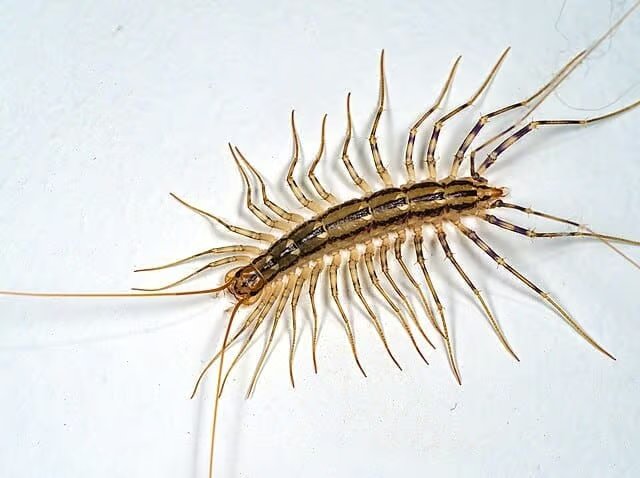
House centipedes are one of the more startling things a homeowner can encounter in a Maine basement or bathroom, and the reaction to seeing one sprint across the floor at high speed is almost universally alarm. That reaction is understandable given their appearance, but house centipedes are worth understanding accurately before deciding how to respond. They are active predators that feed on the insects and arthropods already present in the home, including silverfish, spiders, cockroaches, ants, and flies, which means their presence is often a sign of other prey species more than a problem in itself. In older homes with damp basements and crawl spaces throughout Standish, Hollis, Buxton, and Limington, house centipedes are a consistent presence year-round. As an Associate Certified Entomologist (A.C.E.) with 16 years of experience in the region, accurate identification is always my starting point. Browse the occasional invaders pest library to see other species found in the area, or contact me for identification and treatment help.
What Are House Centipedes?
The house centipede (Scutigera coleoptrata) is the only centipede species in Maine that is a true indoor resident, capable of completing its entire life cycle inside a structure given adequate moisture and prey. It is not an insect but an arthropod in the class Chilopoda, more closely related to lobsters and crabs than to beetles or flies.
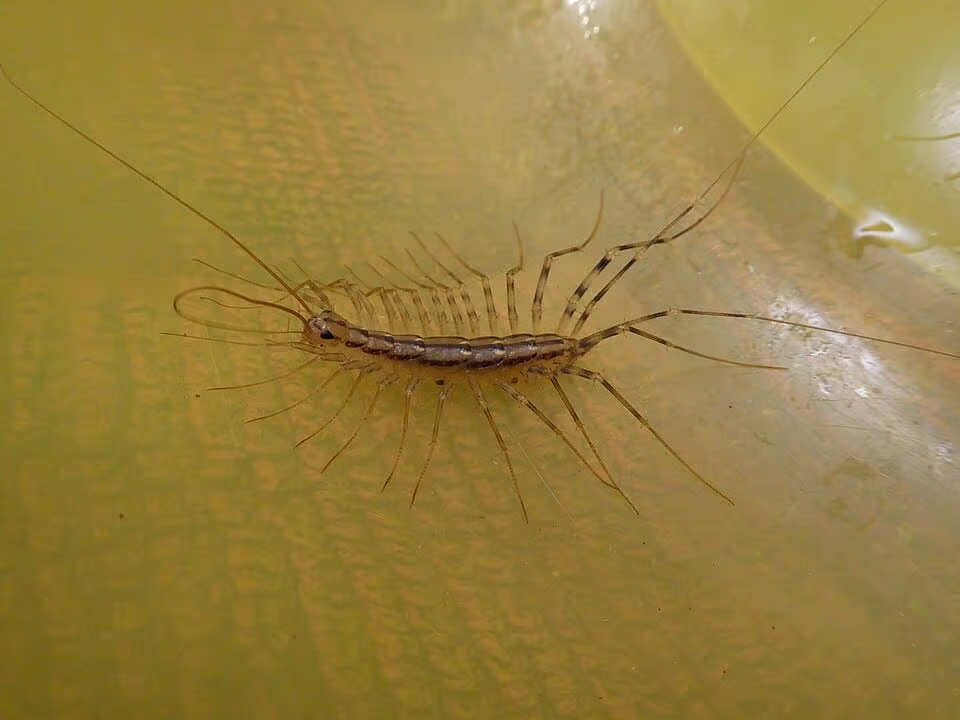
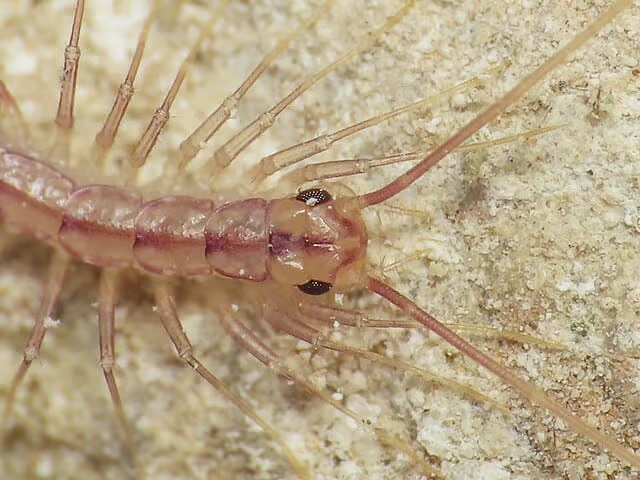
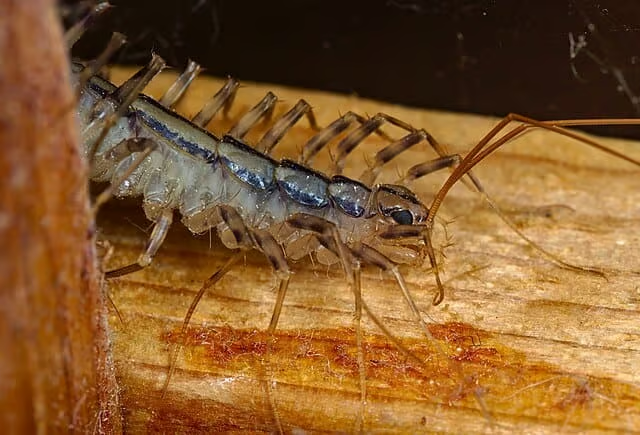
Adults are one to one and a half inches in body length, but the 15 pairs of long, banded legs make them appear substantially larger, and the last pair of legs in females is nearly twice the body length, resembling a tail. The body is elongated and flattened, yellowish-gray to tan with three dark longitudinal stripes running the length of the back. The antennae are very long and are held forward. House centipedes move with remarkable speed when startled, which contributes significantly to the alarm they cause.
Unlike outdoor centipedes, which enter structures only accidentally or seasonally, house centipedes breed indoors and can maintain persistent populations in damp basements, crawl spaces, and bathrooms where moisture levels and prey availability support them. Each pair of front legs is modified into venom-delivering appendages called forcipules, which they use to subdue prey. They are venomous but the venom is calibrated for small invertebrates and poses no meaningful risk to people. According to the UMaine Extension centipedes page, house centipedes are common in Maine homes and are the centipede species most frequently encountered indoors across the state.
Signs of a House Centipede Problem
House centipedes are nocturnal and spend most of their time in concealed damp locations, so sightings are the primary indicator of their presence rather than damage or droppings.
Look for:
- Fast-moving, long-legged individuals seen on basement walls, bathroom floors, or crawl space surfaces, typically at night or when disturbed from hiding places during the day
- Individuals found in bathtubs, sinks, and floor drains, where they become trapped after entering through the drain or falling in while hunting along the rim
- Multiple sightings in the same area over time, suggesting a resident population rather than accidental entry
- Sightings increasing in spring when populations are more active after the relative dormancy of winter
- Presence of other prey species in the same areas, including silverfish, spiders, or occasional cockroaches, which indicates the food supply supporting the centipede population
- Occasional daytime sightings in very damp, dark spaces like behind stored boxes or under utility sinks in basements
Risks in Southern Maine
House centipedes cause no structural damage whatsoever and do not feed on household materials, stored goods, or plant material. They are entirely predatory. The practical risk profile is narrow:
House centipedes can bite if handled or pressed against skin, using the modified front legs rather than a true jaw. The bite is painful in the moment, comparable to a bee sting, and may cause localized redness and swelling, but it is not medically significant in healthy individuals. Allergic reactions to centipede venom are possible but rare. The more practical concern is simply the distress caused by repeated sightings, particularly for household members who find them alarming.
From a pest management perspective, the more useful framing is that house centipedes are an indicator species. A persistent house centipede population in a basement is telling you two things: the moisture level in that space is high enough to support them, and there is sufficient prey present to sustain them. Addressing those two underlying conditions, the moisture and the prey species, is more productive than treating centipedes in isolation. Reducing the silverfish, spider, and other small arthropod populations in the basement through targeted treatment and moisture control typically reduces centipede activity as a byproduct.
Prevention Tips
House centipede prevention centers on moisture reduction and eliminating the prey base that sustains them, which is more effective than trying to exclude a species that can exploit very small openings:
- Run a dehumidifier in the basement or crawl space during humid months to bring relative humidity below 50 percent, which reduces both centipede habitat and the habitat of their prey species
- Fix leaking pipes, address condensation on cold pipes, and improve drainage around the foundation to eliminate persistent moisture sources
- Seal cracks around foundation sills, pipe penetrations, and crawl space access points to reduce movement between the crawl space and living areas
- Remove clutter, stored boxes, and accumulated organic material from basement floors, as these provide the hiding habitat that centipedes and their prey both depend on
- Address any silverfish, spider, or other small arthropod issues in the basement, as reducing the prey supply is one of the most effective centipede management tools available
- Keep basement windows screened and drains covered where possible to reduce entry
- Install a vapor barrier in crawl spaces if one is not already present, as bare soil crawl spaces generate the moisture conditions that house centipedes require
Commonly Confused With
House centipedes are occasionally confused with two other species:
Millipedes are the most common misidentification. Both are multi-legged arthropods found in damp basement and crawl space environments, but they are very different in appearance and behavior once compared directly. Millipedes are cylindrical and dark brown, with two pairs of short legs per body segment that hold the body close to the ground, and they move slowly rather than sprinting. House centipedes are flattened and yellowish-gray with very long legs that extend well beyond the body width, and they move at high speed. Millipedes curl into a coil when disturbed; centipedes run.
Spiders are occasionally confused with house centipedes at a quick glance due to the multiple visible legs, but spiders have only eight legs arranged in four pairs, two body regions (cephalothorax and abdomen), and no antennae. House centipedes have 15 pairs of legs, a single elongated body, and very prominent antennae held forward. The speed and body shape make the two easy to distinguish once observed for more than a moment.
Professional House Centipede Control in Southern Maine
For most house centipede situations, moisture reduction and prey management are the appropriate starting points, and targeted pesticide treatment is rarely the most productive first response. If centipede sightings are frequent and distressing, or if the underlying moisture and prey conditions have been addressed and populations remain high, a targeted treatment of the basement perimeter and crawl space can provide meaningful reduction.
As an A.C.E.-credentialed pest professional I can identify whether what you are seeing is house centipedes or a different species, assess the moisture and prey conditions that are sustaining the population, and recommend the most practical and cost-effective approach for your situation. Learn more about my background and credentials on the about page, or visit the common pests service page for more detail. Contact me to schedule a free inspection.
Frequently Asked Questions
Yes, in a practical sense. They are active predators that hunt and consume silverfish, spiders, cockroaches, ants, flies, and other small arthropods that are already in the home. A house centipede in the basement is doing pest control work of its own. Whether their presence is tolerable is a personal decision, but from a purely functional standpoint they are not a problem in themselves and their presence often indicates other underlying conditions worth addressing.
They can bite if directly handled or pressed against skin, using the modified front legs. The bite is comparable to a mild bee sting in terms of immediate pain and local reaction, and it resolves on its own. They do not pursue people, do not bite unprovoked, and the venom has no meaningful medical significance for healthy individuals. The alarm they cause is almost entirely due to their appearance and speed rather than any actual threat they pose.
Bathtubs and sinks are common trap sites for house centipedes that enter through the drain or fall in while hunting along the rim, then cannot escape the smooth surfaces. Finding centipedes in the tub does not necessarily mean there is a large population in the house, but repeated occurrences suggest enough individuals are active in the plumbing areas or adjacent spaces to warrant a look at the moisture conditions in the basement or crawl space below.
Ready to Get Started?
If house centipedes are appearing regularly in your home and you want to address the underlying conditions driving the problem, reach out for a free inspection and I will assess the moisture and prey species situation and recommend the most practical approach.