

Millipedes in Southern Maine:
Identification, Prevention, and Control
Millipedes are among the most reliable indicators of a moisture problem along a foundation in Southern Maine. They live and breed exclusively outdoors in moist organic matter, and when they appear indoors in significant numbers it almost always means there is a large population immediately outside the structure, sustained by the kind of wet mulch, leaf litter, or chronically damp foundation planting that is common around older homes. The indoor appearance is incidental: millipedes that wander inside cannot survive or breed there and will die within a day or two. The productive response is to address the outdoor conditions that built the population rather than to treat the individuals that made it inside. Properties with dense foundation plantings, heavy mulch, and older homes throughout Hollis, Buxton, Limington, and Standish tend to have the most consistent millipede pressure. As an Associate Certified Entomologist (A.C.E.) with 16 years of experience in the region, accurate identification is always my starting point. Browse the occasional invaders pest library to see other species found in the area, or contact me for identification and treatment help.
What Are Millipedes?
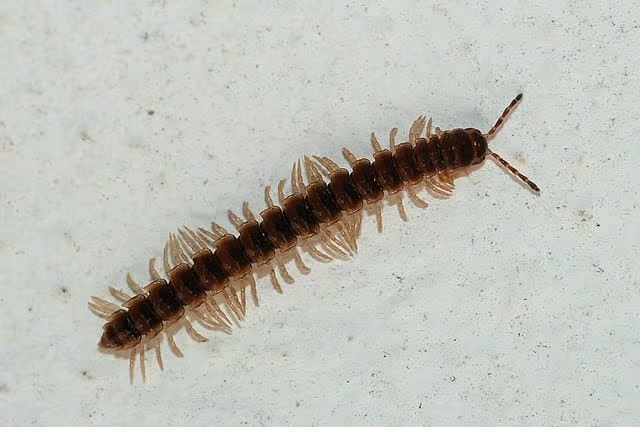
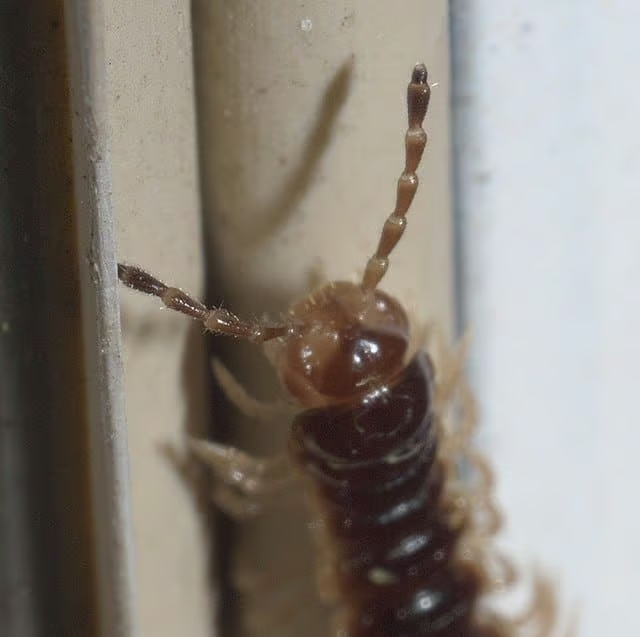
Millipedes are arthropods in the class Diplopoda, more closely related to crustaceans than to insects. The name means “thousand feet,” which is an exaggeration, but most species do have a substantial number of legs: two pairs per body segment, which is the single most reliable anatomical distinction from centipedes, which have one pair per segment. Most millipede species found in and around Maine homes have between 30 and 90 pairs of legs depending on the species and stage of development.
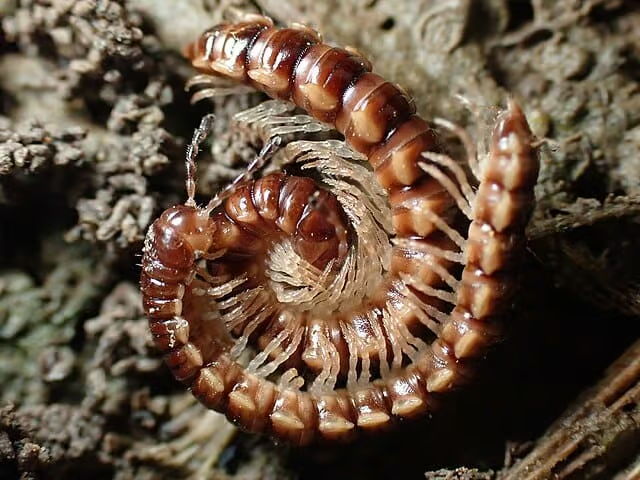
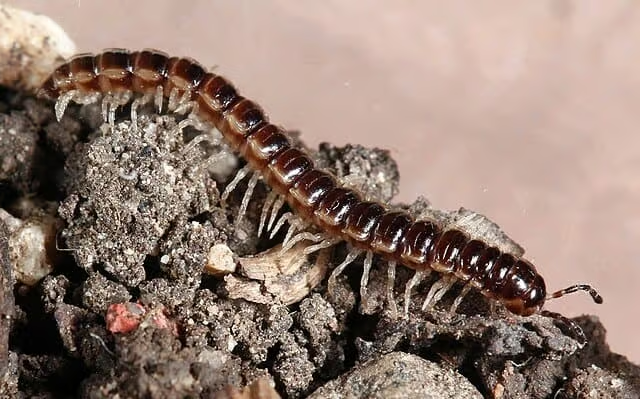
The most common species encountered as occasional invaders in Southern Maine are cylindrical, dark brown to nearly black, and range from one quarter inch to about an inch and a half in length. The body is smooth and rounded rather than flattened. Movement is slow and deliberate, a rippling wave motion of the legs, and when disturbed millipedes curl tightly into a coil or partial spiral as a defensive response rather than running. This coiling behavior, combined with the slow movement and cylindrical body, distinguishes them immediately from centipedes.
Millipedes are detritivores, feeding on decaying plant material, leaf litter, and soft decomposing wood. They play a beneficial ecological role in breaking down organic matter and cycling nutrients in soil, and they are entirely harmless in their outdoor habitat. They require consistently high moisture and cannot survive in dry conditions for more than a day or two, which is why indoor appearances are always short-lived. According to the Maine DACF Got Pests millipedes page, millipedes are common throughout Maine and become nuisance invaders when populations build near the foundation.
Signs of Millipede Activity
Millipede activity is straightforward to identify, and the signs appear both outdoors near the foundation and indoors where they have wandered.
Look for:
- Slow-moving, dark brown, cylindrical many-legged arthropods found on basement floors, in garages, and along foundation walls, typically at night or in dark corners during the day
- Individuals found curled into a tight coil when touched or disturbed, which is the reliable defensive behavior of millipedes and distinguishes them from centipedes and other species
- Large outdoor concentrations under mulch, leaf litter, flat stones, boards, and other damp organic debris along the foundation perimeter
- Increased indoor sightings immediately following heavy rain events or during extended wet periods, when saturated outdoor habitat drives millipedes to move
- Sightings concentrated at the lowest levels of the structure, particularly along the junction of basement walls and floors where outdoor populations enter through gaps
- A faint, sometimes unpleasant odor from defensive secretions where millipedes have been present in quantity or have been crushed
Millipede migration indoors is most pronounced in Casco and Raymond properties following heavy late-summer and fall rain events, when the outdoor organic debris layer becomes saturated and millipedes move upward and outward from their primary habitat.
Risks in Southern Maine
Millipedes are among the lower-risk occasional invaders in terms of direct harm. They do not bite, do not sting, do not transmit disease, and cause no damage to structures, fabrics, stored goods, or plant material.
The one practical risk worth understanding accurately is the defensive secretion. When threatened, many millipede species exude a fluid from glands along the sides of the body. The chemistry of this secretion varies significantly by species: some produce mild irritants, while others produce compounds including hydrogen cyanide derivatives and quinones that can cause genuine skin irritation, temporary discoloration of skin, and eye irritation if the secretion contacts mucous membranes. The risk level in typical handling situations is low, but washing hands after handling millipedes and avoiding touching the eyes is the appropriate precaution. The secretion also causes the faint staining sometimes noticed on surfaces where millipedes have been present or crushed.
Indoors, the more significant concern is what millipede presence indicates: a large, well-established outdoor population in close proximity to the structure, sustained by moisture and organic material conditions worth addressing for their own sake as conditions that also attract other moisture-dependent pests. According to the UMaine Extension millipedes publication, habitat modification to reduce moisture and organic material near the foundation is the most effective long-term management approach.
Prevention Tips
Millipede prevention is almost entirely habitat modification around the exterior, since the indoor population cannot sustain itself and exclusion alone without addressing the outdoor source will not produce lasting results:
- Pull mulch, leaf litter, and organic ground cover back at least 12 inches from the foundation wall, creating a dry zone that millipedes will not readily cross
- Replace organic mulch immediately against the foundation with inorganic material such as pea gravel or stone, which does not retain moisture the same way
- Remove flat objects including boards, stones, stored pots, and landscape timbers from directly against the foundation where millipedes shelter during the day
- Address any drainage issues that keep the soil immediately adjacent to the foundation consistently wet, including grading that directs water toward the structure and downspouts that discharge too close to the house
- Store firewood elevated and away from the structure rather than stacked against the foundation
- Seal gaps at the foundation sill, around pipe penetrations, and under door thresholds where millipedes enter from the foundation perimeter into the basement
- Run a dehumidifier in the basement during humid months to make the interior less hospitable to any that do enter
Commonly Confused With
Millipedes are most commonly confused with two other arthropods:
House centipedes are the most frequent misidentification, since both are multi-legged arthropods found in similar damp basement environments. The differences are immediately apparent on close inspection: centipedes are flattened rather than cylindrical, yellowish-gray rather than dark brown, have one pair of very long legs per segment rather than two pairs of short legs, and move with extreme speed rather than the slow rippling motion of millipedes. Centipedes coil when threatened. Millipedes do not.
Sowbugs and pillbugs (woodlice) are another common source of confusion, as they are also dark, damp-habitat arthropods found under mulch and along foundations. They are significantly smaller than most millipedes, have a distinctly segmented oval body rather than a cylindrical worm-like form, and have only seven pairs of legs. Pillbugs roll into a tight ball when disturbed in a similar fashion to millipedes, but the ball shape is distinctly rounder and more compact. Both sowbugs and pillbugs are crustaceans rather than myriapods, and both are handled the same way as millipedes from a management standpoint.
Professional Millipede Control in Southern Maine
For most millipede situations, habitat modification around the exterior and sealing the foundation gaps that allow entry is the appropriate and sufficient response. Millipedes that are already indoors do not need to be treated since they will die on their own within a day or two. When outdoor populations are very large and migration is severe despite habitat modification, a targeted perimeter treatment applied to the foundation zone and mulch areas can provide population reduction during the peak migration period.
As an A.C.E.-credentialed pest professional I can assess the outdoor harborage conditions driving the indoor occurrence and identify the specific entry points along the foundation, which is the starting point for a lasting solution. Learn more about my background and credentials on the about page, or visit the common pests service page for more detail. Contact me to schedule a free inspection.
Frequently Asked Questions
Heavy rain saturates the organic matter layer in mulch, leaf litter, and soil where millipedes live, and the flooded conditions drive them to move upward and outward from their primary habitat. If large numbers of millipedes are concentrated immediately against the foundation in that habitat, significant numbers will migrate toward and into the structure when the outdoor conditions become unsuitable. The event is seasonal and weather-driven rather than a sign of a permanent indoor infestation, but it does indicate the outdoor population near the foundation is large enough to address.
No. Millipedes require the specific moisture, temperature, and food conditions of the outdoor organic matter layer to survive and reproduce. They cannot sustain themselves on the dry materials found inside a home, and individuals that wander indoors will die within a day or two without returning outdoors. A persistent or recurring millipede problem indoors is always driven by a large population immediately outside the structure, not by reproduction inside it.
Generally not in any serious sense, but washing hands after handling them is a reasonable precaution. Some species produce defensive secretions that cause mild skin irritation or temporary discoloration, and the secretion can cause eye irritation if transferred from hands to eyes. The risk level is low in casual contact but worth being aware of, particularly for children who are more likely to handle them directly.
Ready to Get Started?
If millipedes are entering your home in significant numbers, particularly after rain events, reach out for a free inspection and I will assess the outdoor harborage conditions and foundation entry points driving the problem.