

Earwigs in Southern Maine:
Identification, Prevention, and Control
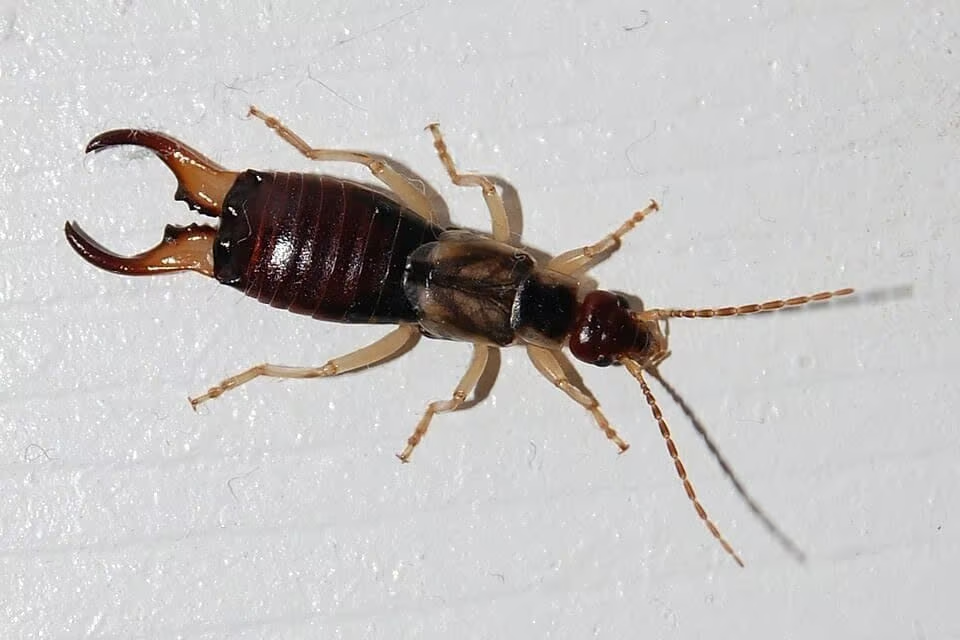
Earwigs are one of those insects whose reputation far exceeds their actual threat. The name alone causes alarm, and the prominent pincers at the rear of the abdomen reinforce the impression that they are dangerous. They are not. Earwigs do not enter ears, do not sting, and pose no meaningful risk to people or structures. They are primarily outdoor scavengers and garden feeders that move into homes opportunistically when conditions drive them inside, typically in search of moisture during hot dry spells or shelter as temperatures drop in fall. In older homes with damp foundations, dense foundation plantings, and heavy mulch throughout Biddeford, Saco, Scarborough, and Hollis, earwigs are a consistent summer nuisance. As an Associate Certified Entomologist (A.C.E.) with 16 years of experience in the region, accurate identification is always my starting point. Browse the occasional invaders pest library to see other species found in the area, or contact me for identification and treatment help.
What Are Earwigs?
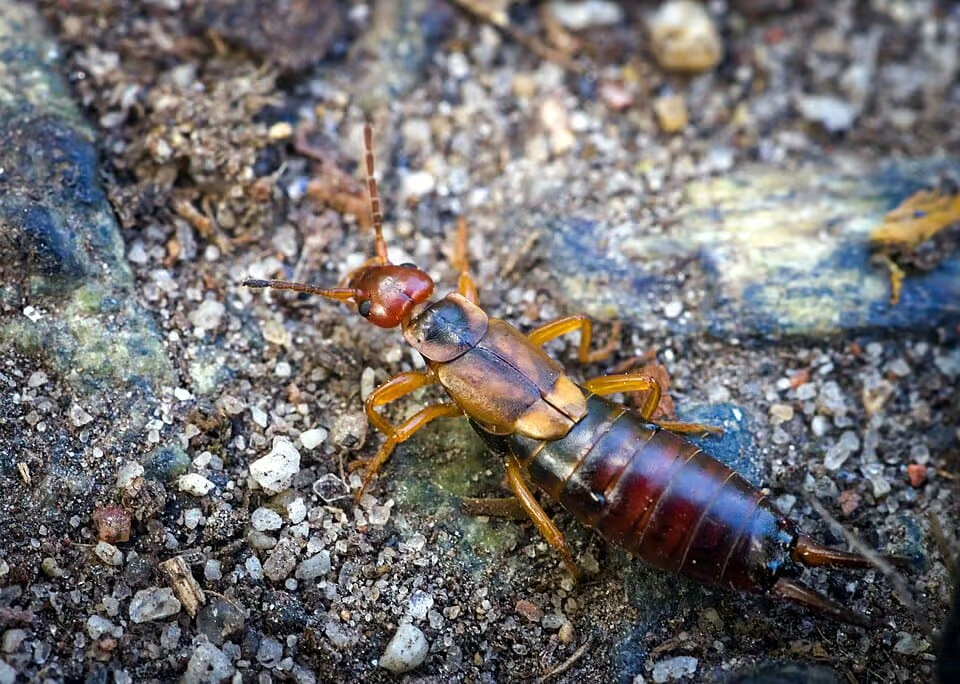
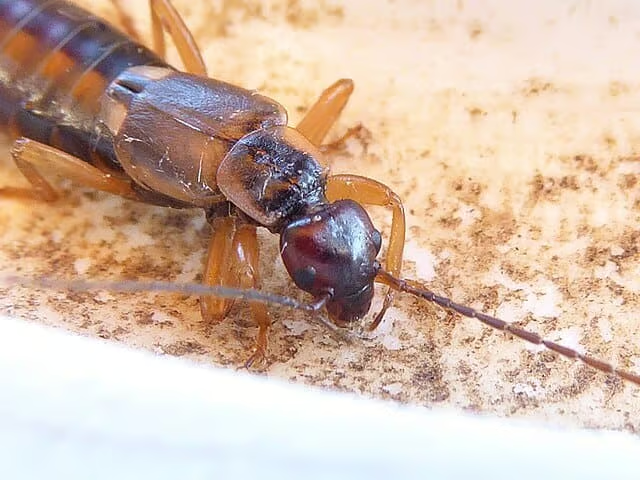
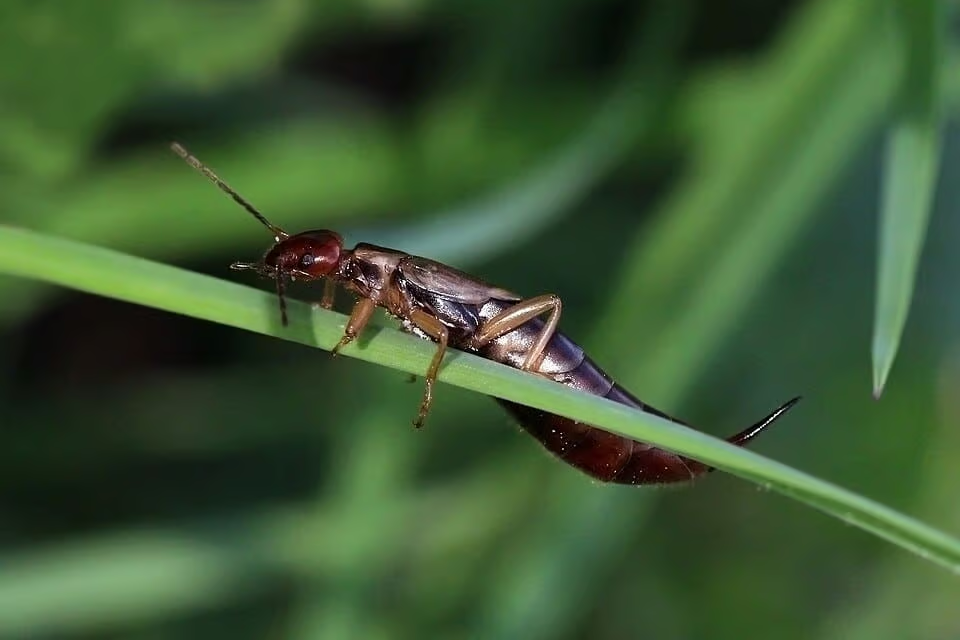
The European earwig (Forficula auricularia) is by far the most common earwig species in Maine and throughout the Northeast. Adults are half an inch to three quarters of an inch long with a reddish-brown, elongated, somewhat flattened body, short functional wings folded under abbreviated wing covers, and six legs. The most immediately recognizable feature is the pair of forceps-like appendages called cerci at the tip of the abdomen. In males the cerci are prominently curved; in females they are straighter and more parallel. These appendages are used for defense, mating interactions, and folding the wings, not for attacking people.
Earwigs are omnivorous scavengers that feed on decaying plant material, living plant tissue, fungi, and small soft-bodied insects. They are strongly photophobic and thrive in dark, damp, sheltered microhabitats including under mulch, beneath stones and boards, inside rolled leaves, and along foundation edges. They are nocturnal, becoming most active after dark. One behaviorally interesting characteristic of earwigs that sets them apart from most insects is maternal care: females actively guard egg clusters and tend the developing nymphs through early instars, a behavior unusual in non-social insects.
The name earwig derives from an old European folk belief that these insects crawl into sleeping people’s ears. This is unfounded. Earwigs do seek out tight, dark crevices as shelter, and in theory any small opening could attract one, but there is no documented pattern of earwigs entering human ears and no anatomical or behavioral reason they would preferentially do so. According to the Maine DACF Got Pests earwigs page, earwigs are established throughout Maine and are most commonly encountered as nuisance invaders in residential settings during summer and early fall.
Signs of Earwig Activity
Earwig problems are primarily outdoor situations that spill indoors, so signs appear both around the exterior of the structure and inside in damp locations.
Look for:
- Reddish-brown, pincer-tailed insects found in basements, bathrooms, and crawl spaces, typically at night when they are most active
- Earwigs trapped in bathtubs, sinks, and floor drains where smooth surfaces prevent them from climbing out
- Dense concentrations of earwigs under mulch, leaf litter, or flat objects like boards and flower pots placed against the foundation
- Irregular holes and chewed edges on flower petals, soft leafy plants, and seedlings in garden beds, which is often the first sign of a significant outdoor earwig population
- Earwigs found in damp stored items in basements, garages, or potting sheds
- Sightings increasing sharply after rain events or during extended hot, dry periods when outdoor moisture becomes scarce
Earwig pressure tends to be heaviest in Casco and Raymond properties with established perennial gardens, dense foundation plantings, and older homes where gaps at the foundation sill provide easy indoor access from the garden.
Risks in Southern Maine
Earwigs present a very limited practical risk profile. They do not damage structures, do not feed on fabric or stored goods, and do not transmit disease. The outdoor garden damage they cause is the most substantive concern for many homeowners, as a significant earwig population under mulch in a perennial bed will feed on flower petals, seedlings, and soft vegetable crops, leaving irregular holes and chewed edges. Dahlias, marigolds, lettuce, and other soft-leafed plants are particularly susceptible.
Indoors, earwigs are entirely a nuisance concern. The pincers can deliver a mild pinch if the insect is picked up or pressed against skin, but the pinch is trivial and the cerci are not capable of breaking skin in the way an insect mandible can. They are not venomous and do not inject anything. According to the UMaine Extension earwigs page, the primary management concern for earwigs in Maine is reducing the outdoor harborage conditions that allow populations to build close to the structure.
Prevention Tips
Earwig prevention is primarily about habitat modification around the exterior and sealing the gaps that allow outdoor populations to move inside:
- Pull mulch, leaf litter, and organic ground cover back at least 12 inches from the foundation, as these are the primary breeding and harborage habitat for outdoor earwig populations
- Remove flat objects like boards, stones, flower pots, and garden debris from directly against the foundation
- Address any moisture issues along the foundation perimeter, including grading that allows water to pool against the structure and downspouts that discharge too close to the house
- Seal gaps around window frames, door frames, utility penetrations, and foundation sills with caulk
- Install and maintain tight-fitting door sweeps on all exterior doors, including garage doors
- Run a dehumidifier in damp basements and crawl spaces to reduce the interior moisture conditions that attract earwigs moving inside
- Use yellow-spectrum exterior lighting rather than white lights, as earwigs and their prey are less attracted to yellow light
- In garden areas with persistent earwig pressure, trapping with rolled damp newspaper or cardboard tubes placed near plants overnight can collect large numbers for disposal, reducing the population without chemical treatment
Commonly Confused With
Earwigs are occasionally confused with two other insects:
Rove beetles are the most common misidentification. Several rove beetle species have a similar elongated, reddish-brown body and short wing covers that leave the abdomen exposed, giving them a superficially earwig-like appearance. The key difference is the tail end: earwigs have the prominent forceps-like cerci, while rove beetles have a plain, unmodified abdomen tip. Rove beetles are also predatory beneficial insects found in similar damp outdoor habitats.
Cockroach nymphs, particularly those of the German cockroach, are sometimes mistaken for earwigs by homeowners who are unfamiliar with both. Cockroach nymphs lack the cerci entirely and have long thin antennae and a distinctly different body shape. Any uncertainty about whether an insect found indoors is a cockroach nymph or an earwig is worth resolving quickly, since the management approach differs significantly.
Professional Earwig Control in Southern Maine
For most earwig situations, habitat modification around the exterior and sealing foundation entry points is the appropriate and sufficient response. When outdoor populations are large enough to cause meaningful garden damage or persistent indoor intrusion despite exclusion work, a targeted perimeter treatment applied to the foundation zone and mulch areas can provide effective population reduction.
As an A.C.E.-credentialed pest professional I can confirm identification, assess the outdoor harborage conditions driving the indoor occurrence, and recommend the most practical response for your specific situation. Learn more about my background and credentials on the about page, or visit the common pests service page for more detail. Contact me to schedule a free inspection.
Frequently Asked Questions
No. This is a persistent folk myth with no factual basis. Earwigs seek out tight, dark, damp spaces as shelter, and the shape of the human ear canal is not something they are drawn to or that offers them what they need. The name predates any scientific understanding of the insect and reflects old European superstition rather than observed behavior. Finding one indoors is entirely coincidental to any proximity to sleeping people.
The cerci can deliver a mild pinch if the insect is picked up or pressed against skin, comparable to the light pinch of a small crab claw. The pincers are not strong enough to break skin in most cases and are not venomous. The reaction to being pinched by an earwig is momentary discomfort, not injury. They do not use the cerci aggressively and will only attempt to pinch if directly handled or trapped against a surface.
Earwig populations build quickly under favorable conditions, specifically abundant organic mulch, consistent moisture, and mild temperatures. A wet spring that keeps mulch damp through early summer creates ideal breeding conditions for large earwig populations by midsummer. Garden populations rarely require professional treatment and can usually be managed with habitat modification, trapping, and if necessary a targeted application to the mulch zone around the most affected beds.
Ready to Get Started?
If earwigs are getting into your home in significant numbers or causing damage to your garden, reach out for a free inspection and I will assess the outdoor conditions driving the problem and recommend the most practical approach.