

Little House Flies in Southern Maine:
Identification, Prevention, and Control
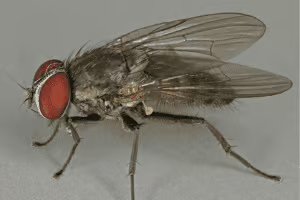
Little house flies are one of the more frequently misidentified fly species I encounter in Southern Maine. Homeowners see small gray flies hovering in the middle of a hallway or doorway and assume they are dealing with house flies, which leads to sanitation efforts focused in the wrong places. Little house flies have different behavior, different breeding preferences, and peak at different times of year than house flies, and treating them the same way produces inconsistent results. I deal with them regularly across Cumberland and York Counties, particularly during the cooler shoulder seasons of spring and fall when their preference for mild temperatures makes them more noticeable than the larger house flies that dominate summer. As an Associate Certified Entomologist (A.C.E.) with 16 years of experience in the region, the hovering behavior is the first thing I look for when this species is suspected. Browse the flies pest library to compare other species common in Maine, or contact me if small hovering flies indoors are not responding to basic sanitation steps.
What Are Little House Flies?
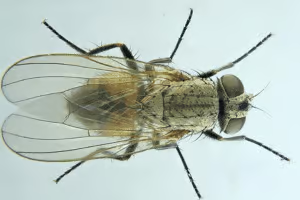
Little house flies (Fannia canicularis), also called lesser house flies, are noticeably smaller than common house flies, reaching about three-sixteenths of an inch in length. They are gray with faint dark stripes on the thorax, smaller and more slender in build than house flies, and hold their wings flat and slightly spread over the back when at rest rather than folded. The most distinctive behavioral trait is the hovering flight of males, who congregate in shaded indoor locations such as doorways, hallways, and under porch ceilings and fly in erratic, darting circular patterns without landing. This hovering behavior in the middle of a room is one of the most reliable ways to distinguish little house flies from house flies, which land frequently on surfaces.
Females lay eggs in moist decaying organic matter, particularly animal manure, wet grass clippings, and decomposing garbage. The larvae are flat, brown, and distinctly spiny rather than the smooth white maggots associated with house flies, and develop more slowly, taking two to four weeks to complete development in the cooler humid conditions typical of Southern Maine spring and fall. Browse the flies pest library to see other species found in the area.
According to Penn State Extension, little house flies are closely associated with animal operations, compost, and moist organic matter and are most abundant during cool, humid weather rather than the peak summer heat that drives house fly populations.
Signs of Little House Fly Activity
The hovering behavior of males is usually the first thing noticed. Look for:
- Small gray flies hovering in erratic darting circles in the middle of doorways, hallways, or under covered outdoor areas
- Flies resting on ceilings, walls, or in shaded corners rather than landing on food surfaces
- Activity peaking in spring and fall rather than the height of summer
- Presence near compost bins, animal waste, wet grass clippings, or moist organic debris
- Larvae in moist manure, wet grass, or decomposing material near the foundation, flat, brown, and spiny rather than smooth white maggots
- Flies entering through doors and windows during mild weather
In Southern Maine locations such as Biddeford and Windham these signs are most common during May and June and again in September and October, particularly around properties with backyard compost, pet areas, or proximity to farms and agricultural operations.
Risks in Southern Maine
Little house flies do not bite and are not the significant disease vectors that house flies are, though they can mechanically transfer bacteria from filth sources to surfaces they land on. Their main impact is nuisance, particularly the persistent hovering of males in indoor spaces that makes them difficult to ignore. In commercial settings near agricultural operations or food service environments their presence can be a sanitation concern worth addressing as part of a broader fly management approach. My commercial pest control services cover little house flies in those settings alongside the full range of fly species that affect commercial operations in Cumberland and York Counties.
Prevention Tips
Prevention focuses on the same outdoor organic sources that drive little house fly breeding, with particular attention to the cooler-temperature breeding materials they prefer:
- Remove animal manure and pet waste promptly and keep pet areas clean
- Manage grass clippings by composting properly or removing them rather than leaving them in moist piles near the foundation
- Keep compost bins sealed and positioned away from the house
- Store garbage in sealed containers and empty them regularly, rinsing bins with hot water
- Install or repair tight-fitting screens on all windows, doors, and vents
- Use door sweeps and weatherstripping to seal gaps around entries
- Reduce moisture accumulation near foundations, under decks, and in low-lying areas adjacent to the structure
For properties near farms or agricultural operations where controlling organic breeding material is an ongoing challenge, a year-round protection plan that includes spring and fall monitoring can stay ahead of the seasonal pressure.
Commonly Confused With
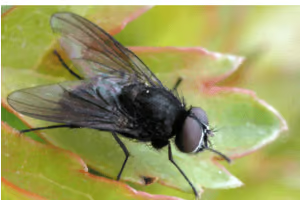
Little house flies are most often confused with house flies, which are larger, have four bold dark stripes on the thorax, land frequently on food and surfaces rather than hovering, and are most active in summer rather than spring and fall. Cluster flies are significantly larger, slower-moving, have golden hairs on the thorax, and appear in large numbers near attics and upper rooms in fall and spring rather than hovering in doorways. Blow flies are similar in size to house flies but have a metallic sheen. The combination of small size, gray coloring, faint rather than bold thoracic striping, and the characteristic hovering flight pattern of males makes little house flies fairly distinctive once the behavior is known.
Professional Little House Fly Control in Southern Maine
As with house flies, treatment begins with locating and eliminating the outdoor breeding sources sustaining the population. The cooler-temperature organic materials that little house flies prefer, including animal manure, wet grass clippings, and moist compost, are often different from what drives a house fly problem, so a fresh inspection is worth doing rather than assuming the same source is responsible. Once breeding material is identified and addressed, exterior bait stations, targeted residual applications, and interior light traps manage active adult populations. For commercial properties near agricultural operations where little house fly pressure is a recurring seasonal concern, my commercial pest control services provide a structured management approach. You can learn more about my background on the about page. My common pests control services cover little house flies and the full range of fly species found in Cumberland and York Counties. Contact me to schedule a free consultation.
Frequently Asked Questions
Almost certainly male little house flies. The hovering behavior is one of the most distinctive things about this species. Males congregate in shaded, sheltered indoor locations and fly in erratic darting circles as part of their mating behavior. House flies do not hover this way. If you are seeing small gray flies circling in the middle of a room or doorway rather than landing on food or surfaces, little house fly is the most likely identification.
Little house flies prefer cooler temperatures than common house flies and are more active during the mild shoulder seasons. In Southern Maine this typically means noticeable indoor activity in May and June and again in September and October, tapering during the hottest weeks of July and August when house flies dominate. Properties with nearby compost, pet areas, or farms tend to see the most consistent spring and fall pressure.
They are related but distinct species with meaningfully different behavior and breeding preferences. Little house flies are smaller, peak in cooler weather, hover rather than land on food, and breed in cooler organic materials like manure and wet grass rather than warm garbage. Treating them as the same pest leads to sanitation efforts focused in the wrong places and inconsistent results. If you are unsure which species you have, I can confirm the identification during a free visit.
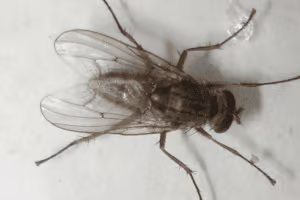
Ready to Get Started?
If small flies are hovering indoors and basic sanitation is not resolving the problem, reach out for a free inspection and I will identify the source.