

Fleas in Southern Maine:
Identification, Prevention, and Control
Fleas are one of the most frustrating pest problems in Southern Maine because the biology of the flea life cycle works almost entirely against the homeowner. Adults on a pet represent perhaps five to ten percent of the total flea population in a home. The other ninety to ninety-five percent, eggs, larvae, and pupae, are living in carpeting, furniture, pet bedding, and floor cracks, developing through stages that are largely unaffected by the treatments people most commonly reach for first. A pet treated with a flea product will be re-infested within hours if the indoor environment is not treated simultaneously, and even a thorough environmental treatment will be followed by new adult emergence for weeks as pupae in protected cocoons continue to develop. Understanding the life cycle is the prerequisite to resolving the problem. In homes with pets throughout Biddeford, Saco, Scarborough, and Windham, flea pressure is heaviest in late summer and fall when outdoor populations peak. As an Associate Certified Entomologist (A.C.E.) with 16 years of experience in the region, accurate identification and life cycle timing are central to how I approach flea work. Browse the fleas and ticks pest library to see related species, or contact me for help.
What Are Fleas?
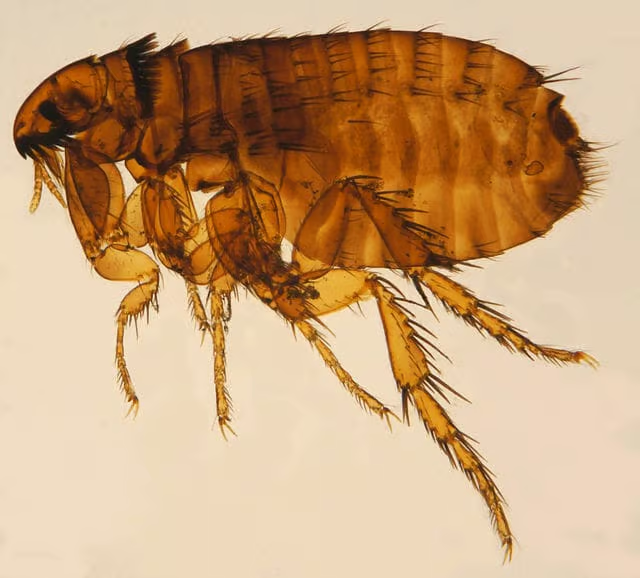
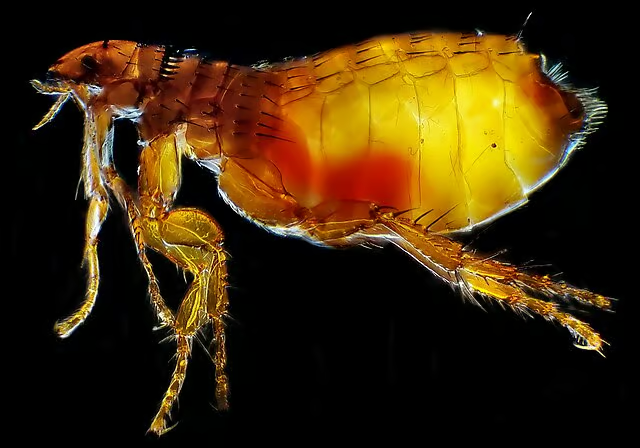
The cat flea (Ctenocephalides felis) is the species responsible for the vast majority of flea infestations on both cats and dogs in Maine and throughout North America, despite the name. Adults are approximately one sixteenth of an inch long, reddish-brown to dark brown, wingless, and strongly laterally flattened, which allows them to move rapidly through fur and evade attempts to remove them by hand. The powerful hind legs are adapted for jumping, allowing fleas to leap vertically up to seven inches and horizontally up to thirteen inches, which is how they transfer between hosts and into the environment. The body has rows of backward-pointing spines (ctenidia) that help anchor the flea in the host’s fur.
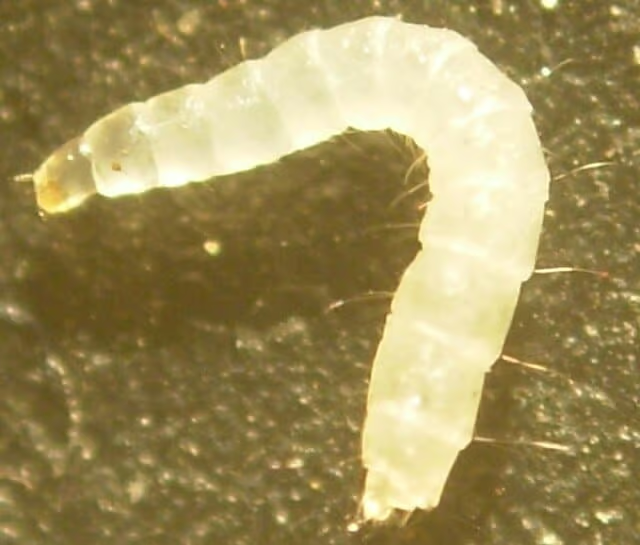
The flea life cycle has four stages. Female fleas must have a blood meal before laying eggs, after which they lay two to eight eggs per day throughout their adult life. Eggs are not sticky and fall off the host into the environment immediately, accumulating wherever the pet spends time. Larvae hatch from eggs after two to twelve days and feed on organic debris and flea dirt (adult flea feces) in carpeting, floor cracks, and bedding. Larvae avoid light and work their way deep into carpet fibers and crevices. The pupal stage is the most challenging aspect of flea management: pupae are enclosed in sticky, debris-coated silk cocoons that adhere to carpet fibers, resist most insecticides, and can remain viable for many months. Pupae will not emerge until environmental signals, primarily vibration, heat, and carbon dioxide from a passing host, indicate that a host is present. This is why an empty home can appear flea-free and then produce an explosive emergence of hungry adults within hours of re-occupancy.
According to the UMaine Extension fleas publication, the cat flea is the most commonly encountered flea in Maine, and rats and mice can also be sources of flea infestations independent of household pets.
Signs of a Flea Infestation
Flea infestations are usually identified by a combination of pet behavior, biting activity, and visible evidence.
Look for:
- Pets scratching, biting, licking, or chewing themselves persistently, particularly at the base of the tail, along the back, and around the neck
- Flea dirt on pets, in pet bedding, or on furniture where pets rest; flea dirt is small, dark, comma-shaped specks of dried blood that turn distinctly reddish-brown when placed on a damp white tissue or paper towel, which distinguishes them from ordinary soil or debris
- Tiny dark insects jumping or moving rapidly through pet fur or on light-colored flooring, socks, or furniture surfaces
- Itchy red bite marks on people, typically concentrated around the ankles, lower legs, and wrists, with a characteristic small red halo around the central bite point
- Increased flea activity immediately after walking across carpeted areas or sitting on upholstered furniture, as vibration and warmth trigger pupal emergence
- Hair loss or hot spots on pets from constant scratching and self-grooming
- Pale gums in severely infested young, small, or elderly pets, indicating blood loss from heavy feeding
Risks in Southern Maine
Fleas pose several health risks to both pets and people. Flea allergy dermatitis is the most common skin condition in cats and dogs, caused by an immune response to proteins in flea saliva. Even a single bite can trigger a significant reaction in a sensitized animal, and affected pets will scratch and chew to the point of creating open wounds and secondary bacterial infections. Animals with flea allergy dermatitis require both flea elimination and veterinary treatment for the allergic response.
Cat fleas serve as intermediate hosts for the dog tapeworm (Dipylidium caninum). Pets that groom themselves and ingest fleas during a flea infestation can become infected with tapeworms, which are then visible as small rice-grain-sized segments around the pet’s rear end or in feces. Children who accidentally ingest fleas can also become infected, though this is uncommon.
Severe infestations cause meaningful blood loss in small pets, kittens, puppies, and elderly animals. Pale gums, lethargy, and weakness in a heavily infested animal warrant prompt veterinary attention. According to the Maine DACF Got Pests fleas page, some people are highly sensitive to flea bites while others barely react, which means one household member may have significant biting complaints while another is unaware of the infestation.
Prevention Tips
Flea prevention requires a consistent, year-round approach to both the animal and the environment:
- Apply veterinarian-recommended flea prevention to all pets year-round, not just during the warm season; fleas can survive in heated homes through winter and pupae can remain dormant for months, making spring re-emergence possible from fall infestations
- Vacuum carpets, rugs, upholstered furniture, and pet resting areas thoroughly and frequently; vacuuming stimulates pupal emergence, which is actually useful because newly emerged adults are more vulnerable to treatment than pupae; dispose of vacuum bags immediately in a sealed bag outdoors after each use
- Wash pet bedding in hot water and machine dry on high heat at least weekly, more frequently during any active flea situation
- Inspect pets for flea dirt after outdoor time in wooded or grassy areas using a flea comb over a white surface
- Address rodent activity around the property; deer mice, Norway rats, and other rodents carry fleas and can introduce or sustain flea infestations independently of household pets
- Keep grass mowed short and remove leaf litter and debris from areas where pets spend time outdoors, as these are the outdoor flea development zones
- Treat outdoor pet resting and play areas as part of any indoor flea management program, since re-introduction from the outdoor environment is a common reason indoor treatments fail
Commonly Confused With
Fleas are most commonly confused with two other small pests:
Springtails are the most frequent misidentification. Both are tiny and jump when disturbed. The key distinction is biting: springtails do not bite under any circumstances, and if small jumping insects are present but no one in the household is experiencing bites, they are almost certainly springtails rather than fleas. Location also helps: springtails are found in wet areas around drains, sinks, and basement walls, while fleas are concentrated in carpeted areas, furniture, and pet resting zones. The flea dirt test on a white tissue is a reliable confirmation if biting is ambiguous.
Bed bugs are another biting pest that causes alarm and are sometimes confused with fleas when bites are the primary symptom rather than a visible insect. Bed bugs do not jump, are significantly larger than fleas at approximately a quarter inch, are flat and oval rather than laterally compressed, and are found in mattress seams, box spring folds, and furniture crevices rather than in carpeting or on animals. Bed bug bites tend to occur in linear or clustered patterns on exposed skin during sleep rather than on the lower legs and ankles that characterize flea bites.
Professional Flea Control in Southern Maine
Effective flea elimination requires treating the pet, the indoor environment, and in many cases the outdoor areas where the pet spends time, all simultaneously and with timing that accounts for the development stages already in the environment when treatment begins. A single treatment that misses any of these three components will result in reinfestation, which is the most common reason flea problems persist despite apparent treatment.
As an A.C.E.-credentialed pest professional I can assess which life stages are present, identify the primary infestation zones in the structure, and apply a treatment timed to the population development in your specific situation. I also provide guidance on the pet treatment and the post-treatment vacuuming schedule that determines whether the first treatment resolves the problem or requires follow-up. Learn more about my background and credentials on the about page, or visit the common pests service page for more detail. Contact me to schedule a free inspection.
Frequently Asked Questions
Treating the pet addresses only the adult fleas on the animal, which represent roughly five to ten percent of the total infestation. Eggs, larvae, and pupae in the carpeting, furniture, and floor cracks are unaffected by pet-only treatment and continue developing. Re-emerging adults will re-infest the treated pet within hours. Resolving the problem requires simultaneous treatment of the indoor environment, and even a thorough environmental treatment will be followed by new adult emergence for several weeks as protected pupae continue to develop. Multiple vacuuming sessions after treatment help by stimulating pupal emergence into conditions where adults are exposed to the treatment residual.
Realistically, four to eight weeks from the time a comprehensive treatment is applied, though the timeline varies with infestation size and how consistently the follow-up steps are maintained. The limiting factor is always the pupal stage. A home can go from apparent success to renewed adult emergence within days if a pocket of undisturbed pupae develops in a protected area. Vacuuming every two to three days after treatment is one of the most effective ways to shorten the timeline by continuously stimulating pupal emergence.
Yes. Adult fleas can survive without a blood meal for several weeks to months under cool, humid conditions, and pupae can remain dormant in their cocoons for much longer, sometimes up to a year. Homes that have had pets moved out while a flea infestation was present will produce a surge of emerging adults when the home is reoccupied, even months later, as vibration and body heat from the returning occupants trigger mass pupal emergence. This is one of the most common scenarios I encounter: a homeowner moves into a rental or purchased home with no visible pets and is immediately besieged by fleas.
Ready to Get Started?
If fleas are making your pets or household miserable and previous treatment attempts have not produced lasting results, reach out for a free inspection and I will assess the infestation, identify the primary zones, and put together a treatment plan timed to your specific situation.