

Springtails in Southern Maine:
Identification, Prevention, and Control
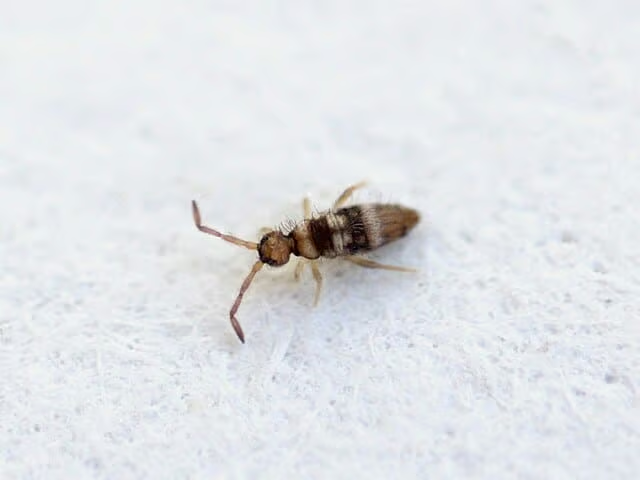
Springtails are one of the most frequently misidentified tiny pests in Southern Maine, primarily because the jumping behavior that gives them their name leads homeowners to assume they are dealing with fleas. They are not fleas, do not bite, and pose no health risk whatsoever. Springtails are moisture-dependent decomposers that belong outdoors in soil, leaf litter, and mulch, and they enter structures entirely because of moisture conditions inside or along the foundation that mimic their preferred outdoor habitat. In that sense they are one of the most reliable early warning signs of a moisture problem worth addressing, in older homes throughout Standish, Windham, Lyman, and Hollis. As an Associate Certified Entomologist (A.C.E.) with 16 years of experience in the region, accurate identification is always my starting point. Browse the occasional invaders pest library to see other species found in the area, or contact me for identification and treatment help.
What Are Springtails?
Springtails are not true insects. They belong to the class Collembola, a separate hexapod group that diverged from insects early in evolutionary history and shares the six-legged body plan but lacks wings and has several other distinguishing characteristics. They are among the most abundant and ecologically important soil arthropods on earth, playing a critical role in decomposing organic matter and cycling nutrients in soil ecosystems. The fact that they occasionally become a household nuisance is incidental to their biology rather than a reflection of any adaptation to indoor living.
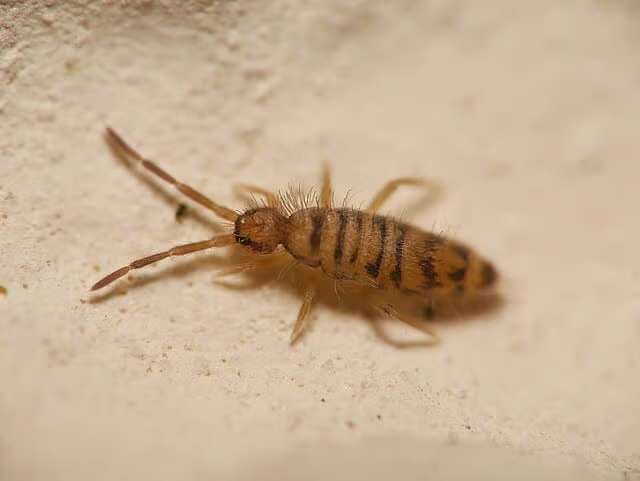
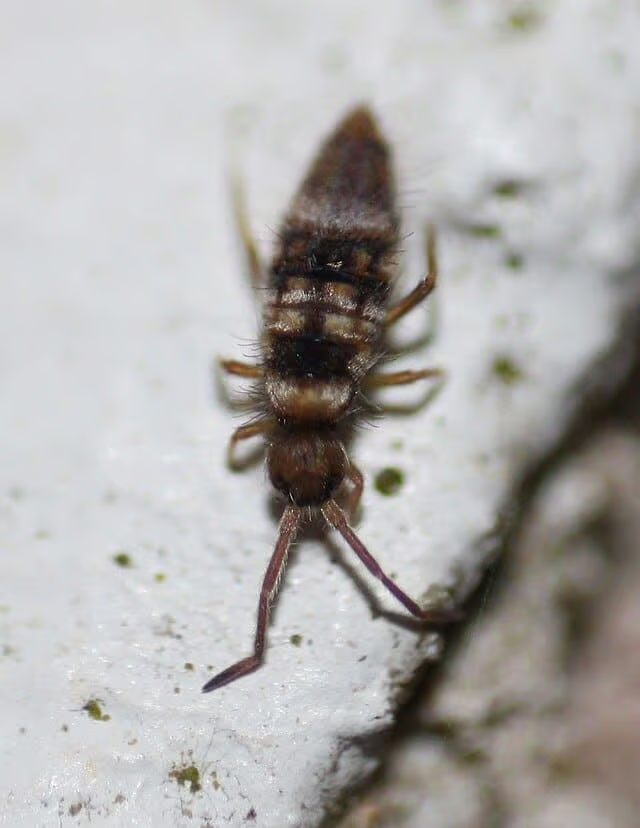
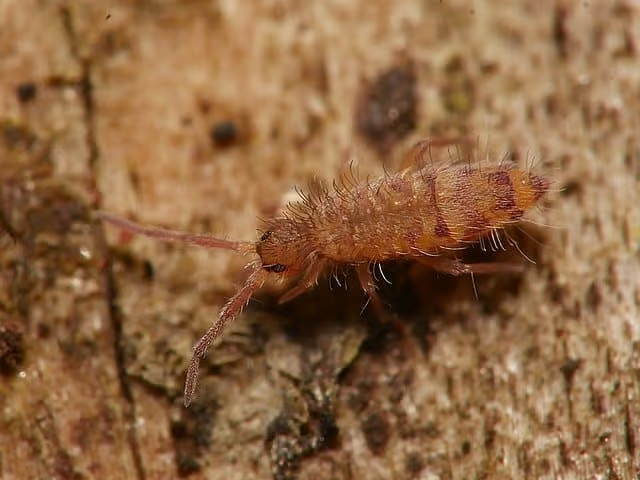
Most springtail species in Maine are one sixteenth to one eighth of an inch long, making them nearly invisible without close inspection. Color varies by species and ranges from white and pale gray to bluish-gray and dark gray to nearly black. Some of the more colorful species display mottled patterns of orange, yellow, and gray. All springtails share the defining anatomical feature that gives the group its name: a forked appendage called the furcula, folded and locked under the abdomen by a clasp-like structure called the tenaculum. When disturbed, the furcula releases and snaps downward against the substrate, propelling the animal several inches into the air in a rapid, uncontrolled jump. This is a purely defensive escape mechanism rather than a directed movement like a flea’s jump.
Springtails feed on fungi, algae, decaying plant material, and bacteria in moist soil and organic matter. They require high humidity to survive and desiccate quickly in dry conditions. According to the UMaine Extension springtails page, they are extremely common in Maine’s moist soil environments and occasionally enter buildings when outdoor conditions drive them toward moisture sources inside.
Signs of a Springtail Problem
Springtail presence indoors is almost always a direct indicator of moisture conditions that are worth identifying and addressing regardless of the springtails themselves.
Look for:
- Tiny pale gray, white, or dark jumping specks on bathroom tile, shower floors, kitchen counters, or basement walls, so small they are often first noticed as moving specks rather than as recognizable insects
- Large aggregations of springtails in bathtubs, sinks, or on wet floors, particularly after rain events or periods of high humidity
- Springtails concentrated around floor drains, pipe penetrations, and areas of visible water intrusion or condensation
- Jumping specks in or around potted houseplants with consistently wet soil, which can support breeding populations
- Activity along the interior of basement walls, particularly at floor level where condensation or seepage is occurring
- Springtails appearing on snow or soil surfaces outdoors around the foundation on warm winter days, which is normal outdoor behavior and indicates a healthy outdoor population near the structure
Springtail pressure indoors is most pronounced in Buxton and Casco properties with older basement waterproofing, bare soil crawl spaces, or persistent condensation issues during Maine’s humid summers.
Risks in Southern Maine
Springtails present essentially no practical risk. They do not bite, do not sting, do not transmit disease, cause no structural damage, and do not feed on household materials, fabrics, or stored food. They are entirely harmless to people, pets, and the structure itself.
The one meaningful concern is what their presence indicates rather than what they cause directly. A large springtail population indoors reliably points to elevated moisture levels, fungal growth, or both. Persistent moisture in a basement or crawl space that supports springtails is also the condition that promotes wood rot, mold growth, and the structural deterioration that follows. Addressing the moisture source is the productive response to a springtail problem, and doing so addresses both the springtails and the underlying conditions they are signaling.
In very wet conditions, such as a basement with persistent seepage or a crawl space with bare soil and no vapor barrier, springtails can establish and breed indoors rather than simply wandering in from outside. This distinction matters because a reproducing indoor population will not resolve with exclusion alone if the moisture source is not corrected. Treating for springtails with pesticides without addressing moisture is generally not a lasting solution for this reason.
Prevention Tips
Springtail prevention is almost entirely about moisture management, since without adequate moisture they cannot survive indoors:
- Run a dehumidifier in basements and crawl spaces during humid months to maintain relative humidity below 50 percent, which is the single most effective springtail prevention measure
- Install a vapor barrier over bare soil in crawl spaces to eliminate the primary moisture source that supports outdoor-originating springtail populations near the foundation
- Fix all plumbing leaks, address condensation on cold pipes, and eliminate any standing water in basements or crawl spaces
- Improve drainage around the foundation so that rainwater is directed away from the structure rather than pooling against the foundation walls
- Pull mulch, leaf litter, and dense ground cover back at least 12 inches from the foundation, as these moist organic materials are the primary outdoor habitat from which springtails enter
- Seal gaps around pipe penetrations, foundation sills, and crawl space access points to reduce entry from outdoor populations
- Allow potted houseplant soil to dry between waterings, as consistently wet soil provides indoor breeding habitat for springtails
- Ventilate bathrooms and kitchens with exhaust fans to reduce humidity in the areas where springtails most commonly appear
Commonly Confused With
Springtails are most frequently confused with fleas, and this is the misidentification that causes the most unnecessary alarm.
Fleas jump and are small and dark, which is what leads to the confusion, but there are several reliable distinguishing features. Fleas are laterally flattened (thin when viewed from the front), reddish-brown to dark brown, and have a characteristic rearward-facing comb of spines visible under magnification. Most importantly, fleas bite and leave itchy welts, while springtails do not bite under any circumstances. If small jumping insects are present but no one in the household is experiencing bites, fleas are essentially ruled out. Springtails are also found in wet areas around drains and sinks where fleas would not typically congregate.
Booklice are another tiny pale indoor pest found in similar damp conditions, but they do not jump. Booklice are soft-bodied, pale, and move with a running rather than jumping motion, and are found near paper, stored food, and mold rather than specifically around water and drains.
Fungus gnats are occasionally confused with springtails since both are tiny and associated with wet soil in houseplants, but fungus gnats are winged and fly rather than jump.
Professional Springtail Control in Southern Maine
For most springtail situations, moisture management is the complete solution and professional pesticide treatment is not necessary or cost-effective. When the moisture source has been identified and corrected and populations persist, or when the entry points are unclear and populations are large enough to be genuinely distressing, a professional assessment is the most productive approach.
As an A.C.E.-credentialed pest professional I can confirm identification, distinguish springtails from fleas with certainty, and assess the moisture conditions driving the indoor occurrence. Springtail problems that persist despite apparent moisture correction often have a hidden source, such as a slow plumbing leak inside a wall or inadequate crawl space ventilation, that a professional inspection is more likely to locate than a homeowner working from the visible surfaces. Learn more about my background and credentials on the about page, or visit the common pests service page for more detail. Contact me to schedule a free inspection.
Frequently Asked Questions
The most reliable single test is whether anyone in the household is being bitten. Fleas bite people and pets and leave itchy red welts, typically around the ankles and lower legs. Springtails do not bite under any circumstances. If small jumping insects are present but no one is experiencing bites, they are almost certainly springtails rather than fleas. Location also helps: springtails are typically found around wet areas, drains, and basement walls, while flea activity is more commonly associated with pet resting areas, furniture, and carpeting.
Yes, under the right conditions. Springtails require high humidity and a food source of fungi or decaying organic matter, and if both are present indoors, particularly in a very wet basement, crawl space with bare soil, or around a chronic plumbing leak, they can establish and reproduce rather than simply wandering in from outside. This is why addressing the moisture source is more important than treating the springtails themselves. A population that is reproducing indoors will persist regardless of pesticide application if the conditions supporting it are not corrected.
Yes and it is actually a sign of healthy outdoor soil ecology rather than a problem. Several springtail species, particularly the snow flea (Hypogastrura nivicola), are active at near-freezing temperatures and aggregate on snow surfaces on warm winter days when they become active briefly. Seeing them outdoors on snow is normal and unrelated to any indoor situation. They are not the same as the springtails found indoors around drains and damp basements, which are typically different species responding to moisture conditions rather than temperature.
Ready to Get Started?
If springtails are appearing in your bathroom, basement, or around drains in significant numbers and moisture management steps have not resolved the problem, reach out for a free inspection and I will assess the moisture conditions driving the issue and recommend the most practical approach.