

Deer Flies in Southern Maine:
Identification, Prevention, and Control
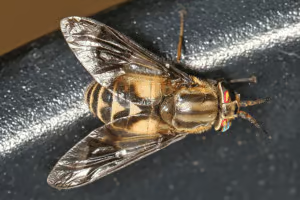
Deer flies are a genuine seasonal nuisance across Southern Maine, particularly in the wooded and lakeside towns of Cumberland and York Counties where marshy areas, wooded corridors, and high humidity create ideal breeding habitat. Their bite is sharp and immediate, their persistence is notable, and they are active through the warmest and most used months of outdoor season. Like black flies, deer flies are not a pest I treat. Their breeding occurs across large natural wetland and wooded areas well beyond the scope of any property-level treatment, and I would rather be direct about that than overpromise. What I can provide is accurate identification and the most effective personal protection guidance for our specific region. Browse the flies pest library to compare other species common in Maine, or contact me if you are unsure what species you are dealing with.
What Are Deer Flies?
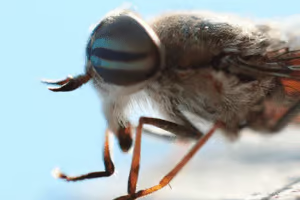
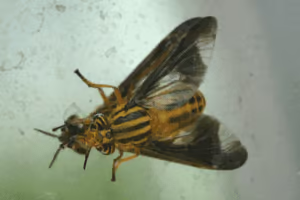
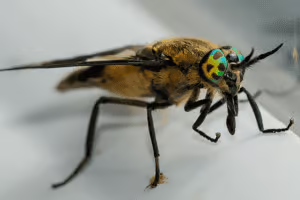
Deer flies belong to the genus Chrysops within the family Tabanidae, the same family as horse flies. Adults are medium-sized, ranging from about one-quarter to one-third inch in length, with a dark body and immediately distinctive large iridescent green or gold compound eyes patterned with dark markings. Their wings are clear with dark bands, which is one of the easiest visual identifiers. Females have powerful scissor-like mouthparts that slice through skin rather than piercing it, which is why the bite is felt immediately and is more painful than a mosquito bite.
Males feed only on nectar and do not bite. Females require a blood meal to develop eggs and are persistent hunters, tracking hosts by movement, carbon dioxide, and dark colors. They breed in muddy or marshy wooded areas, laying eggs on vegetation near water. The full life cycle takes approximately one year, with adults emerging in late spring and remaining active through August in most of Southern Maine. Browse the flies pest library to see other species found in the area.
According to the University of Maine Cooperative Extension, deer flies are common throughout Maine wherever suitable wetland and wooded breeding habitat exists, with peak adult activity running from late May through July in most of the state.
Signs of Deer Fly Activity
Deer fly activity is hard to miss once it starts. Look for:
- Persistent flies hovering around the head, shoulders, and upper body during daylight hours, particularly on calm warm days
- An immediate sharp pinching bite followed by a bleeding wound and itchy swelling, often on the scalp, neck, or upper arms
- Medium-sized dark flies with distinctively patterned iridescent eyes and banded wings landing on light-colored clothing or skin
- Activity peaking in mid-morning through late afternoon on warm, humid, calm days near wooded edges or wetland areas
- Flies that continue circling and attempting to land despite being waved off, often targeting moving targets
In Southern Maine towns such as Standish, Windham, and Waterboro where wooded lots, ponds, and wetland edges are abundant, deer fly pressure is typically highest in June and July.
Risks in Southern Maine
Deer flies in Maine do not transmit diseases to humans. Their primary impact is the immediate pain of the bite, which is more intense than most other biting fly species due to their scissor-like cutting mouthparts, followed by itchy welts that can persist for several days. People with sensitivities can experience more pronounced allergic reactions, and heavily bitten areas can develop secondary infections from scratching.
For people who spend significant time outdoors for work, recreation, or property maintenance in wooded areas of Cumberland and York Counties, deer flies can make certain tasks genuinely difficult during peak season in June and July.
Prevention Tips
Since professional treatment is not a practical option for deer flies, personal protection and landscape management are the tools that actually help:
- Wear long sleeves, long pants, and light-colored clothing when working or recreating in wooded or marshy areas during June and July
- Apply EPA-approved repellents containing DEET, picaridin, or oil of lemon eucalyptus to exposed skin and clothing
- Wear a hat, ideally with a brim, since deer flies consistently target the head and upper body
- Run fans on outdoor work areas and porches since deer flies are disrupted by air movement
- Avoid peak biting times in mid-morning through late afternoon on calm, warm, humid days
- Clear brush and dense vegetation at least 20 to 30 feet from frequently used outdoor areas to reduce the sheltered, low-wind conditions deer flies prefer
- Install or maintain tight screens on windows and doors to keep any that wander close to the structure from entering
Commonly Confused With
Deer flies are most often confused with horse flies, which are significantly larger, generally darker without the patterned wings, and deliver an even more painful bite. Black flies are much smaller, dark and humpbacked without the iridescent eyes or wing banding, and breed in fast-moving streams rather than marshy wooded areas. Mosquitoes are slender with long legs, make an audible whine in flight, and are most active at dusk and dawn rather than during peak daylight hours. The patterned iridescent eyes and dark-banded wings of deer flies are their most reliable identifiers.
About Deer Fly Control in Southern Maine
Deer flies breed across wetlands, stream corridors, and wooded areas throughout the region, well beyond the reach of any property-level treatment. Because their breeding habitat spans the broader landscape, targeted pest control is not an effective solution for this species. Personal protection and the prevention steps above are the most practical tools available during peak season. If you are encountering large biting flies and are not certain whether you are dealing with deer flies or a species that can be treated, I am happy to help with identification. My common pests control services cover a wide range of fly species that do respond to professional treatment. Contact me any time.
Frequently Asked Questions
Proximity to wetlands, ponds, marshy areas, and wooded corridors is the primary driver. Deer flies breed in moist soil and vegetation near standing or slow-moving water, and their flight range from breeding areas is considerable. Properties along pond edges, in low-lying wooded areas, or adjacent to conservation land in towns like Standish, Windham, or Waterboro tend to experience consistent pressure during June and July regardless of what is done on the property itself.
Landscape management helps at the margins. Clearing brush and dense vegetation from outdoor living areas reduces the calm, sheltered conditions deer flies prefer and makes fan-based deterrents more effective. Eliminating any standing water on the property reduces breeding habitat slightly, though the more significant breeding areas are typically offsite. Personal protection with repellent and appropriate clothing during peak hours is the most reliably effective approach.
Size and wing pattern are the fastest clues. Deer flies are smaller, about one-quarter to one-third inch, with distinctively patterned iridescent eyes and clear wings marked with dark bands. Horse flies are noticeably larger, often up to an inch or more, generally darker without the wing banding, and their bite is even more forceful. Both are daytime biters active near wooded and wetland areas in summer.
Ready to Get Started?
If you are dealing with flies around your property and are not sure what species you have, reach out and I can help with identification.