

Chipmunks in Southern Maine:
Identification, Prevention, and Control
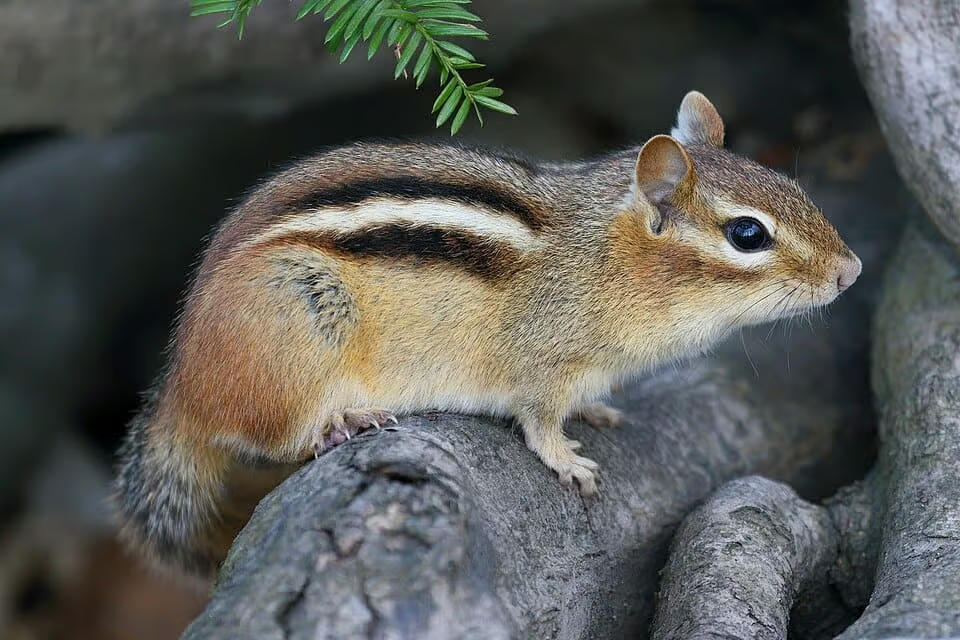
Chipmunks are a common sight throughout Southern Maine, especially in the wooded and suburban neighborhoods of Biddeford and Saco. These small striped rodents frequently dig burrows near foundations, gardens, and patios while seeking food and shelter in older homes. If you notice small holes in the soil or daytime chattering near your house, get your free inspection today.
What Are Chipmunks?
Chipmunks, also known as eastern chipmunks (Tamias striatus), are small ground-dwelling members of the squirrel family. They have reddish-brown fur with five dark stripes running down their back and sides, white stripes above and below the eyes, and a bushy tail. Adults measure about 5 to 6 inches long with an additional 3 to 4 inch tail.
They thrive in our humid coastal climate near forest edges, stone walls, and suburban yards where they cache nuts and seeds in underground burrows. Diurnal and highly active during the day, they are common throughout central and southern Maine. They are one of several nuisance wildlife species commonly found near Southern Maine homes and businesses, often sharing territory with other burrowing and den-seeking animals that cause similar structural problems.
According to the Maine Department of Inland Fisheries and Wildlife they are one of our most recognizable small mammals.
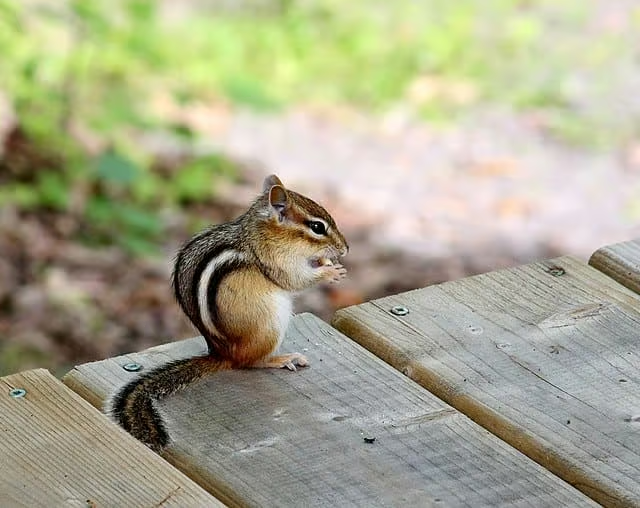
Signs of Activity
These clues usually appear first around foundations, gardens, patios, or along the edges of buildings.
- Small 2-inch diameter holes in soil or mulch with no dirt mound
- Tiny rice-sized droppings scattered near burrows or in garages and basements
- Daytime chipping or chattering sounds near the house
- Chewed flower bulbs, seeds, or young garden plants
- Small tunnels or runways under decks, steps, or retaining walls
- Caches of seeds or nuts in wall voids, crawl spaces, or basements
- Gnaw marks on plastic pipes, wiring, or wooden trim near ground level
- Burrows under sidewalks, driveways, or foundation cracks
In Lyman and Hollis homes these signs often increase in spring and fall when chipmunks are actively foraging and storing food.
Risks in Southern Maine
In our damp, wooded region chipmunks can undermine foundations and patios through burrowing, chew through wiring or irrigation lines, and contaminate basements or crawl spaces with droppings.
Older coastal homes with stone foundations and heavy mulch are especially vulnerable because burrows often go unnoticed until damage appears. While they rarely transmit diseases to people, their activity can attract fleas or ticks and cause costly repairs if left unchecked. My low-impact approach follows best practices from the Maine DACF Got Pests – Chipmunks page and focuses on safe, targeted solutions for local conditions. Chipmunks are often confused with gray squirrels, which cause similar attic and wall damage but nest above ground rather than burrowing, or with woodchucks, which also dig near foundations but are much larger and cause far more extensive soil displacement.
Prevention Tips
Simple exclusion and habitat modification steps protect your home in Southern Maine.
- Seal foundation cracks and gaps larger than ½ inch with concrete or metal flashing
- Cover garden beds and flower bulbs with ¼-inch hardware cloth
- Remove woodpiles, rock piles, and dense ground cover near the house
- Store bird seed, pet food, and garbage in metal rodent-proof containers
- Trim shrubs and vegetation at least 12 inches away from foundations
- Keep mulch and leaf litter pulled back from the base of the house
- Install metal flashing around the bottom of decks and steps
- Inspect and repair damaged retaining walls or patio edges every season
These steps prove especially effective in Casco and Raymond homes with wooded edges and older landscaping.
Professional Treatment
When prevention is not enough I provide targeted, low-impact control. I locate active burrows and entry points around foundations and gardens. Treatments are customized for each property. A single family home in Biddeford may need different focus than a business in Saco. I handle the entire process myself from start to finish.
Learn more about my background and methods on the About page. Contact me today to schedule your free inspection on the Contact page. If chipmunks are burrowing near your foundation or getting into your home, my nuisance wildlife control services in Southern Maine provide humane, targeted removal and exclusion to protect your property.
Frequently Asked Questions
They squeeze through small cracks and gaps as tiny as ½ inch around foundations, utility lines, doors, and windows.
Yes, they are native wildlife. I always follow Maine regulations and prioritize humane exclusion and relocation whenever possible and permitted.
Rarely once they have established burrows and food caches near or inside your home. Prompt exclusion is the most effective way to encourage them to move out permanently.

Related Resources
- Read the full species profile from the Maine Department of Inland Fisheries and Wildlife
- Find practical identification and control tips on the Maine DACF Got Pests – Chipmunks page
Why Choose Precision Pest Control?
Your local solo specialist, I offer customized, low-impact pest control fitted to Southern Maine challenges for homes and businesses. Protect your property today. Reach out for your free inspection.