

Boxelder Bugs in Southern Maine:
Identification, Prevention, and Control
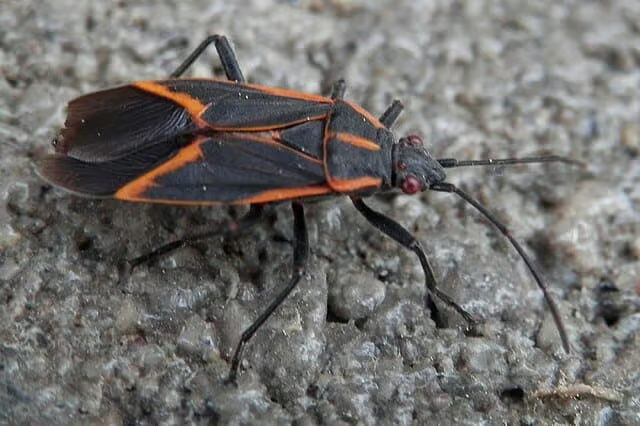
Boxelder bugs are one of the most recognizable fall nuisance pests in Southern Maine, and one of the most commonly misunderstood. The sight of hundreds of black and red insects aggregating on the sunny south-facing wall of a house in September or October is alarming to most homeowners, but boxelder bugs are entirely harmless to the structure, pose no health risk, and do not breed indoors. The problem is purely one of numbers and the staining they cause when crushed. Properties with boxelder trees, silver maples, or ash trees nearby see the heaviest activity, particularly in Windham, Standish, Scarborough, and Saco. As an Associate Certified Entomologist (A.C.E.) with 16 years of experience in the region, accurate identification is always my starting point. Browse the occasional invaders pest library to see other species found in the area, or contact me for identification and treatment help.
What Are Boxelder Bugs?
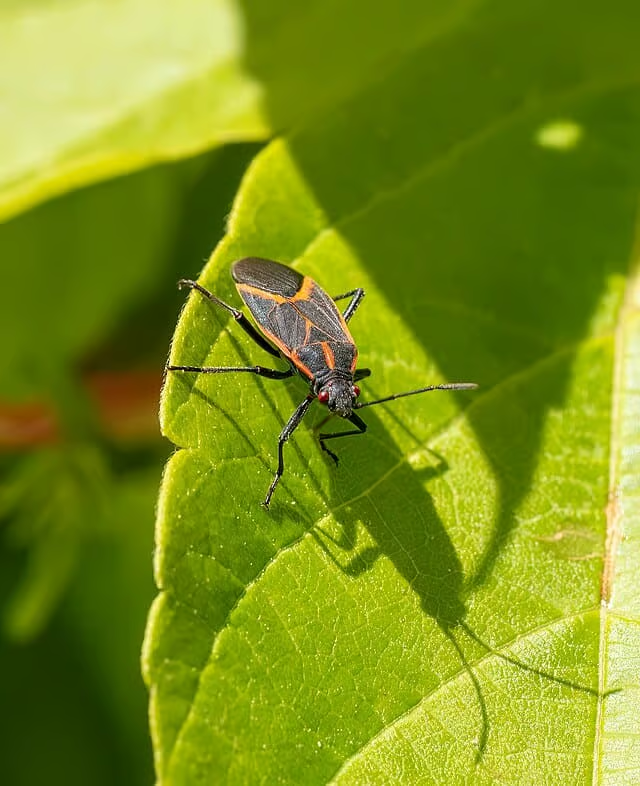
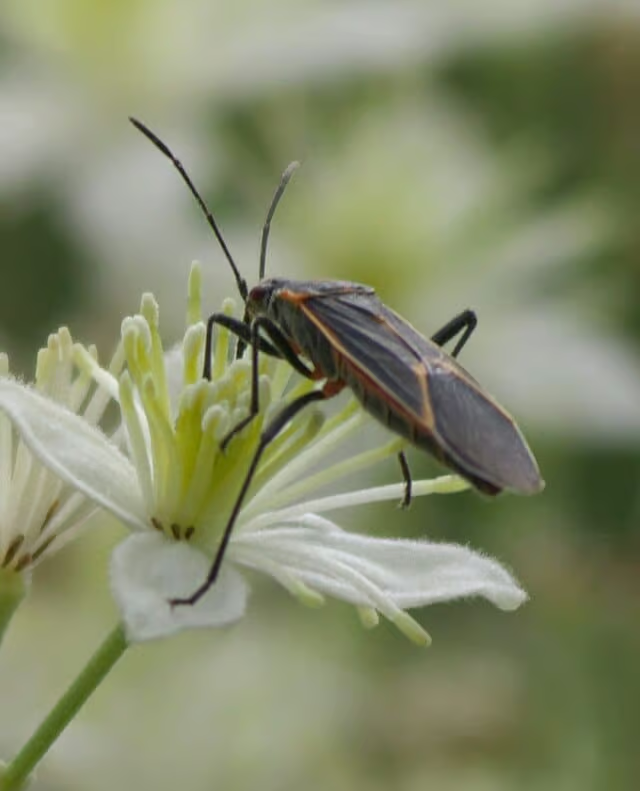
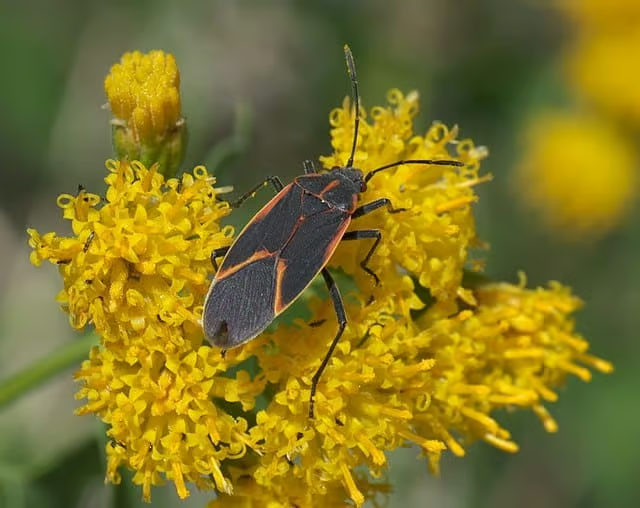
Boxelder bugs (Boisea trivittata) are true bugs in the order Hemiptera, related to stink bugs and seed bugs rather than to beetles despite their similar appearance. Adults are approximately half an inch long with a flat, elongated body that is black with three distinctive red-orange stripes on the pronotum (the plate behind the head) and red-orange coloring along the edges of the wings. The wings fold flat over the back at rest, forming a characteristic red X pattern. The underside of the abdomen is also red-orange.
Nymphs are bright red with black legs and antennae and no functional wings. Early instars are almost entirely red, developing dark markings as they mature through five nymphal stages. The vivid red coloring of nymphs causes frequent misidentification, as detailed in the Commonly Confused With section below.
Boxelder bugs feed primarily on the seeds of boxelder trees (Acer negundo), with silver maple and ash serving as secondary hosts. They complete one to two generations per year in Maine, feeding and developing on host trees through summer before aggregating in fall to seek overwintering sites. According to the Maine DACF Got Pests boxelder bug page, populations tend to be largest in years following hot, dry summers that favor seed production on host trees.
Signs of Boxelder Bug Activity
Boxelder bug problems are almost always an outdoor aggregation situation before they become an indoor one. The sequence is consistent: large numbers on the exterior, then smaller numbers finding their way inside through gaps.
Look for:
- Large aggregations of adult bugs on south and west-facing exterior walls, window frames, and door frames on warm fall days, typically from late August through October
- Bright red nymphs clustered on or near host trees (boxelder, silver maple, or ash) through summer and early fall
- Adults crawling on interior windowsills, door frames, and walls, particularly on warm late-winter or early spring days as they attempt to move back outdoors
- Reddish-orange staining on walls, curtains, window frames, and light-colored surfaces where bugs have been crushed or have released defensive fluid
- Small dark droppings on sills and surfaces where bugs have been congregating
- Bugs emerging from wall voids, baseboards, and around window trim on warm winter days
Boxelder bug pressure is generally heavier in properties near mature female boxelder trees, which produce the seed clusters the bugs feed on throughout summer. Properties in Buxton and Hollis with older established shade trees close to south-facing walls tend to see the most consistent fall aggregation.
Risks in Southern Maine
Boxelder bugs do not bite people, do not sting, do not damage structures, and do not reproduce indoors. They cannot survive the winter inside a heated living space without access to host plant material to feed on, and any that make it into the living area will die on their own within days to weeks.
The practical risks are limited to two things: the staining they cause and the sheer nuisance of large numbers indoors. When crushed, boxelder bugs release a reddish-orange fluid from their defensive glands that stains fabric, curtains, and light-colored walls and is difficult to remove. Vacuuming rather than crushing is the correct indoor response for this reason. Some individuals with sensitivities report mild skin irritation from handling them, but they are not venomous and do not inject anything.
One behavioral detail worth understanding: boxelder bugs that have found entry into a wall void release aggregation pheromones that attract additional bugs from outside. A small initial entry can therefore grow larger over time during the fall aggregation period, which is why sealing entry points before the aggregation begins in late August is more effective than addressing them after bugs are already inside.
Prevention Tips
Prevention for boxelder bugs is almost entirely about exterior sealing and reducing the conditions that bring large numbers close to the structure:
- Seal all gaps around window frames, door frames, utility penetrations, and siding with quality silicone or silicone-latex caulk before late August, when fall aggregation typically begins in southern Maine
- Install and maintain tight-fitting door sweeps on all exterior doors
- Repair or replace damaged window and door screens
- Seal gaps around pipes, cables, and wires where they enter the structure, as these are common entry points for bugs moving from exterior walls into wall voids
- If female boxelder trees (those producing seed clusters) are growing within 50 feet of the structure, removal or replacement with a male or non-seed-bearing species is the most effective long-term reduction measure
- Vacuum aggregating bugs from exterior walls using a shop vac rather than disturbing them by other means, and dispose of the bag away from the structure
- Reduce exterior lighting near entry points on fall evenings, as lights attract boxelder bugs moving in search of entry sites
Commonly Confused With
Boxelder bugs are occasionally confused with several other species:
Brown marmorated stink bugs share the same overwintering behavior and are found aggregating on exterior walls at the same time of year. Stink bugs are shield-shaped and mottled brown with banded antennae and abdominal edges, with none of the red-orange coloring of boxelder bugs. Both species are nuisance-only overwintering pests handled the same way.
Western conifer seed bugs are another overwintering species found on exterior walls in fall. They are larger than boxelder bugs, uniformly brown, and have the distinctive leaf-like flattening on the hind legs that distinguishes them from all other species. Western conifer seed bugs are solitary rather than aggregating in large numbers like boxelder bugs.
Boxelder bug nymphs are bright red and are frequently mistaken for other insects, including red velvet mites, clover mites, and occasionally spider mite infestations. The key distinguishing feature of nymphs is the black legs and antennae contrasting with the vivid red body, and their elongated true bug body shape rather than the round body of mites.
Professional Boxelder Bug Control in Southern Maine
For most boxelder bug situations, a combination of thorough exterior sealing and vacuuming of any bugs that make it indoors is the appropriate response and does not require professional treatment. When populations are very large, entry points are difficult to locate and seal, or the aggregation is concentrated in a way that makes DIY exclusion impractical, a perimeter treatment applied before the fall aggregation period begins can provide meaningful reduction. Treatment after bugs are already inside wall voids is generally not recommended, as it does not eliminate the entry point problem and dead bugs inside walls can attract secondary pests.
As an A.C.E.-credentialed pest professional I can identify whether what you are seeing is boxelder bugs or one of the species they are confused with, assess the entry points driving the indoor occurrence, and recommend the most targeted and cost-effective response for your specific situation. Learn more about my background and credentials on the about page, or visit the common pests service page for more detail. Contact me to schedule a free inspection.
Frequently Asked Questions
No. Boxelder bugs do not feed on structural materials, furniture, fabric, or stored food while inside a home. They are seeking shelter rather than resources, and without access to their host plant seeds they cannot sustain themselves indoors through winter. The only damage they cause is the reddish staining from their defensive fluid when crushed, which is why vacuuming rather than swatting is the right approach.
Boxelder bugs aggregate on sun-warmed south and west-facing surfaces in fall as temperatures drop and they search for overwintering sites. The aggregation pheromones released by the first arrivals attract additional bugs, which is why what starts as a modest number can grow quickly once the behavior gets underway. The population size reflects how many bugs developed on nearby host trees through the summer rather than anything specific about the structure itself.
Exterior perimeter applications can reduce the number entering the structure, but the effect is temporary because sunlight breaks down most residual insecticides quickly and the treatments need to be timed and repeated to be effective through the full aggregation period. Exclusion by sealing entry points is the more durable solution. If the population is large enough that exclusion alone is not practical, a targeted exterior application before the aggregation peaks is the appropriate professional response.
Ready to Get Started?
If boxelder bugs are getting into your home in large numbers or you are dealing with staining from indoor aggregations, reach out for a free inspection and I will identify the entry points and recommend the most practical approach for your situation.