

Booklice in Southern Maine:
Identification, Prevention, and Control
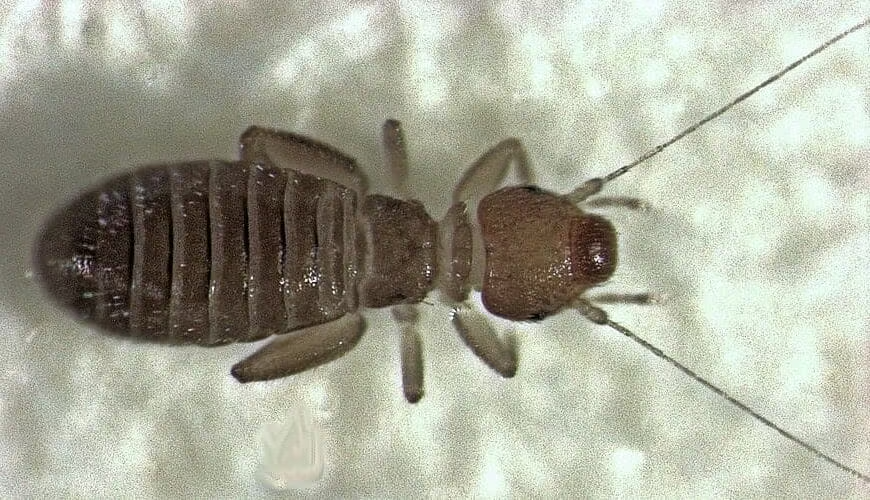
Booklice are one of the most useful indicator pests in Southern Maine homes precisely because they cannot survive without mold. Where booklice appear in significant numbers, active mold growth is almost always present nearby, even if it is not yet visible. This makes them a more useful early warning signal than a direct threat: the booklice themselves are entirely harmless, but the mold conditions they indicate are worth locating and correcting. They are capable of establishing and reproducing indoors in damp, poorly ventilated spaces, and in older homes throughout Biddeford, Saco, Standish, and Windham with unmanaged basement humidity, they can become a persistent presence without any chemical treatment being effective as a lasting solution. As an Associate Certified Entomologist (A.C.E.) with 16 years of experience in the region, accurate identification is always my starting point. Browse the occasional invaders pest library to see other species found in the area, or contact me for identification and treatment help.
What Are Booklice?
Booklice are soft-bodied insects in the order Psocoptera, a primitive insect order whose members are sometimes called psocids. Despite the name, they are not true lice, do not parasitize people or animals, and have no relationship to head lice or body lice beyond a superficial resemblance in size and body shape. The name derives from the habit of some species of feeding on the mold that grows in the paste used to bind old books and in wallpaper adhesive.
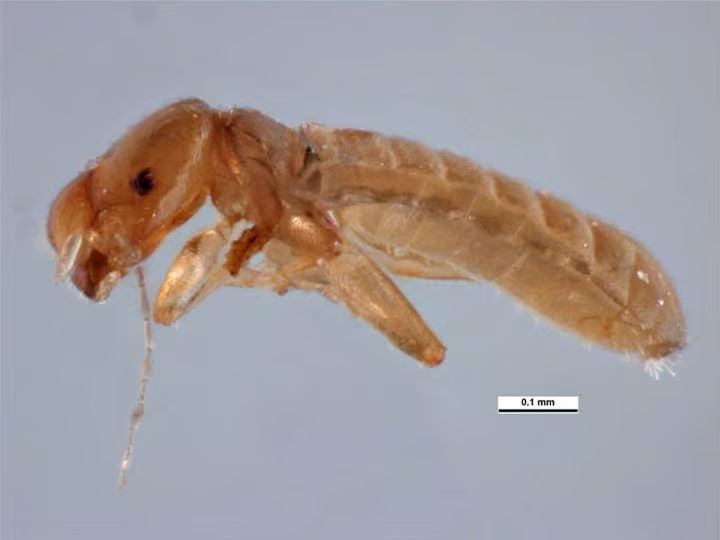
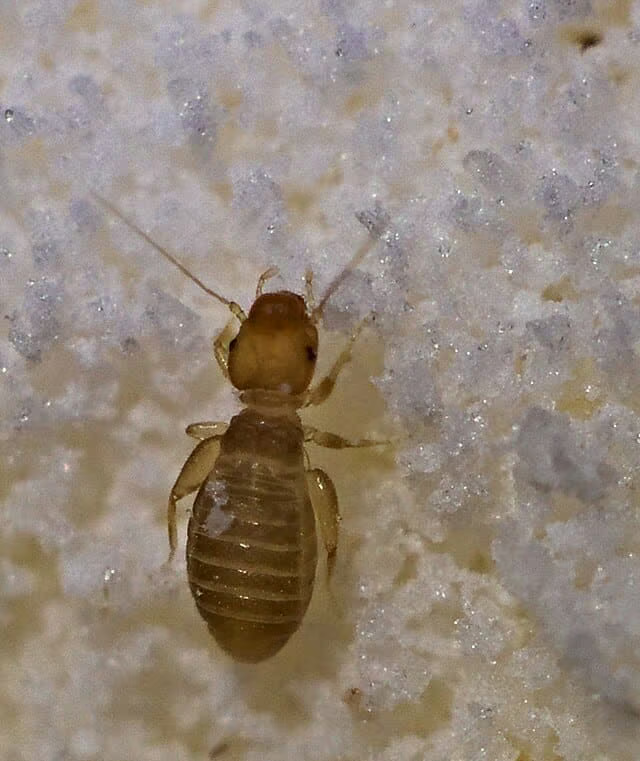
Most booklice encountered indoors are one to two millimeters long, pale gray to yellowish or translucent, with a soft body, relatively large head, long antennae, and prominent compound eyes. Wings are reduced or absent in the indoor species most commonly encountered, particularly Liposcelis bostrychophila, the most common household species in North America. The body is slightly flattened, which allows them to move easily through the small spaces between papers, book pages, and stored materials.
Booklice feed on mold, fungi, algae, pollen, and the starchy organic materials that support mold growth, including the paste in old book bindings, wallpaper adhesive, and stored grain products. They require relative humidity above approximately 60 percent to survive and reproduce, and they desiccate rapidly in dry conditions. This tight dependence on moisture and mold is what makes them a reliable moisture indicator. According to the UMaine Extension booklice page, lowering relative humidity below 50 percent is the primary and most effective control measure for booklice infestations.
Signs of a Booklice Infestation
Booklice are small enough to be easily overlooked, and a population can be substantial before it becomes obvious.
Look for:
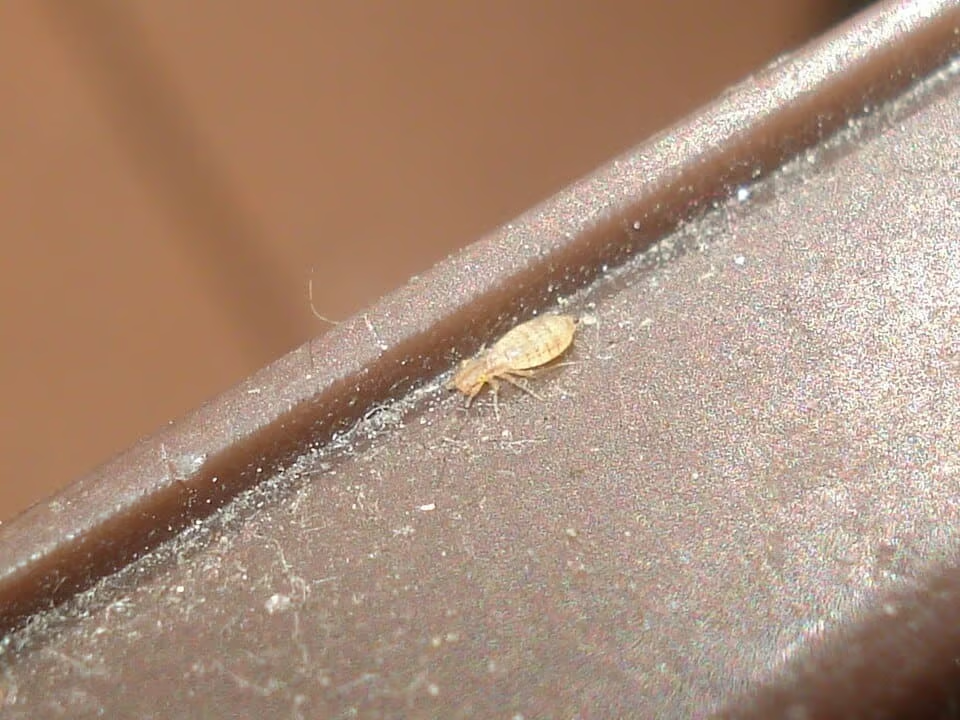
- Tiny pale gray or yellowish specks moving slowly on walls, ceilings, window sills, book spines, or the surfaces of stored paper products, particularly in humid areas
- Concentrations of booklice on or inside cardboard boxes, behind wallpaper, along the edges of books stored in damp conditions, and in stored grain or flour products
- Booklice found on bathroom walls, behind bathroom fixtures, or on the surfaces of shower enclosures, where persistent moisture and surface mold support them
- Populations in kitchen areas around flour, cereals, and other stored dry goods, particularly in packages that have been open or are not well-sealed
- A general pattern of higher numbers during Maine’s humid summer months and after extended periods of elevated indoor humidity
- Populations concentrated in basement storage areas with cardboard boxes, old books, or other paper goods where humidity is not actively managed
Booklice in pantry products represent a slightly different situation from wall-surface or basement populations. In stored grain and flour they indicate either that the product was already infested when purchased or that storage conditions are humid enough to support mold growth in the pantry itself.
Risks in Southern Maine
Booklice are one of the least harmful occasional invaders on the pest library. They do not bite, do not sting, do not transmit disease, and the direct damage they cause to household materials is minimal. Their feeding on book bindings, wallpaper paste, and paper goods is so light that UMaine Extension describes it as insignificant in practical terms.
The meaningful risk is indirect: a booklice population is a reliable indicator of active mold growth, and that mold is the actual concern. Mold in a basement, crawl space, or storage area contributes to indoor air quality problems, can cause respiratory symptoms in sensitive individuals, and indicates moisture conditions that also accelerate wood deterioration in structural elements. Treating the booklice without addressing the underlying mold and moisture is not a lasting solution and misses the more important problem the booklice are pointing to.
Booklice in pantry products should prompt disposal of the affected product and inspection of adjacent stored foods for moisture damage or mold.
Prevention Tips
Booklice prevention is moisture management combined with elimination of the mold food source:
- Run a dehumidifier in basements and crawl spaces during humid months to maintain relative humidity below 50 percent, which is the single most effective booklice prevention measure
- Ventilate bathrooms with exhaust fans during and after showering to reduce surface moisture that supports the mold booklice feed on
- Address any plumbing leaks, condensation on cold surfaces, or water intrusion that maintains elevated humidity in storage or living areas
- Store books, documents, and paper goods in sealed plastic bins rather than cardboard boxes in any space that experiences elevated humidity
- Store pantry dry goods in sealed airtight containers rather than in the original packaging once opened
- Clean bathroom surfaces, grout lines, and any visible mold with appropriate cleaners and address the moisture source preventing the surface from drying between uses
- Vacuum basement and storage areas regularly, paying attention to corners, under shelving, and behind stored items where mold and booklice accumulate
Commonly Confused With
Booklice are most commonly confused with two species, and one of those confusions is significantly more consequential than the other.
Bed bug nymphs are the most important misidentification to address. Early instar bed bug nymphs are tiny, pale, soft-bodied, and can superficially resemble booklice to the unaided eye. The distinction matters enormously because the management response for bed bugs is entirely different from the response for booklice. The key distinguishing features are feeding behavior and location: booklice do not bite and are found on walls, books, and paper surfaces in humid areas; bed bug nymphs bite and are found in mattress seams, box spring folds, and furniture in sleeping areas. If tiny pale insects are found near the bed and biting is occurring, professional identification is warranted before drawing any conclusions.
Springtails are another tiny pale arthropod found in similarly damp conditions and are sometimes confused with booklice. Springtails are distinguished by their jumping behavior when disturbed, while booklice move slowly by running. Springtails are also found specifically in wet areas around drains and wet surfaces, while booklice are more broadly distributed in humid spaces with mold and paper.
Professional Booklice Control in Southern Maine
For most booklice situations, moisture reduction and mold removal are the complete solution, and chemical treatment is rarely warranted or effective as a primary approach. Booklice that lose their food source and humidity die off quickly. When populations are large, widespread, or persist despite apparent moisture correction, a professional assessment is the most productive next step.
As an A.C.E.-credentialed pest professional I can confirm identification, distinguish booklice from bed bug nymphs with certainty, assess the humidity and mold conditions driving the population, and identify hidden moisture sources that may not be obvious from surface inspection. Booklice problems that persist after visible moisture correction often have a hidden source, such as slow condensation inside a wall cavity or inadequate crawl space ventilation, that a professional inspection is more likely to find. Learn more about my background and credentials on the about page, or visit the common pests service page for more detail. Contact me to schedule a free inspection.
Frequently Asked Questions
No. Despite the name they are not related to head lice or body lice and have nothing in common with them beyond small size and a similar body shape at first glance. True lice are parasites that feed on blood or skin debris from a living host. Booklice feed on mold and starchy organic materials and have no interest in people or animals. They do not bite, do not infest hair or clothing in the way true lice do, and finding them in your home has no implications for personal hygiene.
Possibly, though several small pantry pests can appear in flour and similar dry goods including psocids, grain mites, and various stored product beetles and weevils. Booklice in a pantry product indicate that either the product was already infested when purchased, or that storage conditions in your pantry are humid enough to support mold growth in the food. Either way, the affected product should be discarded and remaining dry goods transferred to sealed airtight containers. If the problem recurs, a dehumidifier or improved pantry ventilation may be needed.
Bathroom surfaces that stay damp between uses develop thin films of mold and algae that booklice feed on, even when the mold is not visible. Grout lines, shower walls, behind fixtures, and any surface that does not dry fully between uses are prime booklice habitat. Improving bathroom ventilation with a properly sized exhaust fan that runs during and for 20 minutes after showering, combined with wiping down surfaces that retain moisture, addresses the underlying condition rather than just the booklice.
Ready to Get Started?
If booklice are appearing in significant numbers in your home, or if you are uncertain whether what you are seeing is booklice or something more concerning, reach out for a free inspection and I will confirm the identification and assess the moisture conditions driving the population.