

Bed Bugs in Southern Maine:
Identification, Prevention, and Control
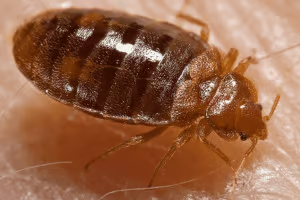
Bed bugs are one of the most challenging pests I treat, and one of the most stressful for homeowners and property managers to deal with. I started my pest control career as a bed bug technician, so this is a pest I know thoroughly from biology through treatment. They are found throughout Cumberland and York Counties, particularly in areas with high travel activity, short-term rentals, and multi-unit housing. As an Associate Certified Entomologist (A.C.E.), accurate identification before any treatment begins is where I always start. Browse the bed bug pest library for a full overview of bed bug species found in Southern Maine, or contact me if you need a professional assessment.
What Are Bed Bugs?
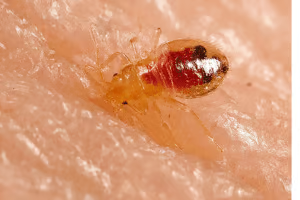
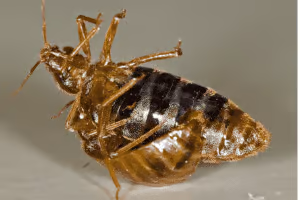
Bed bugs (Cimex lectularius) are small, flat, oval, wingless insects that feed exclusively on blood. Adults are reddish-brown, about 1/4 inch long, and roughly the size of an apple seed when unfed. After feeding they become darker red and visibly engorged. Nymphs go through five instars before reaching adulthood and must take a blood meal before each molt, ranging from yellowish-white when unfed to brighter red after feeding.
According to the University of Maine Cooperative Extension, bed bugs can live from several months to over a year without feeding, which is part of what makes them so difficult to eliminate. They hide during the day in tight cracks and crevices close to their host and emerge at night to feed, injecting an anticoagulant and anesthetic through their saliva so the bite is usually painless during feeding. Females can lay up to 500 eggs in a lifetime, and at room temperature eggs hatch within 5 to 10 days. The Penn State Extension IPM guide on bed bugs notes that infestations in apartment buildings can move both vertically and horizontally between units through shared walls and plumbing chases, which is why prompt treatment in multi-unit housing is critical.
Signs of a Bed Bug Infestation
- Small reddish-brown or black spots on sheets, mattress seams, or box springs from fecal matter
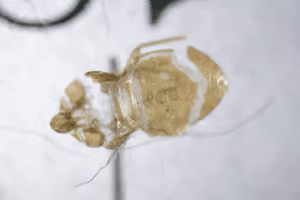
- Shed exoskeletons in mattress seams, cracks in the bed frame, or behind baseboards
- A sweet musty odor in rooms with a heavy infestation
- Itchy red bite marks appearing in lines or clusters on exposed skin, often on arms, shoulders, neck, or face
- Live bugs or blood smears on pillowcases or sheets after feeding
- Tiny white oval eggs roughly 1/16 inch long in cracks and crevices near sleeping areas
Risks in Southern Maine
Bed bugs are not known to transmit disease according to the Penn State Extension IPM guide on bed bugs, but an infestation has real consequences for health and wellbeing:
- Bites cause itchy welts in most people. Some individuals develop allergic reactions including significant swelling. Secondary bacterial infections can result from scratching.
- Sleep disruption and anxiety are well documented effects of living with a bed bug infestation. The psychological toll is real and should not be underestimated.
- In multi-unit housing including apartments, vacation rentals, and hotels, infestations spread quickly to neighboring units through shared walls and plumbing chases.
- Fecal spotting and shed skins contaminate mattresses, furniture, and clothing, sometimes requiring disposal of heavily infested items.
Prevention Tips
- Inspect all second-hand furniture, mattresses, and upholstered items before bringing them indoors
- Use fully zippered mattress and box spring encasements to eliminate the primary harborage area and make monitoring easier
- When returning from travel, inspect luggage thoroughly and wash all clothing on high heat immediately
- Reduce clutter in sleeping areas, especially along baseboards and under beds
- In multi-unit housing, report any signs of activity immediately to prevent spread to neighboring units
- If you manage short-term rentals or vacation properties in Southern Maine, consider a year-round protection plan that includes regular inspections between guest turnovers
Commonly Confused With
Bed bugs are most often confused with bat bugs, which are nearly identical in appearance and require magnification to distinguish reliably. The key difference is host preference. Bed bugs feed primarily on humans while bat bugs prefer bats and only bite people when their bat hosts are gone. If bat bugs are present the underlying bat roost needs to be addressed first. I can identify which species you are dealing with and refer you to a licensed wildlife operator for the bat removal component if needed.
Bed bugs are also occasionally confused with carpet beetles, fleas, and ticks. Carpet beetles have a rounded patterned shell and do not bite. Fleas are much smaller and jump. Ticks have eight legs rather than six. If you are unsure what you are dealing with, professional identification before any treatment is the right first step.
Professional Bed Bug Control in Southern Maine
Effective bed bug treatment requires a thorough inspection to locate all harborage sites, followed by a combination of steam treatment and targeted insecticide application. Steam penetrates mattress seams, cracks, and crevices to kill bugs and eggs on contact. Insecticide provides residual protection in areas where steam cannot reach. I do not use heat treatment. Treatment typically requires at least two visits spaced two to three weeks apart to catch eggs that hatch after the first treatment. I handle every job personally from inspection through follow-up and stay on it until the infestation is fully resolved. Learn more about my bed bug control services or contact me to schedule a free consultation.
Frequently Asked Questions
Look for the combination of signs rather than any one indicator. Dark fecal spots on mattress seams and box springs, shed exoskeletons in cracks near the bed, and bite marks appearing in lines or clusters on exposed skin are the most reliable indicators. Live bugs are about the size of an apple seed and flat when unfed. If you find something and are not sure, I can identify it for you at no charge before any treatment begins.
No. Bed bugs in the United States are not known to transmit any diseases. Their primary health impacts are itchy bite reactions, potential secondary skin infections from scratching, and significant sleep disruption and anxiety from living with an active infestation.
Most treatments require a minimum of two visits spaced two to three weeks apart, since insecticides do not reliably kill eggs and newly hatched nymphs need to be addressed after the first treatment. Full resolution typically takes 30 to 45 days depending on the size of the infestation, the complexity of the property, and how much preparation the occupants complete before treatment. I follow up after each visit to confirm the infestation is fully resolved.
Ready to Get Started?
I serve homeowners and businesses throughout Cumberland and York Counties. If you suspect bed bugs in your home or rental property, reach out for a free consultation.