

Acrobat Ants in Southern Maine:
Identification, Prevention, and Control
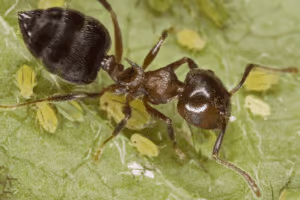
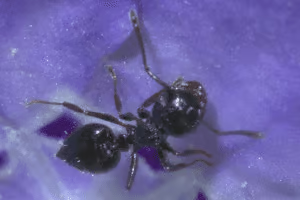
Acrobat ants are a common but often overlooked ant species in Southern Maine, particularly in wooded neighborhoods and properties with older or moisture-damaged wood. They get their name from a distinctive defensive behavior: when disturbed, workers raise their heart-shaped abdomen up over their thorax and head. As an Associate Certified Entomologist (A.C.E.), I encounter these regularly across Cumberland and York Counties, and correct identification matters before any treatment begins. Browse the ants pest library for a full overview of ant species found in Southern Maine, or contact me if you’d like a professional assessment.
What Are Acrobat Ants?
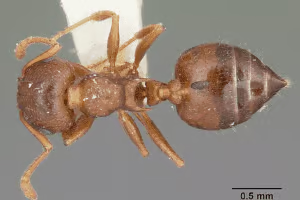
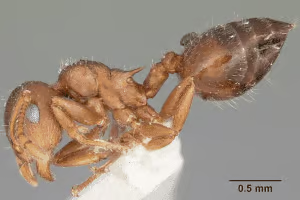
Acrobat ants belong to the genus Crematogaster and are more common in the southeastern United States, though they are encountered regularly in Maine, particularly in homes and structures located in wooded areas. Workers measure about 1/8 inch long and range from light brown to black with a shiny appearance. All workers in a colony are monomorphic, meaning they stay roughly the same small size. The distinctive heart-shaped abdomen, best viewed from above, and a two-segmented waist are the key identification features.
Outdoors, acrobat ants nest in moist decaying wood, tree limbs, firewood, and under rocks. They prefer soft, fungi-softened wood and can tunnel through it in a manner similar to carpenter ants, though they do not eat the wood. The University of Maine Cooperative Extension has documented acrobat ant specimens from New Gloucester, Maine, confirming their presence in our region.
Signs of Acrobat Ant Activity
- Small ants trailing indoors near baseboards, windows, or areas with wooden trim
- Ants raising their abdomen high over their body when disturbed
- Small piles of debris or sawdust-like material near entry points in moist wood
- Insulation stripped from electrical or telephone wires, which acrobat ants will sometimes chew through
- Winged swarmers appearing indoors in late summer or fall
- Ants foraging for sweets or proteins in kitchens or pantries
In heavily wooded towns like Standish and Baldwin, acrobat ants often travel from nearby trees or firewood piles into homes along branches touching the structure or through small gaps around foundations and utility lines.
Risks in Southern Maine
Acrobat ants do not cause major structural damage the way termites do, but they can expand existing cavities in already-decaying wood and occasionally strip insulation from electrical or telephone wiring, which can lead to short circuits. They are primarily a nuisance pest, capable of contaminating food and delivering a mild bite or releasing an unpleasant odor when crushed.
Their presence often signals an underlying moisture problem worth addressing. In Southern Maine’s climate, where spring thaws and heavy rain regularly affect basements, crawl spaces, and older wood framing, acrobat ant activity is sometimes one of the first visible signs of water damage that has gone unnoticed.
Prevention Tips
- Trim all tree limbs and branches so they no longer touch your roof or siding
- Seal cracks around foundations, windows, doors, and utility lines before spring
- Store firewood, logs, and debris piles well away from the house
- Fix leaks and reduce moisture in crawl spaces, basements, and around wooden structures
- Store pantry items in airtight containers and clean up spills promptly
- Consider a year-round protection plan if your property has recurring moisture issues or heavy tree coverage, both of which create ongoing nesting opportunities for acrobat ants
Commonly Confused With
Acrobat ants are most often confused with other small ant species. A few key distinctions:
- Carpenter ants are significantly larger at 6-12mm and leave coarse frass. Acrobat ants are much smaller and their frass is finer.
- Odorous house ants emit a rotten coconut smell when crushed. Acrobat ants release a different, more acrid odor.
- Citronella ants are pale yellow and release a lemon scent. Acrobat ants are darker and their scent is unpleasant rather than citrusy.
The raised abdomen posture is the most reliable field identification clue for acrobat ants. If you are unsure what species you are dealing with, professional identification is always worth doing before any treatment.
Professional Acrobat Ant Control in Southern Maine
Effective acrobat ant control starts with locating the nest, which is often hidden in moist wood inside a wall void, under insulation, or in a tree cavity near the structure. I use low-toxicity baits and targeted treatments rather than broad spraying, and I handle every job personally from inspection through resolution. If you are seeing acrobat ants in or around your home or business, my ant control services cover identification, treatment, and prevention tailored to your specific property. Contact me to schedule a free consultation.
Frequently Asked Questions
Size is the quickest clue. Carpenter ants are much larger at 6-12mm, while acrobat ants are small at around 1/8 inch. Acrobat ants also have a distinctive heart-shaped abdomen they raise upward when disturbed, which carpenter ants do not do. If you are finding large black ants with coarse sawdust-like frass, that points to carpenter ants. Small ants doing the “abdomen raise” are almost certainly acrobat ants. When in doubt, I am happy to take a look.
They are not a serious threat. Acrobat ants do not cause significant structural damage on their own, though they can expand existing cavities in already-decaying wood. They may occasionally strip insulation from electrical wiring, which is worth addressing. They can deliver a mild bite and release an unpleasant odor when crushed, but pose no health risk to your family or pets.
Most treatments see significant improvement within one to two weeks, with full resolution typically within four weeks depending on colony size and nest location. Because I handle every job personally, I stay on top of it until the problem is resolved.
Ready to Get Started?
I serve homeowners and businesses throughout Cumberland and York Counties. If acrobat ants have moved in, reach out for a free consultation.