

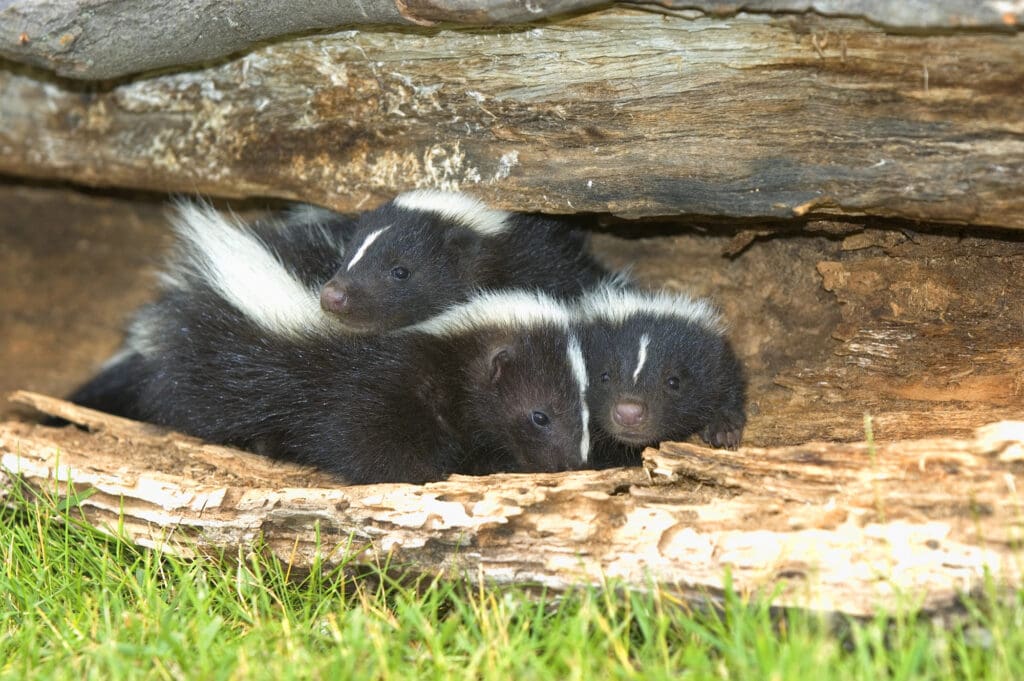
As an an expert in pest control in Southern Maine, Precision Pest Control knows that late February marks the start of skunk mating season, bringing increased activity and potential encounters. With mild 2026 winters extending their roaming, skunks become more noticeable in Cumberland and York Counties. This guide covers skunk behavior, problems, and prevention tips to keep your property safe. If you spot signs, contact me for humane removal.
Understanding Skunk Behavior in Southern Maine
Skunks are nocturnal and often den under porches, decks, or sheds during winter. Mating season runs from late February through early April, with females giving birth in May. During this time, rival males may spray to compete, and females spray to reject advances. Mild winters mean more active skunks emerging earlier, increasing risks of encounters with pets or vehicles. In areas like Portland and Scarborough, sightings spike as males travel for mates.
Problems Skunks Cause
Skunks are generally non-aggressive but can become a nuisance:
Problems They Cause: Strong odors from spraying, dug-up lawns for grubs, potential rabies carriers (watch for daytime activity or aggression), and attracting other pests to dens.
Skunks showing abnormal behavior, like daytime wandering, should be avoided as they may be rabid. In towns such as Saco and Westbrook, these issues often lead to calls during mating peaks.
Prevention Tips for Skunk Control
Prevent skunks by making your yard less appealing:
- Secure trash cans and pet food to eliminate food sources.
- Block den sites under decks or sheds with fencing or hardware cloth.
- Use motion-activated lights or sprinklers to deter nocturnal visits.
- Remove yard debris and trim overgrown areas.
- For trapped skunks, use baits like peanut butter or fish eggs, but consult pros for humane handling.
Homeowners in Cornish can avoid repeat skunk visits by sealing decks and other potential den sites early in the mating season. For more on rabies risks, see the Maine.gov skunk factsheet.

When to Seek Professional Help
If you smell skunk spray frequently or see digging, DIY may not suffice. My wildlife services use humane trapping and exclusion to remove skunks safely. Learn about my wildlife control.
Also, for broader winter tips, see my Top 5 Winter Pests guide.
In communities like Kennebunk and Biddeford, professional help ensures safe resolution without harm to pets or property.
Summary Table of Skunk Prevention Tips
| Issue | Prevention Tip | Why It Works |
|---|---|---|
| Food Attraction | Secure garbage and pet food | Removes easy meals |
| Denning Sites | Block under decks/sheds with fencing | Denies shelter |
| Night Activity | Install motion lights/sprinklers | Scares them away |
| Yard Maintenance | Remove debris and trim vegetation | Reduces hiding spots |
| Trapping | Use baits like peanut butter | For safe removal (pro recommended) |
FAQs on Skunk Control in Cumberland and York Counties
- When does skunk mating season start in Southern Maine? Late February through early April.
- How do I know if a skunk is rabid? Look for daytime activity or aggression. Avoid and call authorities.
- Can skunks spray multiple times? Yes, but they prefer not to; it’s a last resort.
- Are skunks protected in Maine? No, but humane methods are required.
- How to get a free assessment? Visit my contact page.
Updated February 2026. Stay odor-free this mating season. Contact Precision Pest Control for skunk control in Southern Maine.