

House Mice in Southern Maine:
Identification, Prevention, and Control
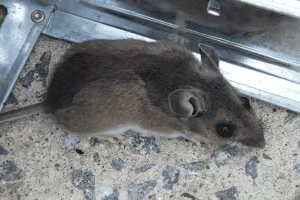
House mice are the most common rodent I deal with across Southern Maine, and in my 16 years of work in Cumberland and York Counties I’ve found them in everything from newer construction in Scarborough to century-old farmhouses in Hollis and Buxton. They’re adaptable, they breed fast, and they’re remarkably good at staying out of sight until a population is well established. As an Associate Certified Entomologist (A.C.E.), accurate identification is always where I start, because house mice behave differently from deer mice and require a different approach. Browse the rodents pest library to compare species, or contact me if you’re seeing signs and aren’t sure what you’re dealing with.
What Are House Mice?
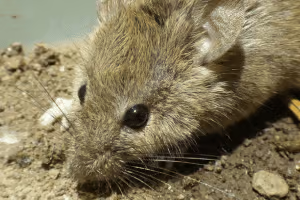
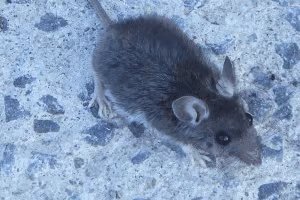
House mice (Mus musculus) are small rodents measuring about 2 to 3.5 inches in body length with a tail of roughly equal length. They have large ears, a pointed snout, and grayish-brown fur with a lighter belly. Unlike deer mice, they lack white feet and a sharply defined white underside, which is one of the clearest ways to tell the two species apart in the field.
House mice are highly prolific. Females produce five to ten litters per year with each litter averaging five to six young, and breeding continues year-round when mice are living inside a heated structure. They can squeeze through openings as small as a quarter inch, which means almost any gap around a pipe, utility penetration, or door frame is a potential entry point. Once inside, colonies establish quickly in wall voids, attics, and basements, often going unnoticed until droppings or sounds give them away. According to the Maine DACF Got Pests house mouse page, house mice are among the most widely distributed and successful mammals in Maine, thriving wherever humans provide food and shelter.
Signs of a House Mouse Infestation
Because house mice are nocturnal and tend to stay hidden during the day, most people notice the evidence before they ever see an actual mouse. Signs tend to concentrate in kitchens, pantries, basements, and attics, particularly in areas that don’t get disturbed often. Look for:
- Small, dark, rice-shaped droppings with pointed ends along walls, in corners, or near food storage
- Gnaw marks on food packaging, baseboards, or electrical wiring
- Greasy rub marks along baseboards, walls, and pipes from repeated travel along established routes
- Shredded paper, insulation, or fabric tucked into hidden areas used for nesting
- Scratching or scurrying sounds inside walls, ceilings, or under floors at night
- Small holes or gaps around pipes and utility entries with signs of activity nearby
- A persistent musty odor in enclosed spaces from accumulated urine and droppings
In Biddeford and Westbrook homes with older foundations, I find that activity often concentrates near basement utility areas and kitchen walls first, before spreading to other parts of the structure as the population grows.
Risks in Southern Maine
House mice rarely bite but they contaminate food and surfaces with urine, droppings, and hair. They can spread Salmonella and other bacteria, and their constant gnawing creates genuine property risks. Chewed electrical wiring is a recognized cause of house fires, and damaged insulation and contaminated stored goods are common outcomes of an infestation that goes unaddressed through a full winter season.
House mice also play a direct role in tick and flea pressure around properties. They serve as primary hosts for black-legged ticks, the species responsible for Lyme disease transmission in Maine, meaning a mouse problem inside the house is often connected to a tick problem in the yard. Addressing rodent activity is one of the more effective steps a homeowner can take to reduce tick exposure, particularly on properties with wooded edges or overgrown areas near the foundation.
Prevention Tips
Strong exclusion habits make a real difference with house mice, particularly in Southern Maine’s older housing stock where gaps and settling around foundations create easy entry:
- Seal all gaps larger than a quarter inch around doors, windows, pipes, and foundations with steel wool, hardware cloth, or caulk
- Store all food including pet food and birdseed in airtight metal or glass containers
- Keep kitchens and pantries clean with no crumbs or spills left overnight
- Remove clutter such as piles of paper, cardboard, or fabric that provide ready nesting material
- Maintain clear space around the foundation by trimming vegetation and removing debris
- Use door sweeps and weatherstripping on all exterior doors
- Empty garbage regularly and store bins away from the house in rodent-proof containers
- Address any known gaps in the roofline, soffits, or siding before fall, when mice begin actively seeking shelter indoors
- Consider a year-round protection plan if your property has seen repeated mouse activity across multiple seasons
Commonly Confused With
House mice are most often confused with two other species found in Southern Maine:
Deer mice are similar in size but have a clearly two-toned coat, reddish-brown or tan on top with a white belly and white feet, and a bicolored tail. Deer mice are more common in rural and wooded properties and are the species associated with hantavirus exposure in Maine. The distinction matters because deer mice require a more cautious cleanup approach due to that disease risk.
Norway rats are significantly larger, with bodies measuring 7 to 9 inches, a thick blunt tail shorter than the body, and gray-brown fur with a paler underside. If the animal you’re seeing is noticeably large or the droppings are capsule-shaped rather than rice-grain sized, it’s likely a rat rather than a mouse and the treatment approach differs accordingly.
Professional House Mouse Control in Southern Maine
When prevention alone isn’t enough, I provide precise, low-impact treatment for house mice customized to each property. Every job starts with a thorough inspection to locate all entry points, nesting areas, and food sources, including gaps in foundations, wall voids, and attic spaces that aren’t obvious without a trained eye. From there I seal entry points first, then deploy only targeted controls exactly where needed: snap traps, live traps, or discreet bait stations placed out of reach of pets and children. No broad spraying and no unnecessary chemicals. My approach follows integrated pest management principles consistent with guidance from Penn State Extension.
Every plan is customized to the property. A single-family home in Biddeford with an older foundation gets different attention than a commercial property in Scarborough with frequent deliveries and food storage areas to protect. I handle the entire process myself from start to finish, with follow-up visits included until the issue is fully resolved. Learn more about my background and credentials on the about page, or visit my rodent control service page for a full overview of how I handle mice, rats, and rodent-proofing across Southern Maine. Contact me to schedule a free inspection.
Frequently Asked Questions
House mice have uniform grayish-brown fur, large ears, and a long tail nearly equal to their body length. Deer mice have a clearly two-toned coat with a white belly and white feet. Voles are stockier with much shorter tails and are rarely found inside structures. If you’re unsure, a professional inspection will give you a definitive answer.
They rarely bite but can transmit bacteria including Salmonella through droppings and urine. They also serve as hosts for black-legged ticks, which carry Lyme disease. Good sanitation and exclusion significantly reduce health risk, but an active infestation warrants professional attention rather than waiting it out.
Most clients notice a sharp drop in activity within the first week once entry points are sealed and traps are in place. Full elimination typically takes 30 days or longer depending on colony size and how consistently sanitation and exclusion steps are maintained. I schedule follow-up visits to confirm the problem is fully resolved and adjust the approach if needed.

Ready to Get Started?
If house mice have found their way into your home or business, reach out for a free inspection and I’ll identify exactly where they’re getting in and what it will take to get them out for good.