

Rodents in Southern Maine:
Identification & Prevention
Rodents are among the most persistent pest problems I deal with across Cumberland, York, and parts of Oxford County. Mice and rats are capable climbers, chewers, and squeezers. A house mouse can fit through a gap no bigger than a dime, and a Norway rat through an opening the size of a quarter. Once inside, they breed quickly and establish hidden nesting sites that are easy to miss until the problem has grown. Whether you’re dealing with scratching sounds in the walls of a Standish farmhouse, droppings in a Windham garage, or signs of gnawing in a Scarborough crawl space, early identification matters. Learn about the rodent species found in Southern Maine below, or contact me for identification help and a free assessment.
Quick Fact: A single female house mouse can produce five to ten litters per year, with each litter averaging six pups. Left unchecked, a small rodent problem can turn into a large one in a matter of weeks.
Common Rodents in Southern Maine
Why Do Rodents Invade Structures in Southern Maine?
Maine’s climate is the main driver. As temperatures drop in late September and October, rodents that have been living outdoors all summer begin moving toward structures for warmth, food, and reliable shelter. They follow utility lines, plumbing chases, and foundation gaps to get inside, often settling into wall voids, attics, or crawl spaces before a homeowner notices anything.
Once indoors, they’re drawn to areas with accessible food and water. Pantries, kitchen cabinets, pet food storage areas, and anywhere cardboard boxes or clutter provide nesting material are all common hotspots. Norway rats tend to stay low, burrowing along foundations and in basements. House mice are more adaptable and can nest almost anywhere in a structure. Deer mice are more common in rural and wooded areas, particularly in places like Hollis, Waterboro, and Limington, and are the species most associated with hantavirus exposure in Maine.
The fast reproduction rate is what turns a small entry-point problem into a full infestation. I see this pattern regularly. A couple of mice enter in fall, breed through winter, and by spring the homeowner has dozens. Addressing entry points and population control at the same time is the only effective approach.
Identification Tips for Rodents in Southern Maine
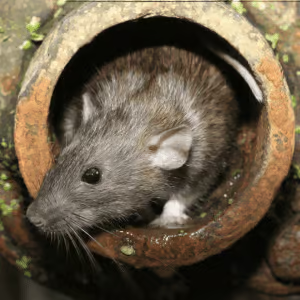
Rodents share a few defining traits: compact bodies, prominent incisors, and long tails. The three species found in Southern Maine are distinguishable from one another once you know the key differences. Body size, coloring, and the location where you’re finding signs are usually enough to narrow it down:
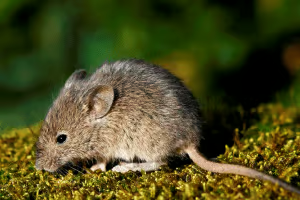
- House mice: small (2 to 4 inches), grayish-brown, large rounded ears, slender tail roughly equal to body length; the most common indoor species across the region
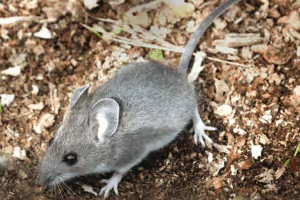
- Deer mice: similar size to house mice but with a distinctive two-toned coat, reddish-brown or tan on top with a white belly and white feet; tail is bicolored; most common in rural and wooded properties
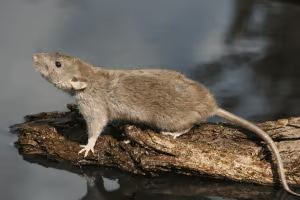
- Norway rats: significantly larger (7 to 9 inches body), gray-brown with a paler underside, thick blunt tail shorter than body length; most often found in basements, along foundations, and in sewers
Beyond the animals themselves, the signs to look for include:
- Droppings along walls, in cabinet corners, or near food storage; rice-grain shaped for mice, capsule-shaped for rats
- Gnaw marks on wood, wiring, plastic containers, or drywall
- Greasy rub marks along baseboards and wall edges where rodents travel repeatedly
- Shredded paper, insulation, or fabric in hidden areas used for nesting
- Scratching or scurrying sounds at night inside walls or ceilings
Behavior & Habits of Rodents
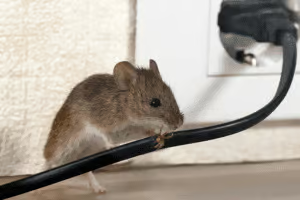
Rodents are primarily nocturnal, spending daylight hours in tight harborage areas and becoming active after dark to forage. They follow the same travel routes repeatedly, which is why rub marks and droppings tend to concentrate along walls and in corners. Mice explore new environments readily. Rats are more cautious and may avoid unfamiliar objects or bait stations for several days before engaging. Both species gnaw constantly to keep their ever-growing incisors in check, which is why chewed wiring, structural wood, and food packaging are such consistent signs of activity.
Risks & Threats from Rodents
Rodents are more than a nuisance. The risks they pose to health and property are real and worth taking seriously.
Hantavirus is the most significant disease concern associated with deer mice in Maine. The virus is transmitted through contact with deer mouse urine, droppings, or nesting material, including airborne particles disturbed during cleanup. Properties near wooded or agricultural areas where deer mice are common carry higher exposure potential. The Maine CDC infectious disease page is the appropriate local reference for current hantavirus guidance.
Leptospirosis can be spread through Norway rat urine contaminating water or food sources. Salmonellosis is a risk wherever rodents have access to food preparation surfaces or stored food. For a broader overview of rodent-associated illnesses, the CDC’s rodents and disease resource covers the major pathogens in detail.
Rodents also play a direct role in tick populations. Deer mice and house mice are primary hosts for the black-legged tick, the species responsible for Lyme disease transmission in Maine. Controlling rodent activity around your property is one of the most effective things you can do to reduce tick and flea pressure. Properties in Saco, Buxton, and other areas with significant wooded edges tend to see the highest overlap between rodent and tick activity.
Beyond disease, rodents cause substantial structural damage. Gnawed electrical wiring is a recognized cause of house fires with no apparent ignition source. Chewed insulation, compromised vapor barriers, and contaminated attic spaces are common outcomes of unaddressed infestations. Failed DIY trapping also creates a secondary problem: rodent carcasses left inside walls or crawl spaces attract blow flies and flesh flies, which can produce a second infestation that is just as frustrating to resolve. A rodent problem handled properly the first time avoids all of that.
An active rodent infestation can also draw in other wildlife. Predators like raccoons, skunks, and opossums are attracted to properties with reliable food sources, and a rodent population is exactly that. If you’re seeing nuisance wildlife activity alongside signs of rodents, the two problems are often connected.
General Prevention Tips for Rodents
- Seal entry points with steel wool, hardware cloth, or caulk around foundation gaps, utility penetrations, and pipe chases. Even small gaps at the roofline or where siding meets the foundation are worth addressing.
- Store food properly. Pet food, birdseed, and pantry staples should go in sealed hard-sided containers. Rodents can chew through cardboard and thin plastic without difficulty.
- Remove outdoor harborage by keeping woodpiles away from the structure, cutting back dense vegetation along the foundation, and clearing debris near entry points.
- Manage moisture around the foundation. Norway rats in particular are drawn to areas with standing water or consistently damp soil.
- Address gaps early in fall, before temperatures drop and rodents begin seeking shelter indoors.
- Consider a year-round protection plan for ongoing monitoring and follow-up to keep populations from reestablishing after initial treatment.
- For food service, healthcare, or property management businesses, my commercial pest control service covers the more intensive inspection and documentation requirements those environments need.
Frequently Asked Questions
Warmth, food, and shelter are the main draws. As fall temperatures drop, outdoor food sources disappear and rodents actively seek structures to overwinter in. Accessible garbage, pet food left out, birdseed near the foundation, and gaps in the building envelope all increase a property’s attractiveness. Addressing those conditions is an important first step.
The clearest signs are droppings, gnaw marks, greasy rub trails along walls, and sounds like scratching or scurrying at night inside walls or ceilings. Rodent activity often turns up first in less-trafficked areas like basements, crawl spaces, and the backs of kitchen cabinets. If you’re not sure what you’re seeing, a professional inspection will give you a clear answer.
Yes. Deer mice are the primary carrier of hantavirus in the Northeast, which can be transmitted through contact with droppings or nesting material, including airborne particles disturbed during cleanup. Norway rats can carry leptospirosis. All rodents can contaminate food surfaces and stored food. Cleanup of active rodent areas should be done carefully to avoid exposure.
Rodents generally avoid contact with people, but they will bite if cornered or handled. The more significant health risk is indirect contact, meaning contamination from droppings, urine, or nesting material rather than direct bites.
Very quickly. House mice can produce a new litter roughly every three weeks when living indoors, with five to six pups per litter. A mouse that enters in October can be part of a much larger population by spring. Early intervention makes a significant difference in how manageable the problem is.
Yes. Rodents gnaw constantly to keep their teeth worn down, and wiring is a common target. Chewed electrical wiring is a recognized cause of house fires. If you’re finding gnaw damage anywhere near wiring, that warrants prompt attention from a professional.
Professional Rodent Control in Southern Maine
Rodents are one of the most common calls I get from homeowners and businesses across Southern Maine, and they’re one of the more satisfying problems to resolve when handled properly. That means a thorough inspection, targeted population control, and attention to the entry points that allowed them in. I’ve been doing this work for 16 years, and I hold an Associate Certified Entomologist (A.C.E.) credential, held by fewer than 1% of pest control professionals, which means I can accurately identify the species involved and tailor the approach accordingly.
If you’re dealing with mice, rats, or just want a professional assessment of your property’s vulnerability, my rodent control service covers residential and commercial properties throughout Cumberland and York Counties. Contact me to schedule a free consultation.