

Pavement Ants in Southern Maine:
Identification, Prevention, and Control
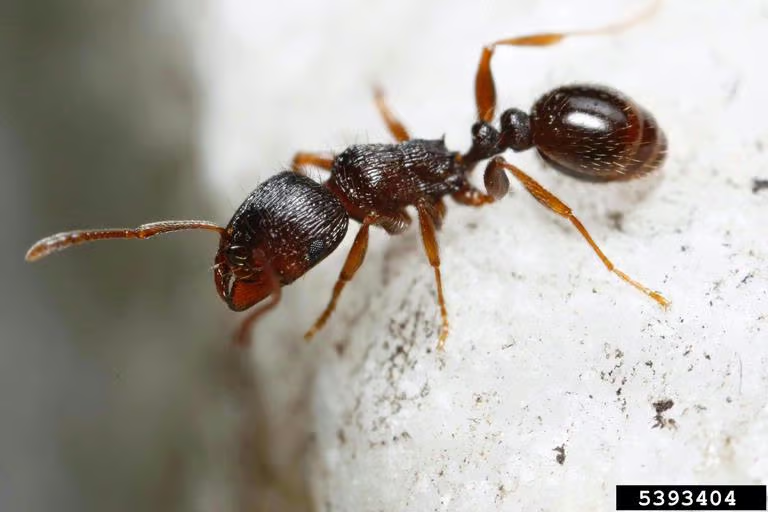
Pavement ants are one of the most frequently encountered indoor ant species in Southern Maine. They show up in homes and businesses across Cumberland and York Counties year-round, entering through cracks in foundations, concrete slabs, and around door frames in search of food. Despite their small size they can be persistent once established, and colonies can grow quite large. As an Associate Certified Entomologist (A.C.E.), I identify and treat these regularly, and accurate species identification before treatment always makes a difference in the outcome. Browse the ants pest library for a full overview of ant species in Southern Maine, or contact me if you need a professional assessment.
What Are Pavement Ants?
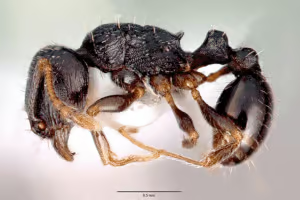
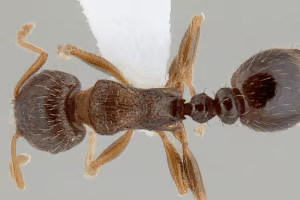
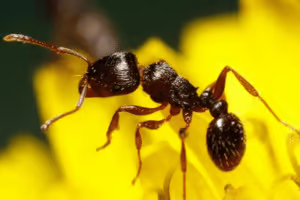
Pavement ants (Tetramorium immigrans) are a small non-native species originally from Europe, now widespread throughout the United States. Workers are about 1/8 inch long and uniformly dark brown to black with a shiny abdomen. Two key identification features are fine parallel grooves running across the head and thorax and two small spines on the back of the thorax, both visible under magnification. Their 12-segmented antennae end in a 3-segmented club.
Colonies typically contain several thousand workers with a single queen, though larger colonies can exceed ten thousand workers. According to the University of Maine Cooperative Extension, pavement ants are frequently encountered by Maine homeowners and will forage up to 30 feet from their colony on a wide variety of foods including sugary items, meats, grains, pet food, and other insects.
Signs of Pavement Ant Activity
- Thin trails of tiny dark ants marching single file along baseboards, counter edges, or window sills
- Small mounds of fine soil or sand pushed up through cracks in concrete floors, foundations, expansion joints, or between patio bricks
- Ants clustering around sweets, grease, pet food, or crumbs in kitchens and pantries
- Large numbers of ants engaged in territorial battles on sidewalks or driveways in spring, which is a distinctive pavement ant behavior
- Winged swarmers appearing indoors during warmer months, often found near windows as they move toward light
In suburban Southern Maine towns like Biddeford and Saco, pavement ants are particularly common given the density of driveways, sidewalks, patios, and slab foundations that create ideal nesting conditions directly adjacent to homes and businesses.
Risks in Southern Maine
Pavement ants do not damage wood or structural materials and are not known to spread disease. Their sting is too weak to penetrate human skin in most cases. They are a nuisance pest primarily because of food contamination and visible trailing indoors.
One less commonly known risk: when food is scarce, pavement ants will girdle garden plants including tomatoes, brassicas, and carrots to feed on the plant sap. In Southern Maine gardens this can cause plant damage that goes unattributed to ants. They can also be a persistent problem in greenhouses for the same reason.
Prevention Tips
- Seal cracks in foundations, concrete slabs, expansion joints, and around all door and window frames and utility penetrations
- Wipe up spills and crumbs immediately and store all food including pet food in airtight containers
- Keep garbage cans clean and tightly lidded
- Grade soil away from the foundation so water does not pool against the structure
- Clear gutters and direct downspouts well away from the building
- Keep mulch, vegetation, and debris away from the foundation perimeter
- Consider a year-round protection plan if your property has recurring ant pressure from multiple entry points, which is common in older homes with aging concrete slabs and foundations
Commonly Confused With
Pavement ants are most often confused with two other small ant species found indoors in Southern Maine.
Odorous house ants are similarly sized and dark in color but lack the two spines on the thorax and produce a strong rotten coconut odor when crushed. Pavement ants produce no notable odor.
Acrobat ants also have two spines on the thorax but their spines are proportionally longer and more prominent, and they display the distinctive behavior of raising their heart-shaped abdomen when disturbed. Pavement ants do not do this.
The two small spines on the thorax combined with the parallel grooves on the head are the most reliable identification features for pavement ants. If you are unsure which species you are dealing with, I am happy to take a look before any treatment begins.
Professional Pavement Ant Control in Southern Maine
Effective pavement ant control starts with locating the nest, which is typically in soil directly beneath a foundation, slab, or pavement surface. I trace foraging trails back to the entry point, use slow-acting baits that workers carry back to the colony rather than contact sprays that only kill foragers, and seal entry points to prevent re-infestation. I handle every job personally from inspection through resolution. If pavement ants are trailing through your home or business, my ant control services provide targeted treatment to eliminate the colony at the source. Contact me to schedule a free consultation.
Frequently Asked Questions
Crush one and smell it. If it smells like rotten coconut, it is an odorous house ant. Pavement ants produce no notable odor when crushed. Pavement ants also have two small spines on the back of the thorax and fine grooves on the head, both visible under a magnifying glass. If you are not sure, I am happy to identify them at no charge before any treatment begins.
No. They do not damage structural wood, do not sting effectively, and are not known to spread disease. The main concern is food contamination from trailing indoors and, in garden situations, occasional plant damage when food is scarce. They are a nuisance pest worth treating but not a structural or health threat.
Most treatments show significant improvement within one to two weeks. Full resolution typically takes two to four weeks depending on colony size and how many entry points are involved. Because pavement ants can enter through many small cracks, I seal entry points alongside treatment to prevent the colony from simply re-establishing access.
Ready to Get Started?
I serve homeowners and businesses throughout Cumberland and York Counties. If pavement ants keep finding their way inside, reach out for a free consultation.