

Odorous House Ants in Southern Maine:
Identification, Prevention, and Control
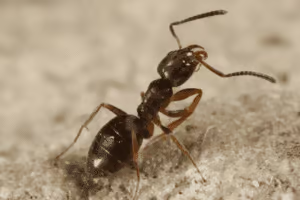
Odorous house ants are one of the most common ant species I treat in Southern Maine homes and businesses. They show up in kitchens, bathrooms, and wall voids across Cumberland and York Counties throughout the warmer months, and their colonies can be persistent and difficult to eliminate without identifying the nest site. The name comes from the distinctive rotten coconut odor they release when crushed. As an Associate Certified Entomologist (A.C.E.), I identify these regularly and take a targeted approach to treatment rather than relying on contact sprays that scatter the colony without solving the problem. Browse the ants pest library for a full overview of ant species in the area, or contact me if you need a professional assessment.
What Are Odorous House Ants?
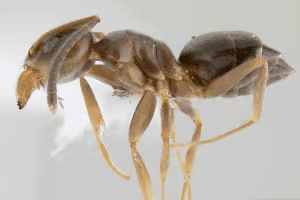
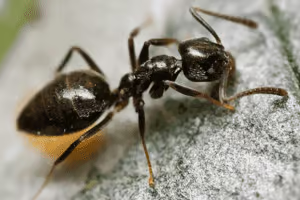
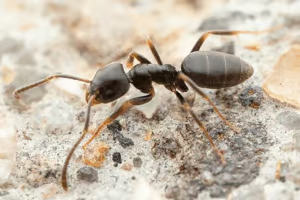
Odorous house ants (Tapinoma sessile) are a native North American species found throughout most of the United States. Workers are 1/16 to 1/8 inch long, monomorphic, and uniform in color from light brown to dark brown or black with a shiny abdomen. Their thorax has an uneven profile when viewed from the side, and their pedicel has a single node that is hidden beneath the abdomen, making it difficult to see without magnification.
Colonies typically contain several thousand workers with multiple queens, which is one reason they can be challenging to control. According to Penn State Extension, odorous house ants prefer foods high in sugar but will also feed on grease and dead insects. They nest both outdoors under rocks, mulch, and debris and indoors near moisture sources in wall voids, under floors, and near pipes.
Signs of Odorous House Ant Activity
- Thin trails of tiny dark ants following edges of counters, baseboards, or window sills
- Ants clustering around sweets, grease, or pet food in kitchens and bathrooms
- A sudden increase in ant numbers indoors after rain or temperature changes, as colonies relocate
- A distinct rotten coconut or blue cheese smell when ants are crushed
- Winged swarmers appearing indoors between May and July
Risks in Southern Maine
Odorous house ants cause no structural damage and are not known to spread disease. They are a nuisance pest that contaminates food surfaces, leaves visible foraging trails, and produces an unpleasant odor when disturbed. In humid or leaky areas of a home they can become well established and persistent, moving colonies frequently when disturbed, which is one reason store-bought contact sprays often make the problem worse by splitting colonies into multiple satellite nests rather than eliminating them.
Their presence indoors often points to an underlying moisture issue worth addressing. Leaky pipes, poorly sealed crawl spaces, and damp areas near foundations are the conditions that draw them in and keep them coming back.
Prevention Tips
- Wipe up spills and crumbs immediately and store all food including pet food in airtight containers
- Fix leaks promptly and reduce moisture in kitchens, bathrooms, basements, and crawl spaces
- Seal cracks around foundations, windows, doors, and utility pipe penetrations
- Keep mulch, leaf litter, and vegetation at least 12 inches away from the foundation
- Empty trash frequently and rinse recycling containers before storing them
- Consider a year-round protection plan if odorous house ants have been a recurring problem, since proactive barrier treatments are more effective than reacting after they have already established indoors
Commonly Confused With
Odorous house ants are most often confused with two other small ant species found in Southern Maine.
Pavement ants are similarly sized and dark in color but have two small spines on the thorax and produce no notable odor when crushed. They also tend to nest under pavement and foundations rather than indoors in wall voids.
Citronella ants are pale yellow rather than dark brown to black, and they smell like lemons rather than rotten coconut. The color difference alone is usually enough to distinguish them.
The rotten coconut smell is the most reliable single identification clue for odorous house ants. If you crush a suspected ant and it smells like coconut or blue cheese, you almost certainly have Tapinoma sessile.
Professional Odorous House Ant Control in Southern Maine
Effective treatment for odorous house ants starts with tracing the foraging trails back to the nest site rather than spraying foragers. I use slow-acting sweet baits that workers carry back to the colony, reaching the queens and eliminating the source rather than just the visible ants. I handle every job personally and follow up to make sure the problem is fully resolved. If odorous house ants keep finding their way inside, my ant control services cover identification, nest location, and targeted treatment. Contact me to schedule a free consultation.
Frequently Asked Questions
Contact sprays kill foraging workers but rarely reach the colony or queens. Worse, disturbing the colony with a spray can cause it to split into multiple satellite nests, spreading the problem. Slow-acting baits that workers carry back to the nest are far more effective because they reach the source. This is why professional treatment typically resolves what repeated DIY spraying cannot.
No. They do not damage structures, do not sting, and are not known to spread disease. They are a nuisance pest that contaminates food surfaces and produces an unpleasant smell when disturbed. The main reason to treat them is to stop the contamination and trailing activity indoors.
Most treatments show significant improvement within one to two weeks. Full resolution typically takes two to four weeks depending on colony size and how many satellite nests are present. Because odorous house ants have multiple queens and can relocate quickly, I follow up to confirm the problem is completely resolved.
Ready to Get Started?
I serve homeowners and businesses throughout Cumberland and York Counties. If odorous house ants keep finding their way inside, reach out for a free consultation.