

Lone Star Ticks in Southern Maine:
Identification, Prevention, and Control
The lone star tick is a relatively recent arrival in Southern Maine, expanding its range northward over the past several decades from its traditional stronghold in the southeastern United States. It is now documented in York and Cumberland counties and represents a genuine addition to the tick species that residents and property owners need to be aware of, though it remains less abundant here than the deer tick or American dog tick. What makes the lone star tick particularly significant despite its limited current range in Maine is the combination of aggressive questing behavior and an unusual disease association: alpha-gal syndrome, an acquired red meat allergy that can develop following a bite from this species and that can persist for years. Wooded properties with dense undergrowth and significant white-tailed deer activity throughout Biddeford, Saco, Scarborough, and Standish are the most likely locations to encounter this species in the region. As an Associate Certified Entomologist (A.C.E.) with 16 years of experience in the region, accurate tick identification is the foundation of accurate disease risk assessment. Browse the fleas and ticks pest library to see related species, or contact me for help with tick management on your property.
What Are Lone Star Ticks?
The lone star tick (Amblyomma americanum) is a hard tick in the family Ixodidae, native to the southeastern and south-central United States and expanding progressively northward. In Maine it is currently considered an expanding species rather than an established resident population on the scale of deer or dog ticks, but documented findings in York and Cumberland counties confirm it is present and deserves recognition as a local health concern.
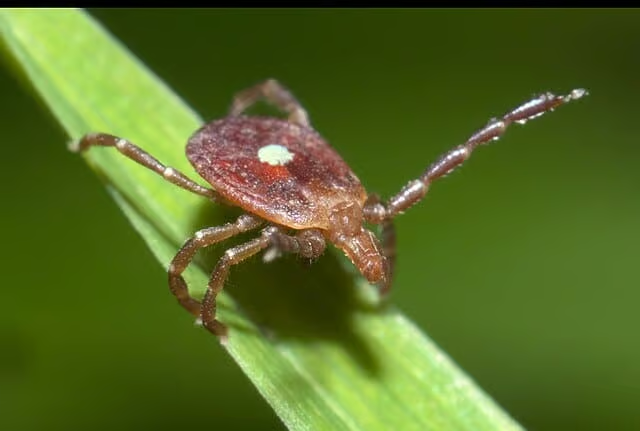
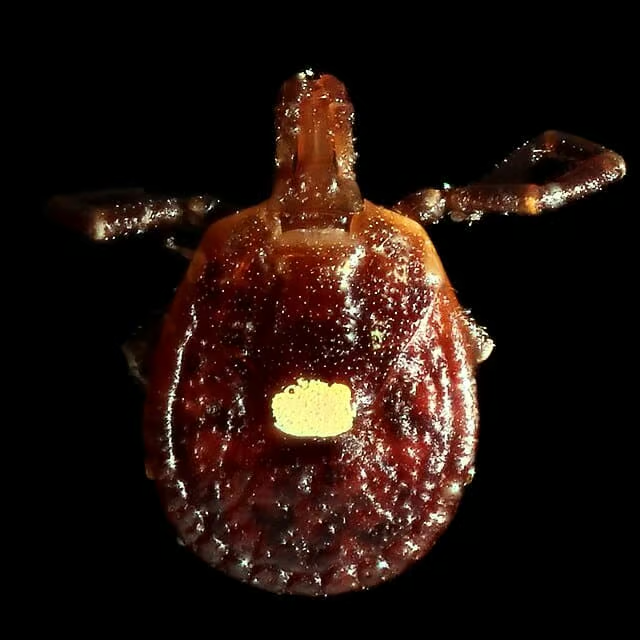
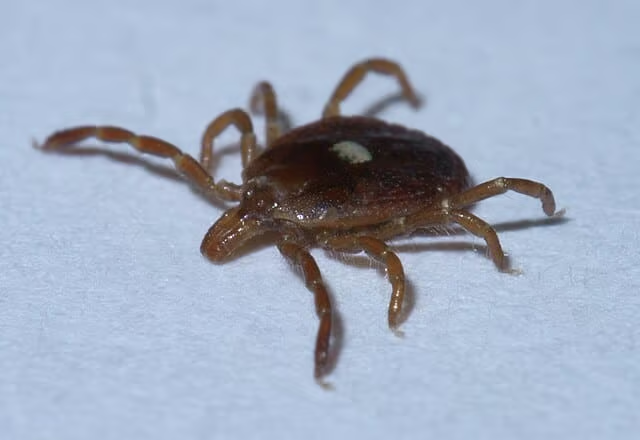
Adult females are approximately one quarter of an inch when unfed, making them similar in size to American dog ticks and noticeably larger than deer ticks. The single most recognizable identification feature is the bright white spot at the center of the female’s scutum, which is what gives the species its common name. This single spot is consistent and distinctive. Males have scattered whitish markings along the outer edges of the body rather than a central spot, and are somewhat smaller than females.
Lone star ticks are notably more aggressive host-seekers than deer ticks or dog ticks. Rather than waiting passively on vegetation for a host to brush past, all three active life stages of the lone star tick will actively move toward a detected host, tracking carbon dioxide and thermal cues over short distances. This behavior means that sitting or resting in infested habitat, not just walking through it, creates exposure risk. All three life stages readily bite people, dogs, and other mammals.
The species is most active from April through October, with nymphs and adults most abundant in late spring and early summer. White-tailed deer are an important host for adult lone star ticks and play a significant role in their range expansion, as deer movement carries the ticks into new geographic areas. According to the Maine CDC ticks page, lone star ticks have been confirmed in Maine and their distribution is being actively monitored as the range continues to shift northward.
Signs of Lone Star Tick Activity
Lone star tick encounters are identified by direct observation rather than indirect signs.
Look for:
- Ticks with a single bright white or cream-colored spot at the center of the back found attached to skin or crawling on clothing after outdoor activity; the single central spot on females is immediately distinctive and unlike any other tick species found in Maine
- Males found crawling on clothing or skin; males lack the central spot and instead have scattered whitish markings along the body margin, making them harder to identify with certainty without magnification
- Small poppy-seed to sesame-seed-sized nymphs found after time in wooded areas with dense understory; lone star nymphs lack any distinct white markings and are more difficult to identify to species
- Multiple ticks found simultaneously on people or pets after time in infested habitat, consistent with the active questing behavior of this species
- Tick encounters in habitat with significant deer activity, particularly areas with dense shrubby understory and leaf litter accumulation
- Activity from late April through October, with peak adult and nymphal activity in May through July
Risks in Southern Maine
The lone star tick is associated with several diseases and health conditions, some of which are not well known outside the medical and entomological communities.
Ehrlichiosis is the most commonly reported lone star tick-transmitted illness, caused by bacteria in the genus Ehrlichia. Symptoms typically begin one to two weeks after a bite and include fever, headache, muscle aches, and nausea. Most cases respond well to antibiotic treatment when diagnosed promptly.
Tularemia is a bacterial infection transmitted by lone star ticks as well as by deer ticks and dog ticks. It can present in several forms depending on the route of transmission and typically causes fever, skin ulcers, and swollen lymph nodes.
Heartland virus is a newer recognized illness associated with lone star ticks and has been documented in the United States, including in the Northeast as the tick’s range expands.
Alpha-gal syndrome is the most unusual and increasingly recognized health consequence of lone star tick bites. Alpha-gal (galactose-alpha-1,3-galactose) is a sugar molecule found in the meat of most mammals. A bite from a lone star tick can trigger an immune sensitization to alpha-gal, causing the affected person to develop an allergic reaction, ranging from hives to anaphylaxis, when they subsequently eat red meat or consume products containing mammalian gelatin. The reaction typically occurs three to six hours after eating red meat rather than immediately, which makes the connection to tick bites difficult to recognize without medical awareness of the syndrome. Alpha-gal syndrome can persist for years and in some cases does not resolve at all.
According to the Maine DACF Got Pests ticks page, all tick bites should be treated with the same prompt removal approach regardless of species.
Prevention Tips
Prevention for lone star ticks is the same as for other tick species in Maine, with particular attention to the active questing behavior that makes resting in infested habitat a genuine exposure risk:
- Wear light-colored clothing that makes crawling ticks visible; tuck pants into socks and shirts into pants when moving through or sitting in wooded or brushy areas during active season
- Apply EPA-registered repellents containing DEET, picaridin, or IR3535 to exposed skin; treat clothing and gear with permethrin before any outdoor activity in tick-prone habitat
- Perform a thorough full-body tick check after any time outdoors in wooded or brushy areas, including after activities that involve sitting or resting on the ground or on logs
- Shower promptly after outdoor activity to wash off unattached ticks before they find an attachment site
- Keep pets on veterinarian-recommended tick prevention through the active season
- Keep lawns mowed short, clear leaf litter and brush from yard edges, and create a dry barrier between maintained yard areas and wooded borders
- Address white-tailed deer activity near the property where possible, as deer are the primary adult host and a key factor in lone star tick range expansion
- Submit any unfamiliar tick found to the UMaine Extension Tick Lab for free identification to help track the species’ distribution in Maine
Commonly Confused With
The female lone star tick, with its single white central spot, is distinctive enough to be unlikely to cause confusion once the marking is recognized. The more practically important confusion is with other tick species found in the same habitat.
American dog ticks are similar in size and are found in overlapping habitat. Dog ticks have extensive mottled white patterning across the scutum rather than a single central spot, and the overall pattern looks ornate and extensive rather than the single isolated spot of the lone star female. Male lone star ticks are more easily confused with dog ticks, as both have white markings without a central spot, but their distribution in Maine is currently different enough that habitat and location provide useful context.
Deer ticks are smaller, darker, and have a solid black scutum with no white markings in females. A tick with any white marking on the back is not a deer tick. However, deer tick nymphs and lone star tick nymphs are both small and both lack distinctive markings, making nymphal identification to species level difficult without magnification or laboratory confirmation.
Professional Lone Star Tick Control in Southern Maine
Lone star ticks are addressed through the same property-level tick management approach used for deer ticks and dog ticks, targeting the wooded borders, shrubby understory, and leaf litter zones where all three species are most likely to be encountered. Maintaining sustained seasonal coverage across these habitat zones reduces questing populations of all tick species simultaneously and is more practical and effective than attempting to target individual species separately.
As an A.C.E.-credentialed pest professional I can confirm tick identification to species, help track whether lone star tick activity is increasing on your specific property over time, and maintain treatment coverage through the active season. Learn more about my background and credentials on the about page, or visit the mosquito and tick control service page for detail on what yard tick programs cover. Contact me to schedule a free inspection.
Frequently Asked Questions
Alpha-gal syndrome is an acquired food allergy to red meat and mammalian products that can develop after a bite from a lone star tick. The tick’s saliva contains alpha-gal, a sugar molecule found in the tissues of most mammals other than primates, and the bite can sensitize the immune system to react to this molecule. Once sensitized, eating red meat such as beef, pork, or lamb triggers an allergic reaction that typically appears three to six hours after eating rather than immediately. Reactions range from hives and gastrointestinal symptoms to anaphylaxis in severe cases. The syndrome can persist for years and is not fully reversible in all individuals. Anyone who develops unexplained allergic reactions hours after eating red meat, particularly after spending time in tick habitat, should discuss the possibility of alpha-gal syndrome with a healthcare provider.
The single white or cream-colored spot at the center of the back is the defining characteristic of adult females and is unmistakable once you know what to look for. If you find a reddish-brown tick of moderate size with a single isolated white dot on its back, it is a lone star tick female. Males have scattered white markings along the body margin rather than a central spot and are harder to identify with certainty at a glance. Nymphs lack distinctive markings and cannot be reliably identified without magnification. Any tick of uncertain identification can be submitted to the UMaine Extension Tick Lab at no charge for Maine residents.
Less common than deer ticks or American dog ticks, but present and documented in York and Cumberland counties. It is more established in states to the south such as Massachusetts and Connecticut, and its continued northward expansion makes familiarity with the species increasingly relevant for Maine residents. If you spend time in wooded areas with significant deer traffic and you find a tick with a single white spot on the back, it is worth reporting to the UMaine Extension Tick Lab to contribute to the ongoing tracking of the species’ distribution in the state.
Ready to Get Started?
If you are concerned about tick exposure on your property, including lone star ticks as the species continues to establish in southern Maine, reach out for a free inspection and I will assess the habitat features driving exposure and maintain treatment coverage through the active season.