

Fruit Flies in Southern Maine:
Identification, Prevention, and Control
Fruit flies are one of the most common small fly complaints I receive from homeowners and commercial clients across Southern Maine, and they are also one of the most misunderstood. Most people assume fruit flies come from fruit, which is only half right. The red-eyed fruit fly that hovers around your produce bowl is a different animal from the dark-eyed fruit fly breeding in your kitchen drain, and treating one type the way you would treat the other gets you nowhere. Getting the identification right between the two is the first step. As an Associate Certified Entomologist (A.C.E.) with 16 years of experience across Cumberland and York Counties, I deal with both types regularly in residential kitchens and in commercial food service environments where fruit fly activity can become a serious sanitation concern. Browse the flies pest library to compare other species common in Maine, or contact me if fruit flies are not responding to basic cleaning.
What Are Fruit Flies?
There are two distinct types of fruit flies you are likely to encounter in Southern Maine homes and businesses, and telling them apart matters for treatment.
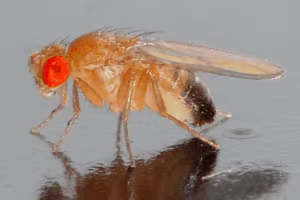
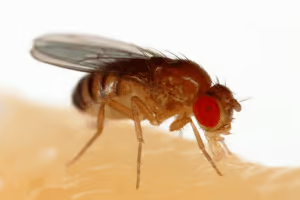
Red-eyed fruit flies (Drosophila melanogaster and related species) are the classic small fruit fly, about one-eighth inch long, with a yellowish-tan body and distinctive bright red eyes. They are strongly attracted to fermenting sugars and breed in overripe or damaged fruit, spilled juice, wine and beer residue, and fermenting organic material in kitchen waste.
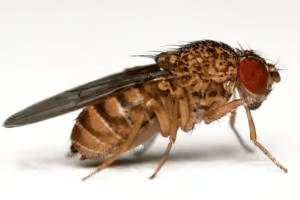
Dark-eyed fruit flies (Drosophila repleta group) are slightly larger and darker with dark rather than red eyes. They are less associated with fresh fruit and more closely tied to drains, garbage disposals, moist organic buildup under appliances, and fermenting residue in recycling bins. A persistent fruit fly problem that does not resolve when produce is removed is almost always dark-eyed fruit flies with a drain or appliance source.
Both types develop from egg to adult in as little as seven to ten days under warm conditions, which is why populations appear to emerge suddenly and build quickly. Browse the flies pest library to see other species found in the area.
According to the University of Maine Cooperative Extension, fruit flies are among the most frequently encountered small fly species in Maine homes year-round, with populations peaking in summer when warm temperatures accelerate development.
Signs of Fruit Fly Activity
The specific location of the activity is often the most useful clue about which type you are dealing with. Look for:
- Tiny flies hovering around fruit bowls, countertops, wine bottles, or fermenting produce
- Swarms near garbage cans, recycling bins, or compost containers
- Flies emerging from sink drains, garbage disposals, or the area under a refrigerator
- Adults resting on windows or walls near food preparation areas, particularly in the morning
- Persistent activity even after all visible fruit and produce has been removed, which strongly suggests a drain or appliance source
- Tiny white larvae visible in overripe fruit for red-eyed types, or in drain slime for dark-eyed types
In Southern Maine locations such as Raymond and Standish red-eyed fruit flies tend to be most noticeable in late summer when homegrown produce is abundant, while dark-eyed fruit flies persist year-round wherever drain conditions allow.
Risks in Southern Maine
Fruit flies do not bite or sting and are not significant disease vectors. Their main health concern is the transfer of bacteria from decaying organic material onto food preparation surfaces as they land, which is a particular issue in commercial food service environments. My commercial pest control services address fruit fly activity in restaurant kitchens, bars, food processing facilities, and other commercial settings where fruit flies intersect with health code compliance and operational sanitation standards.
In residential settings the concern is primarily nuisance and the underlying sanitation condition their presence reveals. A persistent fruit fly problem means there is an organic source somewhere in the kitchen sustaining continuous breeding, and finding that source is the work.
Prevention Tips
Prevention for red-eyed and dark-eyed fruit flies requires addressing different sources, though the general principles overlap:
- Store fruit and vegetables in the refrigerator or sealed containers and discard overripe items promptly
- Wipe down counters daily and clean up spills, juice residue, and wine or beer drips immediately
- Empty kitchen trash and recycling daily and rinse recycling containers before placing them in the bin
- Keep garbage disposal clean by running it regularly with cold water and treating it periodically with an enzymatic cleaner
- Flush kitchen and bathroom drains weekly with baking soda, vinegar, and hot water to prevent biofilm accumulation
- Clean under the refrigerator and dishwasher where spills and moisture accumulate unnoticed
- Store dry goods and pet food in airtight containers
For commercial kitchens and food service businesses, a regular drain cleaning and sanitation schedule as part of a broader pest management program is the most reliable way to keep fruit fly activity from becoming a recurring problem. For residential properties with recurring fruit fly activity, a year-round protection plan that includes regular drain monitoring and early intervention is worth considering.
Commonly Confused With
Fruit flies are most commonly confused with drain flies, fungus gnats, and phorid flies, all of which are small and appear near similar indoor environments. Drain flies are fuzzy and moth-like with broad tent-shaped wings, resting near drain openings rather than hovering around food. Fungus gnats are dark and long-legged, associated with overwatered houseplant soil rather than food and drains. Phorid flies are humpbacked and characteristically run across surfaces rather than flying, and are associated with more serious plumbing or organic decay issues. The red eyes and tan body of red-eyed fruit flies are their most distinctive feature. Dark-eyed fruit flies are harder to distinguish without looking closely, but their preference for drain environments over fresh produce is a useful behavioral clue.
Professional Fruit Fly Control in Southern Maine
Fruit fly treatment is entirely about finding and eliminating the breeding source. Killing adult flies with sprays or traps provides temporary relief but does not stop the next generation already developing in whatever organic material is sustaining the population. I inspect kitchens, pantries, drains, garbage disposals, areas under appliances, and any other moist organic environment in the structure to locate every active breeding site before applying any treatment. Enzymatic drain treatments, targeted gel baits, and physical source removal address the problem at its origin. For commercial properties where fruit fly activity is a recurring operational and compliance issue, my commercial pest control services include fruit fly management as part of a structured integrated pest management program. You can learn more about my approach and background on the about page. My common pests control services cover fruit flies and the full range of small fly species found in Cumberland and York Counties. Contact me to schedule a free consultation.
Frequently Asked Questions
This is the most common fruit fly scenario and almost always means you have dark-eyed fruit flies breeding in a drain, garbage disposal, or under an appliance rather than red-eyed fruit flies tied to produce. The source is fermenting organic residue in a wet environment rather than fruit sitting on the counter. Thorough drain cleaning with a brush and enzymatic treatment, combined with cleaning under the refrigerator and dishwasher, addresses the most common hidden sources. If activity continues after that, a professional inspection to locate the specific source is the most efficient next step.
Not necessarily. Fruit flies are opportunistic and any kitchen with fresh produce, a compost bin, a recycling container, or normal drain use can develop a fruit fly problem under the right conditions. They are more a sign of a specific organic source than general cleanliness. The speed with which they reproduce once established is what makes them feel overwhelming, not the initial cause.
A year-round protection plan with regular monitoring and drain maintenance keeps recurring problems from re-establishing. Contact me to discuss whether that makes sense for your property.
Ready to Get Started?
If fruit flies keep coming back despite cleaning, reach out for a free inspection and I will find the source.