

Flesh Flies in Southern Maine:
Identification, Prevention, and Control
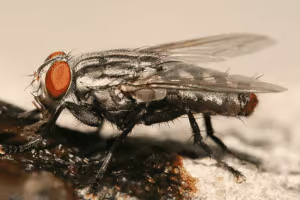
Flesh flies are closely related to blow flies and the two are frequently confused, but there are meaningful differences between them that affect how a problem gets resolved. Both are drawn to decaying organic matter and both can indicate a hidden animal carcass in a wall void or attic, but flesh flies are slightly different in appearance, deposit live larvae rather than eggs, and tend to be more associated with outdoor waste sources and animal remains than with indoor structural problems specifically. I encounter them regularly across Cumberland and York Counties, particularly around properties with wildlife activity, outdoor garbage, compost, and pet waste. As an Associate Certified Entomologist (A.C.E.) with 16 years of experience in the region, getting the identification right between flesh flies and blow flies matters because it shapes where I start looking for the source. Browse the flies pest library to compare other species common in Maine, or contact me if you are seeing large gray flies indoors and are not sure what you have.
What Are Flesh Flies?
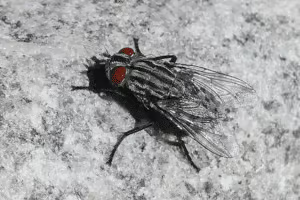
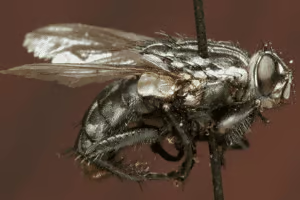
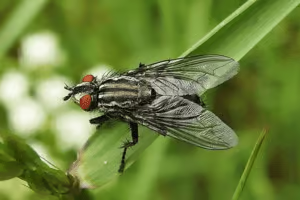
Flesh flies belong to the family Sarcophagidae and are medium to large flies ranging from about one-quarter to one-half inch in length. They are gray with three distinct dark longitudinal stripes running down the thorax and a distinctive checkerboard pattern of lighter and darker gray squares on the abdomen. Their eyes are red. They do not have the metallic blue, green, or bronze sheen of blow flies, which is the most reliable visual distinction between the two families.
One of the more notable biological features of flesh flies is that females give birth to live first-instar larvae rather than laying eggs. This allows them to deposit larvae directly onto a suitable food source rather than relying on eggs to hatch, which accelerates development and means populations can build quickly when conditions are right. They are attracted to carrion, garbage, animal waste, and decaying organic matter. Browse the flies pest library to see other species found in the area.
According to the University of Maine Cooperative Extension, flesh flies are common throughout Maine and are most active during warm months when decaying organic matter is available, with activity tapering in fall as temperatures drop.
Signs of Flesh Fly Activity
Look for these indicators:
- Medium to large gray flies with striped thorax and checkered abdomen resting on sunny exterior walls, windows, or near outdoor waste areas
- Adults active during daylight hours with a loud audible buzzing
- Maggots appearing on garbage, pet waste, compost, or near outdoor animal remains
- Flies clustering near trash bins, compost piles, or areas where food scraps accumulate
- Indoor sightings near windows or walls, particularly if accompanied by an odor from a wall void or structural space
- Empty pupal cases along baseboards in garages, basements, or crawl spaces near a hidden organic source
In Southern Maine locations such as Limerick, Standish, and Scarborough where wooded properties, wildlife activity, and outdoor living are common, flesh fly pressure tends to increase through the summer months and into early fall.
Risks in Southern Maine
Flesh flies can carry bacteria from decaying matter on their bodies and mouthparts, contaminating food preparation surfaces and stored food if they gain access to kitchen areas. In commercial food service environments their presence represents a genuine sanitation and regulatory concern, and my commercial pest control services address flesh fly activity in those settings as part of a broader integrated pest management approach.
In residential settings the more immediate concern is what their presence indicates. Like blow flies, flesh flies appearing indoors in numbers usually point to a specific organic source that needs to be located and addressed. That source may also indicate an active rodent or wildlife issue driving ongoing carcass production in or around the structure.
Prevention Tips
Flesh fly prevention focuses on eliminating the organic sources that attract and sustain them:
- Keep garbage bins sealed with tight-fitting lids and empty them at least weekly, rinsing with hot water regularly
- Clean up pet waste daily and store pet food in airtight containers
- Keep compost bins sealed and positioned well away from the house
- Remove any dead animals or roadkill from the property promptly
- Seal gaps around windows, doors, foundation vents, soffits, and utility penetrations to reduce both fly entry and the wildlife activity that creates carcasses in the structure
- Maintain clean yards by removing fallen fruit, accumulated leaves, and any other organic debris near the foundation
- Address any known rodent or wildlife activity before it creates secondary flesh fly problems. My rodent control services and nuisance wildlife control services can help reduce the conditions that lead to flesh fly pressure in and around the structure
Commonly Confused With
Flesh flies are most commonly confused with blow flies, which share similar habits and habitats but are distinguished by their metallic blue, green, or bronze sheen. Flesh flies are matte gray without any metallic coloring, and their striped thorax and checkered abdomen are distinctive once you know to look for them. House flies are smaller, lack the bold striping and checkerboard pattern, and are associated with general food and garbage rather than carrion specifically. If you are seeing large gray striped flies indoors in numbers, flesh fly is the likely identification, but blow fly is worth ruling out since the source-finding and treatment approach is similar for both.
Professional Flesh Fly Control in Southern Maine
As with blow flies, the foundation of flesh fly treatment is locating and eliminating the organic source. Treating adult flies without addressing what is attracting and sustaining them produces only temporary results. I inspect the full structure including wall voids, attics, crawl spaces, and the exterior perimeter to identify carcasses, waste accumulations, or other organic material driving the activity. Once the source is identified and addressed I apply targeted treatments to remaining harborage areas as needed. For properties where wildlife activity is contributing to recurring flesh fly pressure, addressing the underlying rodent or wildlife problem through my rodent control services or nuisance wildlife control is often the more meaningful long-term solution. You can learn more about my approach and background on the about page. My common pests control services cover flesh flies and the full range of fly species found in Cumberland and York Counties. Contact me to schedule a free consultation.
Frequently Asked Questions
The metallic sheen is the fastest differentiator. Blow flies have a bright metallic blue, green, or bronze body that is immediately noticeable. Flesh flies are matte gray with three dark stripes down the thorax and a checkered gray and black pattern on the abdomen. Both are larger than house flies and both are associated with decaying organic matter, but the color difference is clear once you are looking for it. If you are unsure, I can confirm the species during a free visit.
The most common explanation is a dead animal in a wall void, attic, or crawl space, which is the same situation that drives indoor blow fly activity. Less commonly they can enter through gaps around windows and doors if a strong outdoor source like an uncovered trash bin or compost pile is nearby. A sudden indoor appearance, particularly if accompanied by an odor, almost always points to a structural carcass situation worth investigating.
They can if an accessible organic source is present indoors, such as an exposed animal carcass in an accessible area. In most residential situations they are breeding outdoors or in inaccessible structural voids rather than in living spaces. Locating and addressing the source rather than treating adults is the effective approach regardless of where the breeding is occurring.
Ready to Get Started?
If large gray flies are appearing inside your home and you are not sure why, reach out for a free inspection and I will find the source.