

Drain Flies in Southern Maine:
Identification, Prevention, and Control
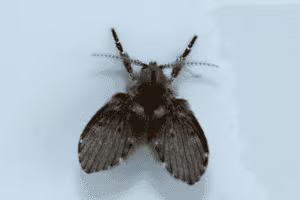
Drain flies are one of those pests that homeowners tend to underestimate until they have them. A handful of fuzzy little moths hovering near the bathroom sink does not sound serious, but drain flies breed directly in the organic slime inside drains, pipes, and sump systems, and a single neglected drain can sustain a population indefinitely no matter how many adult flies are swatted. I deal with them regularly across Cumberland and York Counties, particularly in older homes with slow drains, damp basements, and underused floor drains where biofilm accumulates unchecked. As an Associate Certified Entomologist (A.C.E.) with 16 years of experience in the region, finding every breeding site before treating is where the work actually happens with drain flies. Browse the flies pest library to compare other species common in Maine, or contact me if small flies near your drains are not responding to cleaning.
What Are Drain Flies?
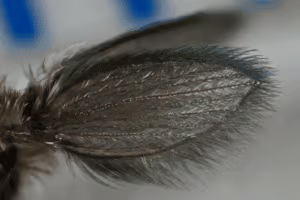
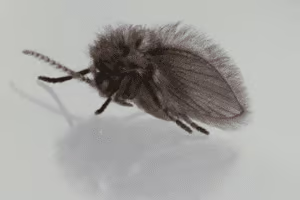
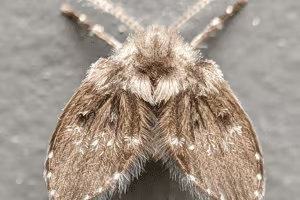
Drain flies (Psychoda spp.), also called moth flies or filter flies, are tiny insects ranging from about one-sixteenth to one-quarter inch in length. Their bodies are covered in dense fine hairs that give them a distinctly fuzzy, moth-like appearance, and their broad wings are held tent-like over the body at rest. They are poor fliers, moving in short hopping patterns rather than sustained flight, and are most often seen resting on walls and surfaces near plumbing rather than actively flying.
Larvae develop in the gelatinous biofilm layer that builds up on the inner walls of drains, pipes, sump pits, and other moist organic environments. They feed on bacteria, fungi, and decomposing organic matter within that film. Adults emerge from the drain, mate, and lay eggs back into the same breeding site, meaning populations can cycle continuously as long as the slime layer remains. Browse the flies pest library to see other species found in the area.
According to the University of Maine Cooperative Extension, drain flies are a year-round concern in Maine wherever moisture and organic buildup accumulate in plumbing, with populations expanding rapidly during the warmer months when development accelerates.
Signs of Drain Fly Activity
Because drain flies breed in a specific location and tend to stay close to it, activity is usually concentrated near the source. Look for:
- Small fuzzy dark flies resting on walls, mirrors, or surfaces near sinks, showers, bathtubs, or floor drains
- Adults hovering near drain openings, particularly in the early morning or evening
- Flies emerging in noticeable numbers after running water or flushing, which disturbs the biofilm and causes adults to scatter
- Larvae or small dark worm-like forms visible in drain openings or on wet surfaces near the drain
- Persistent activity in basements, laundry rooms, or bathrooms with slow or infrequently used drains
In Southern Maine locations such as Scarborough and Windham, drain fly activity is most common in older homes with damp basements or floor drains that see infrequent use, particularly during the humid summer months when biofilm accumulation accelerates.
Risks in Southern Maine
Drain flies do not bite, do not spread disease directly, and cause no structural damage. Their primary impact is nuisance, plus the underlying sanitation concern of what their presence indicates. A persistent drain fly population means there is an organic buildup in your plumbing significant enough to support continuous breeding, which in commercial food service settings represents a genuine regulatory risk. My commercial pest control services are specifically equipped to address drain fly activity in restaurant kitchens, food processing facilities, and other commercial environments where drain maintenance and fly control intersect with health code compliance.
In residential settings the concern is more practical. A drain fly problem that does not resolve with basic cleaning usually means there is a more significant biofilm accumulation, a partially blocked drain, or a less obvious breeding site like a sump pit or condensate line that needs to be located and addressed properly.
Prevention Tips
Drain fly prevention is almost entirely a matter of keeping organic buildup from accumulating in plumbing:
- Clean all drains weekly using a stiff drain brush to physically scrub the inner pipe walls, not just flush with water
- Use an enzyme-based drain cleaner monthly to break down biofilm organically without damaging pipes
- Keep garbage disposals clean by running them regularly with cold water and occasional enzymatic treatment
- Fix slow or partially blocked drains promptly since standing water accelerates biofilm accumulation
- Cover or treat infrequently used floor drains in basements and utility rooms where water evaporates and biofilm builds undisturbed
- Ventilate bathrooms and laundry areas to reduce ambient moisture
- In commercial settings, establish a regular drain cleaning schedule as part of overall sanitation protocols
Commonly Confused With
Drain flies are most often confused with fungus gnats, which are similar in size but dark and long-legged with a more delicate appearance and are associated with overwatered houseplant soil rather than drains. Fruit flies are tan with distinctive red eyes and cluster around ripe produce and recycling rather than resting near drain openings. Phorid flies are humpbacked and run across surfaces rather than resting in place, and are associated with more serious drain or plumbing issues. The fuzzy moth-like appearance and tent-shaped wings of drain flies at rest are their most reliable identifiers. No other common small fly species in Southern Maine has the same distinctly hairy, broad-winged look.
Professional Drain Fly Control in Southern Maine
With drain flies, the treatment is eliminating the breeding source, not spraying adult flies. Adults that are killed are immediately replaced by new ones emerging from the biofilm as long as the drain remains untreated. I inspect all drains, floor drains, sump pits, condensate lines, and any other moist organic environments in the structure to locate every active breeding site before applying any treatment. Enzymatic drain treatments, physical biofilm removal, and targeted gel applications to affected drains address the source directly. For commercial properties where drain fly activity intersects with food safety compliance, my commercial pest control services include drain fly management as part of a broader integrated pest management program. You can learn more about my approach and background on the about page. My common pests control services cover drain flies and the full range of small fly species found in Cumberland and York Counties. Contact me to schedule a free consultation.
Frequently Asked Questions
Rinsing a drain with boiling water or pouring bleach down it removes surface material but rarely reaches the biofilm layer clinging to the inner pipe walls, which is where the larvae actually live. Effective drain cleaning requires physical scrubbing with a drain brush to break up the slime layer, followed by enzymatic treatment to digest the remaining organic material. If you have done that thoroughly and still have flies, there is likely a secondary breeding site such as a floor drain, sump pit, condensate line, or slow drain elsewhere in the structure that has not been located yet.
They can enter through floor drains that are connected to the sewer system, particularly drains that see infrequent use and dry out, losing their water trap seal. Once the trap seal is gone the drain becomes an open pathway from the sewer, which can introduce both drain flies and other sewer-associated insects. Maintaining the water seal in floor drains by periodically pouring water down them, or installing a drain cover, prevents this entry point.
Sometimes. A basic drain fly problem usually means biofilm has accumulated in a commonly used drain, which is a maintenance issue rather than a plumbing emergency. But if drain flies are appearing from a floor drain, sump pit, or area where you would not expect organic buildup, it can indicate a blocked or slow drain, a broken pipe allowing moisture to accumulate, or a sewage issue worth investigating. If the source is not immediately obvious, a professional inspection to locate it is worthwhile.
Ready to Get Started?
If drain flies keep coming back despite cleaning, reach out for a free inspection and I will find the source.