

Blow Flies in Southern Maine:
Identification, Prevention, and Control
When blow flies suddenly appear inside a Southern Maine home in numbers, there is almost always a reason beyond general outdoor activity. These metallic flies are strongly associated with decaying organic matter, and finding them clustering at windows or emerging from a wall void is frequently the first sign of a dead animal hidden somewhere in the structure. I encounter this regularly across Cumberland and York Counties, particularly in homes near wooded areas where mice, squirrels, and other wildlife sometimes die in attics, wall voids, and crawl spaces. As an Associate Certified Entomologist (A.C.E.) with 16 years of experience in the region, locating the source before applying any treatment is where I always start with blow flies. Browse the flies pest library to compare other species common in Maine, or contact me if you are seeing metallic flies indoors and are not sure why.
What Are Blow Flies?
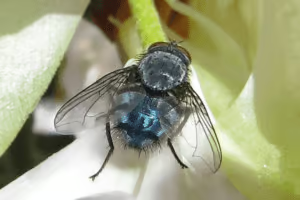
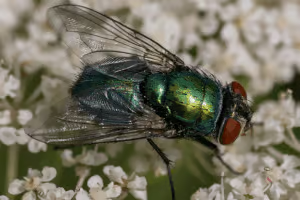
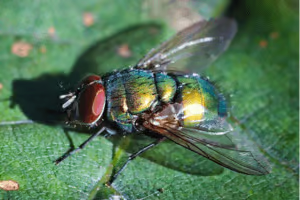
Blow flies belong to the family Calliphoridae and are sometimes called bottle flies, greenbottle flies, or bluebottle flies depending on the species. Adults are slightly larger than house flies, ranging from about one-quarter to one-half inch in length, with a distinctly shiny metallic blue, green, bronze, or black body and large red compound eyes. They produce a noticeably loud buzzing sound in flight that sets them apart from most other common fly species.
Females locate decaying matter with exceptional sensitivity and lay eggs in large batches directly on the source. Larvae, commonly called maggots, develop rapidly under warm conditions and can complete development from egg to adult in as little as one to two weeks during Maine’s summer months. Browse the flies pest library to see other species found in the area.
According to the University of Maine Cooperative Extension, blow flies are among the most common fly species encountered around homes in Maine and are valuable ecological decomposers outdoors, but their appearance indoors in numbers almost always signals an underlying source that needs to be addressed.
Signs of Blow Fly Activity
Because blow flies are tied to a specific source rather than general indoor conditions, the signs tend to appear suddenly rather than building gradually. Look for:
- Large metallic blue or green flies clustering at windows or near light sources, particularly on sunny days
- A loud, audible buzzing from adults active during daylight hours
- Maggots or larvae visible in garbage, near pet waste, in compost, or emerging from a wall or floor junction
- Empty pupal cases along baseboards, in attics, or in crawl spaces indicating a completed life cycle nearby
- A sudden emergence of flies from a wall void, ceiling, or structural gap
- A foul odor from an unidentified location in the structure, often preceding or accompanying the flies
In Southern Maine homes near wooded areas such as Windham, Standish, or Scarborough, the sudden indoor appearance of metallic flies in late fall or winter frequently points to a rodent or wildlife carcass in the structure.
Risks in Southern Maine
Blow flies can carry bacteria from decaying matter on their bodies and mouthparts, contaminating food preparation surfaces and stored food if they have access to kitchen areas. In commercial food service environments this represents a genuine sanitation and regulatory risk, and my commercial pest control services are equipped to handle blow fly activity in those settings. In residential settings the more immediate concern is usually identifying and resolving the underlying source, since the flies are a symptom of the problem rather than the problem itself.
Their presence indoors can also indicate an active rodent or wildlife issue that needs separate attention. If a dead animal in a wall void is drawing blow flies, there may be a live population of the same species that put it there.
Prevention Tips
Keeping blow flies from becoming a problem is largely a matter of eliminating what attracts them:
- Keep garbage bins sealed with tight-fitting lids and empty them at least weekly, rinsing bins regularly with hot water
- Remove any dead animals, roadkill, or organic waste from the property promptly
- Store pet food in airtight containers and clean up pet waste daily
- Keep compost bins sealed and positioned away from the house
- Seal gaps around windows, doors, foundation vents, utility penetrations, and soffits to prevent both fly entry and the wildlife activity that can lead to carcasses in the structure
- Install and maintain fine mesh screens on all windows, doors, and attic vents
- In wooded areas, address any known rodent activity before it creates a secondary blow fly problem. My rodent control services can help with that directly
Commonly Confused With
Blow flies are most often confused with house flies, which are similar in size but dull gray rather than metallic and associated with general food and waste rather than decaying animal matter specifically. Flesh flies are closely related and share similar habits but are gray with a striped thorax and checkered abdomen rather than metallic, and they give birth to live larvae rather than laying eggs. The metallic sheen of blow flies is their most distinctive and reliable identifier. No other common fly species in Southern Maine has the same bright blue, green, or bronze coloring.
Professional Blow Fly Control in Southern Maine
With blow flies, finding the source is the treatment. Spraying adult flies without locating and eliminating the breeding material will reduce visible activity temporarily but the problem returns as long as the source remains. I inspect attics, wall voids, crawl spaces, and the exterior perimeter systematically to locate carcasses, waste accumulations, or other organic material driving the activity. Once the source is identified and addressed, I apply targeted treatments to remaining harborage areas as needed and can recommend exclusion work to prevent future wildlife entry. For properties with recurring blow fly activity tied to persistent rodent pressure, a year-round protection plan addresses both issues together. My common pests control services cover blow flies and the full range of fly species found in Cumberland and York Counties. Contact me to schedule a free consultation.
Frequently Asked Questions
The most common explanation is a dead animal somewhere in the structure. A mouse, squirrel, or other wildlife that died in a wall void, attic, crawl space, or under a floor is the typical culprit. Blow flies can detect decaying matter from a considerable distance and will find their way in through very small gaps. A sudden indoor appearance of metallic flies, particularly if accompanied by an odor, almost always points to this situation. Less commonly, an uncovered garbage source or accessible pet waste can attract them from outdoors.
Follow the flies. Adults tend to cluster near light sources but will also congregate near the source, particularly early in the morning before temperatures warm up. The odor, if present, can also help localize it. In practice, wall voids near plumbing, attic corners near roof penetrations, and crawl spaces near the foundation are the most common locations in Southern Maine homes. If you cannot locate it yourself, I can inspect the structure and identify it during a free visit.
Eventually, yes. Once the organic matter is fully consumed and dried out the food source is gone and flies will stop breeding there. The timeline depends on the size of the animal and the conditions, but it can take several weeks to months. During that time you will continue to see adults emerging from the structure. Locating and removing the source, or treating the void if removal is not possible, resolves it considerably faster.
Ready to Get Started?
If metallic flies are appearing inside your home and you are not sure why, reach out for a free inspection and I will find the source.