

Firebrats in Southern Maine:
Identification, Prevention, and Control
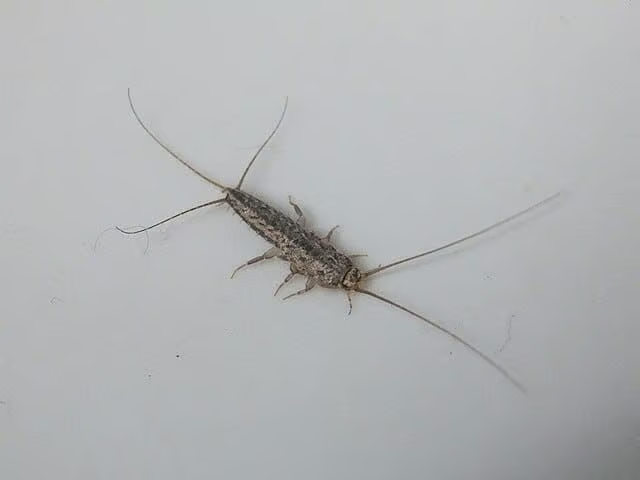
Firebrats are closely related to silverfish and nearly identical in body shape, but they occupy a fundamentally different ecological niche that makes them genuinely less common in most Southern Maine homes. While silverfish favor cool, damp basements and bathrooms, firebrats require sustained heat in the range of 90 to 110 degrees Fahrenheit to thrive, which limits them to specific hot zones around furnaces, boilers, hot water heaters, steam pipes, and commercial heating equipment. In residential settings they are most commonly found in older homes with oil or gas boilers and uninsulated utility rooms where heat radiates consistently from the equipment. Bakeries, laundries, and commercial kitchens are the environments where they are most significant as pests. In homes throughout Biddeford, Saco, Standish, and Scarborough, they are a less frequent pest than silverfish but worth knowing how to identify since the treatment approach differs. As an Associate Certified Entomologist (A.C.E.) with 16 years of experience in the region, accurate identification is always my starting point. Browse the occasional invaders pest library to see other species found in the area, or contact me for identification and treatment help.
What Are Firebrats?
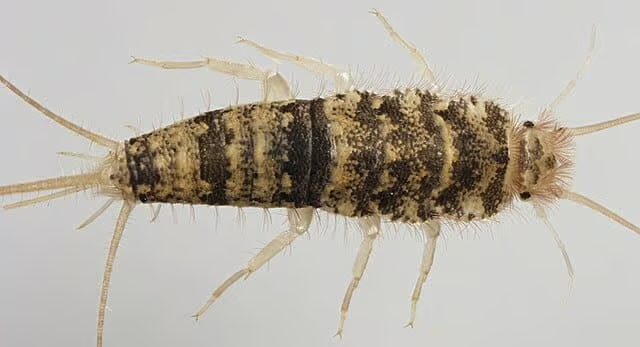
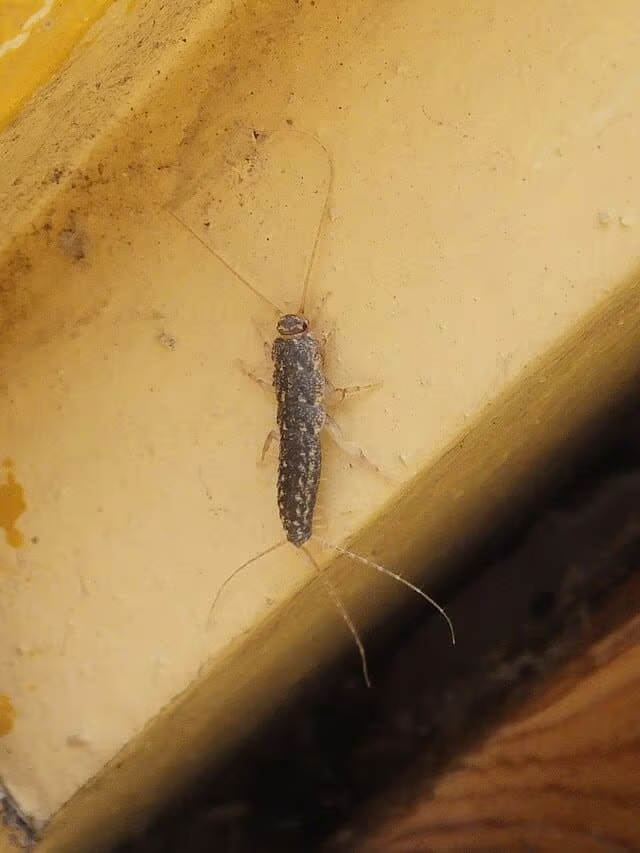
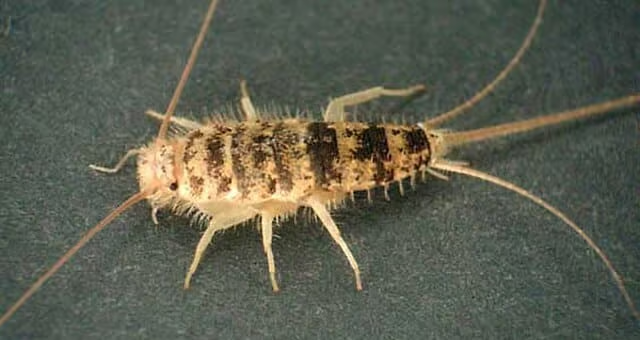
Firebrats (Thermobia domestica) are wingless insects in the order Zygentoma, the same ancient lineage as silverfish, and share the same basic body plan: a tapered, carrot-shaped body covered in scales, two long antennae at the front, and three long tail filaments at the rear. Adults are approximately half an inch long. The most reliable visual distinction from silverfish is color: firebrats are mottled gray-brown with darker banding and patches that give the body a distinctly patterned appearance, while silverfish have a more uniform silvery-gray metallic sheen.
The more reliable distinguishing characteristic is behavior and location. Firebrats are strongly thermophilic, requiring sustained high temperatures between 90 and 110 degrees Fahrenheit to develop and reproduce efficiently. At temperatures below 75 degrees Fahrenheit, development slows dramatically. This temperature requirement drives firebrats directly to the hot zones around furnaces, boilers, hot water heaters, ovens, and anywhere else in a structure where heat radiates consistently. Finding a silverfish-shaped insect in a cool damp basement points to silverfish; finding one in the utility room near the boiler points to firebrats.
Like silverfish, firebrats are ametabolous, continuing to molt throughout their adult lives rather than undergoing metamorphosis. They feed on starchy materials including paper, book bindings, flour, dried foods, and natural fiber fabrics. They are nocturnal, fast-moving, and photophobic. According to the UMaine Extension silverfish and firebrats page, both species are found in Maine but silverfish are significantly more common in typical residential settings.
Signs of a Firebrat Infestation
Firebrat signs are nearly identical to silverfish signs, but concentrated in warm locations rather than cool, damp ones.
Look for:
- Fast-moving, mottled gray-brown insects found near furnaces, boilers, hot water heaters, steam radiators, ovens, and dryers, typically when the area is disturbed or a light is turned on at night
- Irregular surface feeding damage on paper, cardboard, books, or food packaging stored in warm utility areas
- Small pepper-like droppings scattered near feeding sites and harborage areas around heat sources
- Shed skins in cracks and crevices near hot pipes and behind utility equipment
- Yellow staining on paper or cardboard near feeding damage
- Insects found in kitchen areas near ovens and dishwashers where sustained heat and humidity are present
Firebrat activity is most consistent in Cornish and Limerick properties with older oil-fired boilers and uninsulated utility rooms where equipment heat radiates consistently into the surrounding space.
Risks in Southern Maine
The risk profile for firebrats is identical to silverfish: no biting, no stinging, no structural damage, no disease transmission. The damage is entirely to organic materials with starch, cellulose, or protein content, particularly paper goods and natural fiber fabrics stored near heat sources.
In residential settings the damage potential is generally more limited than silverfish because the hot zones firebrats require tend to be utility areas rather than the living spaces, attics, and storage areas where valuable documents, books, and clothing are kept. The most common residential damage involves paper, cardboard, and food items stored in utility rooms near heating equipment. In commercial settings, bakeries and food processing facilities where sustained heat and flour are both present can experience more significant firebrat pressure.
Prevention Tips
Firebrat prevention differs from silverfish prevention in that temperature management is as important as moisture management:
- Insulate hot water pipes and boiler components where practical to reduce the surface temperature of areas immediately adjacent to the equipment
- Reduce humidity in utility areas with ventilation or targeted dehumidification, as firebrats require both heat and moisture to thrive
- Store paper goods, cardboard, and food products away from immediate proximity to furnaces, boilers, and hot water heaters
- Seal cracks and gaps around pipe penetrations and utility entries where firebrats travel between the hot equipment zone and surrounding spaces
- Keep utility rooms cleared of clutter, stored cardboard, and accumulated debris that provides both food and harborage
- Store natural fiber items in sealed plastic containers rather than cardboard in any storage area that experiences elevated temperatures
- Address any plumbing leaks near heating equipment that maintain moisture in the hot zone
Commonly Confused With
Firebrats are most commonly confused with one species:
Silverfish are the obvious comparison since the two species are nearly identical in appearance. The color difference is the most accessible visual distinction: firebrats are mottled gray-brown with visible patterning, while silverfish have a more uniform, bright silvery-gray metallic sheen. The location where the insect is found is the more reliable diagnostic: a silverfish-shaped insect near the furnace or hot water heater is almost certainly a firebrat, while one found in a cool damp bathroom or bookshelves is almost certainly a silverfish. The management approach is similar for both species, but identifying which one is present focuses treatment efforts on the right areas and conditions.
Professional Firebrat Control in Southern Maine
For most residential firebrat situations, addressing the heat and moisture conditions near the heating equipment and removing harborage materials from the immediate area is the starting point. When populations are established and treatment is warranted, targeted application to the harborage areas around the heating equipment is appropriate and significantly more effective than broad applications to unaffected areas of the structure.
As an A.C.E.-credentialed pest professional I can confirm identification and distinguish firebrats from silverfish, which determines where control efforts should focus. The two species require attention to different zones of the structure, and treating the wrong location is not an effective use of resources. Learn more about my background and credentials on the about page, or visit the common pests service page for more detail. Contact me to schedule a free inspection.
Frequently Asked Questions
Color and location are the two most useful distinguishing factors. Firebrats are mottled gray-brown with a patterned appearance; silverfish are a more uniform bright silvery-gray. More reliably, firebrats are found near sustained heat sources like furnaces, boilers, and hot water heaters, while silverfish are found in cool, damp areas like basements, bathrooms, and book storage spaces. If you are seeing a silverfish-shaped insect in a utility room near the boiler, it is almost certainly a firebrat.
Less common than silverfish in typical residential settings, because most Maine homes do not sustain the 90 to 110 degree Fahrenheit temperatures that firebrats prefer except in specific zones around older heating equipment. Homes with modern, insulated, high-efficiency heating systems have fewer suitable firebrat habitats than older homes with boilers or large hot water heaters in uninsulated utility rooms. Firebrats are more significant pests in commercial settings like bakeries, laundries, and steam-heated buildings.
Not efficiently. Below about 75 degrees Fahrenheit, firebrat development and reproduction slow dramatically, and they cannot complete their life cycle in the typical cool conditions of a Maine basement or living space. They will range outward from heat sources to forage but return to the warm zone for development and reproduction. This predictable behavior makes locating and treating the source much more straightforward than with silverfish, which can be distributed throughout cool spaces in a structure.
Ready to Get Started?
If firebrats are appearing near your heating equipment or you are finding damage to paper or food goods stored in your utility room, reach out for a free inspection and I will confirm the identification and recommend the most practical approach.