

Deer Ticks in Southern Maine:
Identification, Prevention, and Control
Deer ticks are the most medically significant pest in Southern Maine. Maine consistently reports among the highest Lyme disease rates in the United States, and the deer tick is the sole vector for Lyme disease, anaplasmosis, babesiosis, and several other tickborne illnesses in the state. Tick populations have expanded their range throughout York and Cumberland counties over the past two decades and now occur in all 16 Maine counties. They are active whenever temperatures are above freezing, which in southern Maine means exposure risk is present for most of the year, not just during the warmest months. As an Associate Certified Entomologist (A.C.E.) with 16 years of experience managing tick pressure on properties throughout the region, reducing tick habitat and questing populations around homes is one of the most meaningful things a property-level pest management program can do for the health of a household. Browse the fleas and ticks pest library to see related species, or contact me for help with tick management on your property.
What Are Deer Ticks?
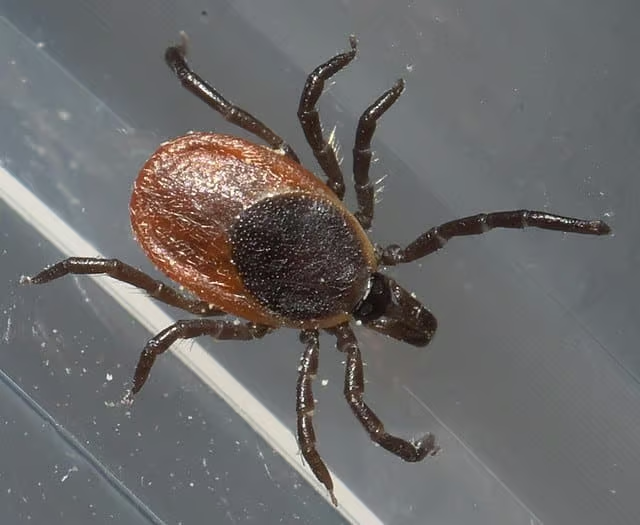
The deer tick (Ixodes scapularis), also called the blacklegged tick, is an arachnid in the family Ixodidae rather than an insect. Adults and nymphs have eight legs; larvae have six. Deer ticks are not closely related to insects despite being grouped with them in common pest management contexts.
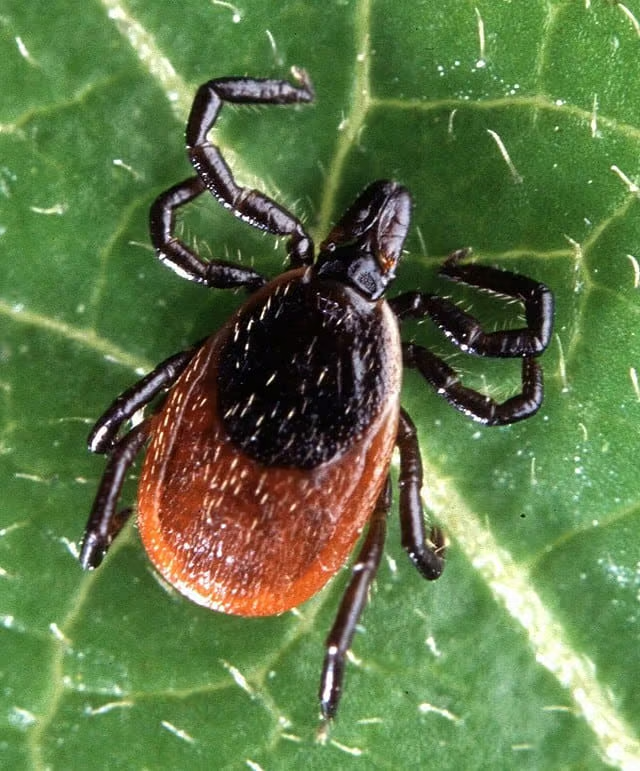
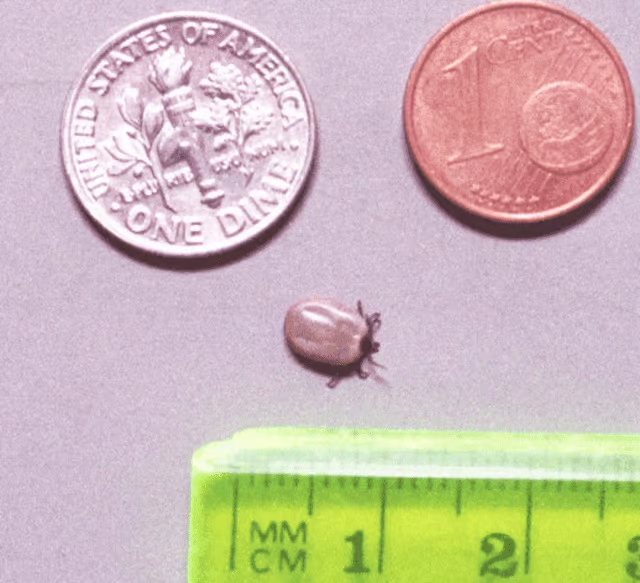
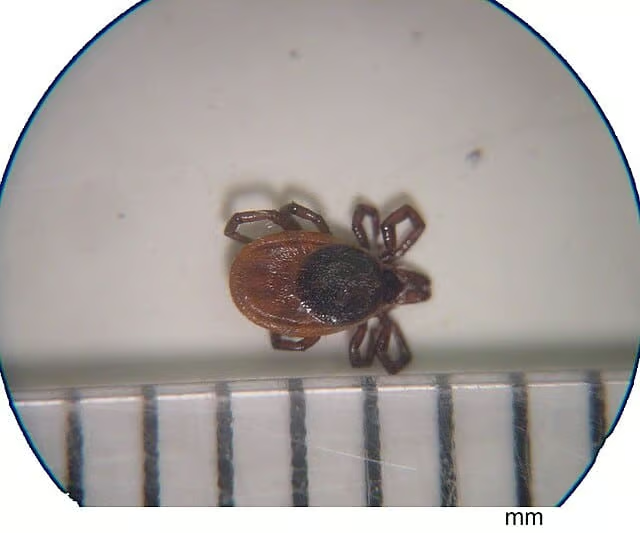
Adults are approximately one eighth of an inch long when unfed. Females have a dark reddish-brown body with a prominent solid black scutum (shield) covering the front portion of the back, which is the most reliable identification feature. Males are smaller and nearly entirely dark brown to black. Nymphs are roughly the size of a poppy seed, tan to light brown, and have no visible scutum markings at that size. Larvae are even smaller, approximately the size of a grain of sand, and have six legs.
The deer tick life cycle spans two years and uses three separate host animals. Larvae hatch in late summer, take a single blood meal on a small mammal, most commonly a white-footed mouse or deer mouse, and then overwinter. The larva molts into a nymph the following spring. Nymphs feed once on a second host from May through July, which is the period of highest transmission risk to people because the nymphs are tiny enough to go unnoticed and yet are already capable of transmitting the pathogens they acquired as larvae. After molting into adults, the ticks seek a third host, typically deer, in fall and early spring, where mating occurs. Adults are larger and more visible but remain active and capable of biting people and pets whenever temperatures are above freezing.
The Maine DACF Got Pests ticks page provides identification comparisons between deer ticks and American dog ticks, which are frequently encountered in the same habitat. The UMaine Extension Tick Lab offers free tick identification and testing for Maine residents and maintains current distribution and infection rate data for the state.
Signs of Deer Tick Activity
Deer ticks are encountered rather than tracked by indirect signs the way most pest species are. The relevant signs are primarily the finding of ticks on people, pets, or property.
Look for:
- Ticks found attached to skin after time outdoors in wooded areas, along field edges, in brushy areas, or in the yard; attached ticks are most commonly found in the scalp, behind the ears, in the armpits, behind the knees, and in the groin
- Nymphal ticks found crawling on skin or clothing after outdoor activity from May through July; at poppy-seed size these require close inspection to find
- Adult ticks found on clothing, skin, or pets from April through June and again in October through November when adults are most active; adults are more easily spotted but no less capable of transmitting disease
- Ticks found on pets during regular grooming and inspection; dogs and cats pick up ticks readily from the same habitat and often carry them indoors
- A characteristic expanding rash appearing anywhere from three to thirty days after a tick bite, which warrants immediate medical evaluation regardless of whether a tick was found
Risks in Southern Maine
Deer ticks in Maine transmit several serious diseases. Lyme disease is by far the most common, caused by the bacterium Borrelia burgdorferi and transmitted when an infected nymph or adult feeds for approximately 36 to 48 hours or more. Early Lyme disease symptoms include fever, fatigue, headache, muscle and joint aches, swollen lymph nodes, and the characteristic expanding rash. Not all cases produce the rash, and not all rashes have the bullseye pattern. Untreated Lyme disease can progress to cause joint inflammation, neurological symptoms, and cardiac involvement.
Anaplasmosis and babesiosis are also transmitted by deer ticks and are increasing in incidence across Maine. Babesiosis in particular can be severe in immunocompromised individuals, the elderly, and those who have had their spleen removed. Hard tick relapsing fever and Powassan virus disease, though less common, are also transmitted by deer ticks in Maine and can cause serious illness.
The 36 to 48 hour attachment window before Lyme disease transmission is the most actionable public health fact about deer ticks. Prompt removal of an attached tick substantially reduces the risk of disease transmission, which is why daily tick checks after outdoor activity and immediate careful removal of any attached ticks are the single most important personal protection practices.
Prevention Tips
Deer tick prevention operates at two levels: personal protection during outdoor activities and habitat management to reduce tick populations close to the structure.
Personal protection: wear light-colored clothing to make crawling ticks easier to spot; tuck pants into socks and shirts into pants when in tick-prone areas; apply EPA-registered repellents containing DEET, picaridin, or IR3535 to exposed skin; treat clothing and gear with permethrin, which binds to fabric and provides durable protection through multiple washings; shower within two hours of coming indoors to wash off unattached ticks; perform a thorough full-body tick check after every outdoor excursion; keep pets on veterinarian-recommended tick prevention year-round.
Yard management: keep lawns mowed short; clear leaf litter from yard edges and around the foundation; create a three-foot wood chip or gravel buffer between the lawn and any wooded or brushy border, as ticks rarely cross dry sunny zones; remove brush piles, stone walls, and other microhabitats that shelter the rodents that serve as the primary larval and nymphal hosts; address deer mouse and other rodent populations on the property, since rodents are the primary Lyme reservoir host; keep deer away from the yard perimeter where possible using fencing or landscape choices that do not attract deer browsing.
Tick removal: if a tick is found attached, remove it promptly with fine-tipped tweezers grasping as close to the skin surface as possible, pulling upward with steady even pressure without twisting or jerking; do not use heat, petroleum jelly, nail polish, or other substances to detach the tick; clean the bite site with rubbing alcohol or soap and water; the removed tick can be submitted to the UMaine Extension Tick Lab for identification and testing.
Commonly Confused With
The most practically important misidentification in Southern Maine is deer ticks confused with American dog ticks, since the two species share habitat and are found on the same hosts, but carry very different disease risks.
American dog ticks are significantly larger than deer ticks as adults, three sixteenths of an inch or more unfed, and have distinctive white or silver-gray mottled markings on the scutum that deer ticks entirely lack. Dog ticks are brown rather than reddish-brown, and the scutum patterning is the single most reliable distinguishing feature visible to the unaided eye. Dog ticks do not transmit Lyme disease and are far less medically significant in Maine than deer ticks, though they are vectors for Rocky Mountain spotted fever and tularemia. Correctly identifying which species is attached matters for assessing disease risk after a bite.
Lone star ticks are expanding into southern Maine and are occasionally confused with deer ticks. Adult females are identifiable by the single white spot at the center of the scutum. Lone star ticks are also associated with disease transmission and should be treated with the same prompt removal response as deer ticks.
Brown dog ticks are an indoor species that rarely bites people and does not transmit Lyme disease, but is occasionally found on dogs and confused with deer ticks. Brown dog ticks lack the mottled scutum pattern of dog ticks and are uniformly brown with no distinctive markings.
Professional Deer Tick Control in Southern Maine
Yard-level tick management programs reduce questing tick populations in the areas where people and pets are most likely to encounter them: the yard perimeter, wooded borders, and transition zones between lawn and natural vegetation. Sustained seasonal treatment across these zones keeps pressure on tick populations through the full period of human exposure rather than attempting to address a year-round problem with a single application. No yard program eliminates tick exposure entirely, but reducing the density of questing ticks in the areas where your household spends time is a meaningful contribution to the overall prevention picture alongside personal protection practices.
As an A.C.E.-credentialed pest professional I assess your property’s specific tick habitat, target treatment precisely to the areas driving human exposure rather than applying broadly, and maintain coverage through the active season to address ticks at multiple life stages as populations cycle. Learn more about my background and credentials on the about page, or visit the mosquito and tick control service page for detail on what yard tick programs cover. Contact me to schedule a free inspection.
Frequently Asked Questions
Lyme disease transmission generally requires the tick to be attached and feeding for at least 36 to 48 hours, though some research suggests transmission can begin somewhat earlier under certain conditions. This window is why daily tick checks and prompt removal are so important. A tick removed within 24 hours of attachment carries a very low transmission risk for Lyme disease. The same attachment time threshold does not apply equally to all diseases the tick transmits; anaplasmosis, for example, can be transmitted more quickly.
Yes. Deer ticks are active whenever temperatures are above approximately 35 to 40 degrees Fahrenheit, which in southern Maine means they can be encountered on mild days throughout winter. This is a meaningful difference from the American dog tick, which is largely inactive in cold weather. Deer tick activity is lower in winter than during the peak spring and fall periods, but the risk is not zero, and pet tick prevention and tick check habits should not be suspended based on the calendar alone.
Remove it promptly using fine-tipped tweezers, grasping as close to the skin as possible and pulling upward with steady pressure. Clean the area with alcohol or soap and water. If possible, save the tick in a sealed bag or container so it can be submitted to the UMaine Extension Tick Lab for identification and testing. Monitor the bite site and your health for the following 30 days; seek medical attention if an expanding rash develops at or away from the bite site, or if flu-like symptoms including fever, fatigue, or joint pain appear. Early treatment of Lyme disease is very effective.
Ready to Get Started?
If your property has significant wooded border, heavy leaf litter, or consistent deer traffic and your household spends time outdoors, a professional tick assessment and yard management program is worth a conversation. Reach out for a free inspection and I will evaluate your property’s tick habitat and recommend a targeted approach.