

Crickets in Southern Maine:
Identification, Prevention, and Control
Crickets are one of those pests where the nuisance is auditory as much as anything else. A single male cricket chirping inside a wall void at 2 a.m. from a location you cannot find is an experience most Maine homeowners are familiar with. The good news is that most cricket problems in Southern Maine are seasonal, driven by the movement of outdoor populations into structures as temperatures drop in late summer and fall. In most cases the problem resolves on its own as temperatures drop further and the crickets that entered die off, but the chirping while they are alive and the fabric damage they cause while feeding indoors make prompt attention worthwhile. In older homes with accessible basements and garages throughout Standish, Buxton, Cornish, and Hollis, late summer cricket entry is a consistent annual occurrence. As an Associate Certified Entomologist (A.C.E.) with 16 years of experience in the region, accurate identification is always my starting point. Browse the occasional invaders pest library to see other species found in the area, or contact me for identification and treatment help.
What Are Crickets?
Several cricket species are found in Southern Maine, and distinguishing between them matters because they behave differently indoors.
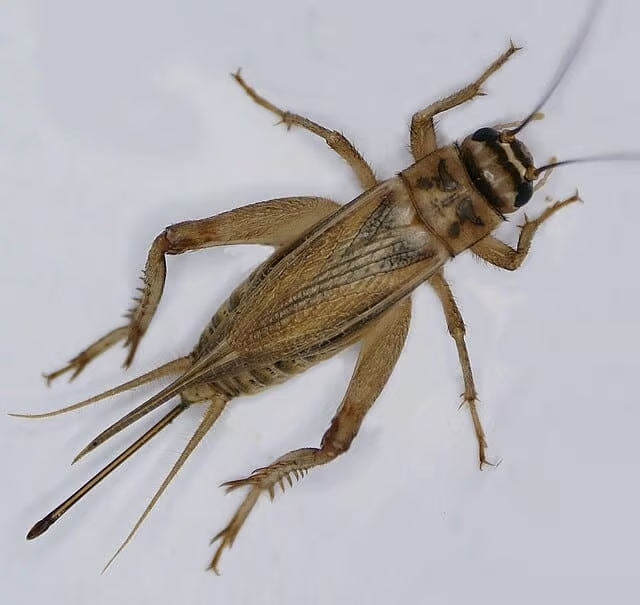
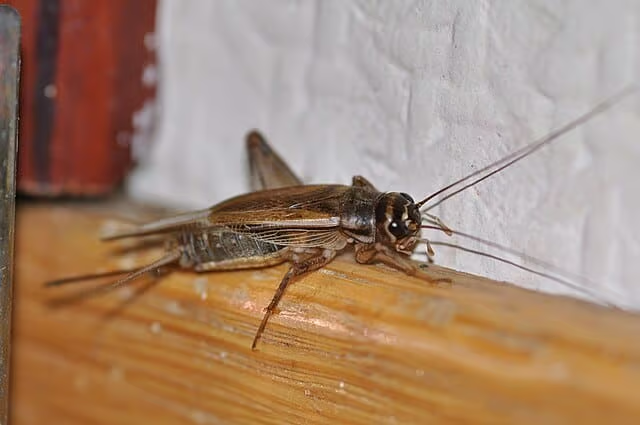
The house cricket (Acheta domesticus) is the species most likely to establish an indoor population. Adults are three quarters of an inch to one inch long with a yellowish-brown body, three dark bands across the head and pronotum, long antennae, and wings that extend slightly past the abdomen. They are the species responsible for the persistent chirping that homeowners find indoors in fall, as the chirping is produced by males rubbing a scraper on one forewing against a file-like structure on the other. Chirping rate increases with temperature: at warmer indoor temperatures chirping is rapid and nearly continuous; as temperatures cool the chirping slows. House crickets can breed indoors in warm, moist areas and are not strictly seasonal.
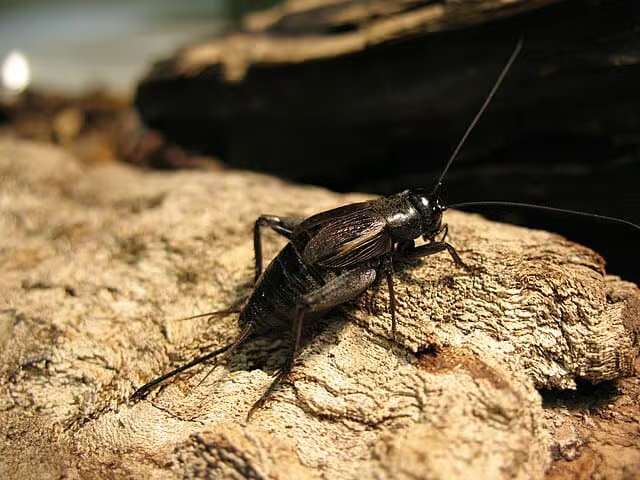
Field crickets (Gryllus spp.) are similar in size but darker, typically dark brown to black, with a more rounded body. They are primarily outdoor insects that enter structures accidentally in late summer and fall when populations peak, but they cannot survive or breed indoors through a Maine winter. Field cricket entry is a seasonal event rather than a persistent infestation.
Both species chirp, though field crickets tend to be louder. Only males produce the chirping sound; females have a prominent needle-like ovipositor at the tail end that males lack. According to the UMaine Extension crickets page, both house and field crickets are common occasional invaders in Maine homes, with field cricket pressure heaviest in late summer and fall.
Signs of a Cricket Problem
Cricket presence is hard to miss once a male starts chirping, but other signs help assess whether the problem is a few accidental strays or an established indoor population.
Look for:
- Loud, continuous chirping sounds at night, typically from basements, wall voids, or under appliances, most active when indoor temperatures are above 55 degrees Fahrenheit
- Yellowish-brown or dark brown crickets with long antennae found on basement floors, garage floors, or near exterior entry points in late summer and fall
- Irregular holes and chewed areas in fabric, particularly natural fibers like wool and cotton, and in paper products, which crickets damage while feeding
- Small dark droppings scattered along baseboards, near entry points, and in areas where crickets are spending time
- Crickets attracted to and found near exterior lights and interior light sources at night
- Activity concentrated near warm areas such as furnaces, water heaters, and appliances in the basement
Cricket entry is most concentrated in Scarborough and Saco properties near field edges and weedy borders in late August and September when outdoor field cricket populations are at their peak and begin moving toward structures.
Risks in Southern Maine
Crickets do not bite people, do not sting, and do not transmit disease. The practical risks are fabric damage and noise.
The fabric damage is real and can be significant if crickets go undetected in storage areas. Crickets feed on natural fibers including wool, cotton, linen, and silk, as well as paper, leather, and food items. Damage appears as irregular chewed areas, often concentrated on perspiration or food stains where the fabric’s protein content is higher. Stored clothing, area rugs, and paper goods in damp basements are most vulnerable.
The noise is the primary driver of most homeowner concern. A single chirping male hidden inside a wall void or under a staircase can be remarkably loud in a quiet house and may be extremely difficult to locate. The chirping stops immediately when approached due to vibration sensitivity, making the source hard to find. A professional inspection can identify likely harborage areas even when direct location of the individual cricket is not possible.
Prevention Tips
Cricket prevention is primarily about sealing exterior entry points and reducing the outdoor conditions that bring high populations close to the structure:
- Seal all gaps around door frames, window frames, utility penetrations, and foundation sills before late August, when late-summer cricket populations begin moving toward structures
- Install and maintain tight-fitting door sweeps on all exterior doors, particularly garage doors and basement bulkhead doors
- Reduce exterior lighting near entry points or switch to yellow-spectrum bulbs, as crickets are strongly attracted to white lights and aggregate near lit entry points at night
- Mow grass and clear weedy vegetation within 20 feet of the foundation, as this is the outdoor harborage where field cricket populations build through summer
- Remove leaf litter, wood piles, and debris piles from along the foundation perimeter
- Run a dehumidifier in the basement to reduce the moisture conditions that make the interior hospitable for house crickets establishing indoors
- Store natural fiber clothing and paper goods in sealed plastic containers in damp storage areas
Commonly Confused With
Two other species are regularly confused with house and field crickets in Southern Maine:
Camel crickets, also called cave crickets or spider crickets, are among the most commonly encountered and most alarming-looking basement insects in Maine. They belong to a separate family (Rhaphidophoridae) and are not true crickets. They are humpbacked, wingless, and much larger-legged than house or field crickets, with legs that extend outward giving them a spider-like silhouette that causes significant alarm on first encounter. They are tan to brown, lack wings entirely, and do not chirp. They are entirely harmless, do not bite, and are primarily found in very damp basements and crawl spaces where they feed on organic debris. If you are finding large humpbacked insects with long legs in the basement that do not chirp, they are almost certainly camel crickets rather than house or field crickets.
Grasshoppers are occasionally confused with field crickets due to the similar jumping ability and general body shape, but grasshoppers are larger, hold their wings flat along the sides of the body rather than over the back, and are exclusively outdoor insects that do not enter structures in meaningful numbers.
Professional Cricket Control in Southern Maine
For most field cricket situations, sealing entry points before fall and reducing outdoor harborage near the foundation is sufficient. Indoor individuals can be removed by hand or vacuumed up. When house crickets have established a reproducing indoor population, or when camel cricket populations in a damp basement are large enough to be a significant nuisance, a targeted treatment of the basement perimeter and any crawl space areas combined with the moisture management steps that address the underlying conditions is the most effective approach.
As an A.C.E.-credentialed pest professional I can identify the species involved, distinguish camel crickets from house and field crickets, assess the entry points and conditions driving the indoor occurrence, and recommend the most practical response. Learn more about my background and credentials on the about page, or visit the common pests service page for more detail. Contact me to schedule a free inspection.
Frequently Asked Questions
Crickets have extremely sensitive vibration detection through the soles of their feet, and a chirping male will stop immediately when it detects footsteps or other vibrations approaching. The sound is also directional in ways that make it difficult to pinpoint in an enclosed space, because the chirp reflects off walls and can seem to come from a different direction than the actual source. Waiting motionlessly in silence for several minutes after the chirping stops and then listening for the next chirp is more effective than actively searching. Heat sources are a good starting point since crickets congregate there.
Field crickets that enter in fall will generally die within a few weeks once temperatures inside drop or their short adult lifespan ends, without reproducing indoors. House crickets can potentially survive and breed indoors in warm, moist conditions. If the chirping started in September and has not recurred after a few weeks, it was likely a field cricket that has died. If chirping persists through winter or if multiple individuals are found at different times, house crickets with an established indoor population are more likely.
Those are almost certainly camel crickets, also called cave crickets or spider crickets. They are a separate species from house and field crickets, do not chirp, and are entirely harmless. They are attracted to the same damp basement conditions that support other moisture-associated pests. Reducing basement humidity is the most effective long-term control measure for camel crickets, and the same dehumidification and exclusion approach that addresses silverfish and millipedes in damp basements will reduce camel cricket populations as well.
Ready to Get Started?
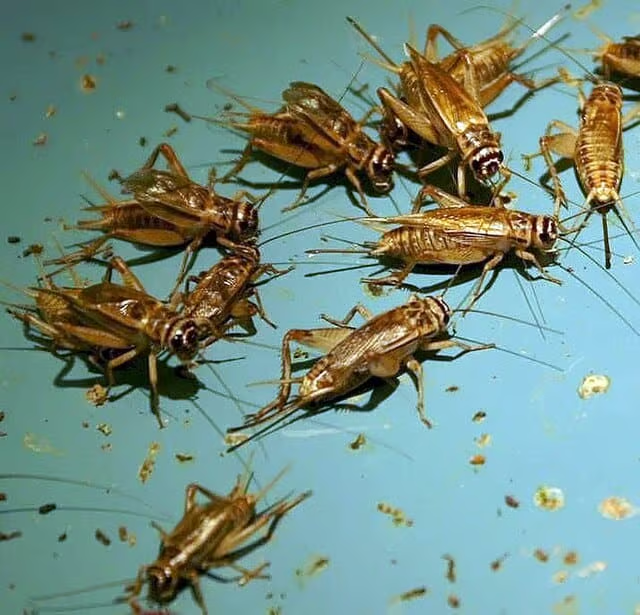
If crickets are chirping inside your home, damaging stored fabrics, or appearing in large numbers in your basement, reach out for a free inspection and I will identify the species involved and recommend the most practical approach.