

Cluster Flies in Southern Maine:
Identification, Prevention, and Control
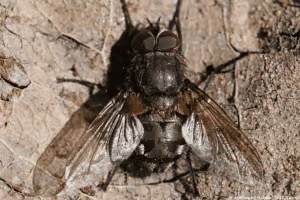
Cluster flies are one of the most predictable fall nuisances I deal with in Southern Maine. Every September and October, as temperatures begin to drop, they migrate to the sunny sides of homes and buildings and squeeze through gaps in siding, soffits, and window frames to overwinter inside wall voids and attics. Then on warm winter and early spring days they emerge into living spaces, sometimes in very large numbers. It happens at the same properties year after year because the flies use chemical cues to return to sites that worked before. As an Associate Certified Entomologist (A.C.E.) with 16 years of experience in the region, I treat cluster flies regularly across Cumberland and York Counties and the solution is always the same: exclusion before they enter, not treatment after they are already inside. Browse the flies pest library to compare other species common in Maine, or contact me for help with a current problem.
What Are Cluster Flies?
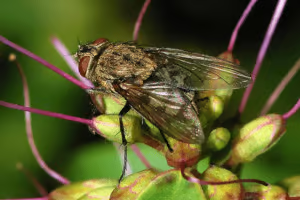
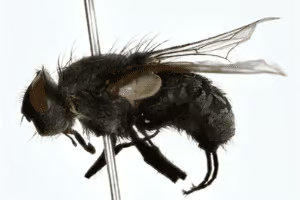
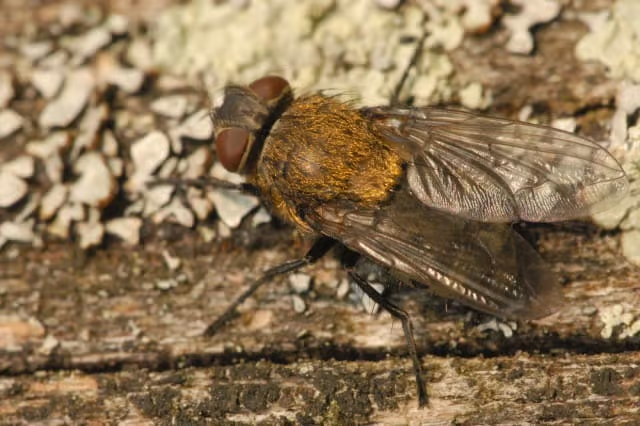
Cluster flies (Pollenia rudis) are slightly larger than house flies, dark gray with distinctive short golden yellow hairs on the thorax that give them a slightly golden sheen at certain angles. Their wings overlap flat on their backs when at rest, which is one of the easier ways to tell them apart from house flies at a glance. They move more slowly and sluggishly than most other fly species, particularly when cool.
Their life cycle is tied to earthworms. Larvae develop as parasites inside earthworms in the soil during summer, which is why cluster flies are most common around properties with healthy lawns and gardens. Adults do not reproduce indoors, do not bite, and have no interest in food or garbage. Their only goal when entering a structure is to find a protected place to wait out the winter. Browse the flies pest library to see other species found in the area.
According to the University of Maine Cooperative Extension, cluster flies are among the most common fall-invading insects in Maine, with populations varying significantly year to year depending on earthworm abundance and summer conditions.
Signs of Cluster Fly Activity
Cluster fly activity follows a very consistent seasonal pattern. Look for:
- Large groups of sluggish dark gray flies resting on south or west-facing exterior walls on warm fall afternoons, typically starting in late September
- Flies entering around window frames, door frames, soffits, eaves, and gaps around utility penetrations on upper levels of the structure
- Indoor activity on sunny warm days during winter or early spring as flies warm up and become active inside wall voids
- Clusters gathered in attics, upper rooms, or around ceiling lights and window sills
- Small dark fecal spots on walls and ceilings where flies have been resting
- A noticeable sweet, slightly sickly odor in heavily infested attics
In Southern Maine locations such as Portland, Westbrook, and Standish these signs typically peak in October through November on the exterior and again in March through April when indoor emergence is most noticeable.
Risks in Southern Maine
Cluster flies are harmless to people, pets, and structures. They do not spread disease, bite, or infest food. The main impact is the nuisance of large numbers appearing indoors on warm days, plus the small stains and odor they leave behind in heavily used overwintering sites like attics. Crushing them leaves greasy stains on walls and curtains, which is worth knowing before reaching for a paper towel.
The more meaningful concern is that properties that experience cluster fly entry without addressing it will see the same problem every fall, often in increasing numbers, because the flies leave aggregation pheromones that attract others to the same entry points the following year. For properties with recurring seasonal invader problems of any kind, a year-round protection plan is the most reliable way to stay ahead of it.
Prevention Tips
Because cluster flies enter in fall before winter and emerge in spring, the window for effective prevention is late summer through early September, before they begin their migration:
- Seal every crack and gap around windows, door frames, soffits, eaves, fascia boards, chimneys, and utility penetrations, particularly on south and west-facing walls where flies congregate first
- Install or repair tight-fitting screens, weatherstripping, and door sweeps on upper-level openings
- Caulk around any exterior gaps where siding meets trim, foundation, or roofline
- Check and seal around attic vents and crawl space vents
- Trim tree branches and shrubs back from the roofline to reduce sheltered staging areas
For properties that deal with cluster flies every fall, a year-round protection plan timed to address exclusion work and exterior treatment before the fall migration is the most effective long-term solution.
Commonly Confused With
Cluster flies are most often confused with house flies, which are similar in size and general coloring but lack the golden thorax hairs, move more quickly, and are associated with food, garbage, and general indoor activity rather than appearing in attics and upper rooms in fall and spring. Blow flies are metallic blue or green rather than gray and are tied to decaying organic matter rather than seasonal overwintering. The slow, sluggish movement of cluster flies and their tendency to gather in large numbers on sunny exterior walls in fall are the most reliable identifying behaviors.
Professional Cluster Fly Control in Southern Maine
The most effective time to treat for cluster flies is before they enter in fall, not after they are already inside for the winter. I inspect the full exterior of the structure to identify entry points, apply residual treatments to exterior surfaces where flies congregate before entry, and seal gaps that allow access to wall voids and attics. For flies already inside, targeted applications of low-toxicity dusts in wall voids and attic spaces, combined with vacuuming of accessible clusters, resolves active problems without broad spraying in living areas. You can learn more about my approach and background on the about page. Properties that deal with this annually are strong candidates for a year-round protection plan that includes a scheduled fall treatment timed to the migration. My common pests control services cover cluster flies and the full range of seasonal invaders found in Cumberland and York Counties. Contact me to schedule a free consultation.
Frequently Asked Questions
Cluster flies that successfully overwinter in a structure leave aggregation pheromones behind that attract the next generation back to the same location the following fall. This is why properties that have had cluster fly problems tend to see them return in increasing numbers year after year without intervention. Sealing entry points and treating exterior surfaces before the fall migration breaks the cycle, and a year-round protection plan is the most reliable way to make sure that treatment happens at the right time each year.
Leave them alone if possible until spring. Disturbing a cluster fly overwintering site in winter causes them to scatter deeper into the structure and can result in more flies emerging into living spaces. Vacuuming accessible clusters in the attic is the least disruptive approach during the overwintering period. The time to address the problem properly is the following August or September before the next fall migration begins. Contact me in late summer and I can schedule a pre-season treatment at the right time.
No, though they are related and look similar at a glance. Cluster flies are slightly larger, have golden hairs on the thorax, move more slowly, and have no interest in food or garbage. Their entire reason for entering a structure is to overwinter, which is why they appear in attics and upper rooms rather than kitchens. House flies are faster, associated with food and waste, and active year-round indoors rather than seasonally.
Ready to Get Started?
If cluster flies are returning to your home every fall, reach out to schedule a consultation before the next season begins.