

Carpenter Bees in Southern Maine:
Identification, Prevention, and Control
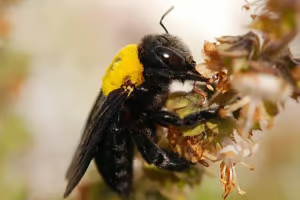
Carpenter bees are large black bees commonly seen around Southern Maine homes and decks, especially in Raymond and Casco during spring and summer. These solitary pollinators drill perfectly round half-inch holes into untreated wood to create nesting tunnels in our humid, wooded coastal climate. Excellent garden pollinators that visit flowers daily, they become a concern when they return year after year to the same eaves, fascia, siding, or deck rails.
What Are Carpenter Bees?
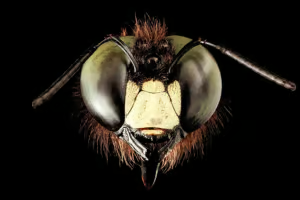
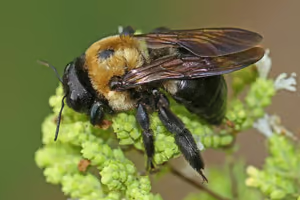
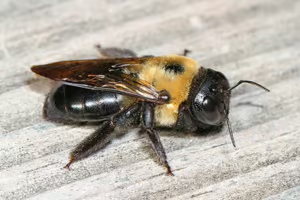
Carpenter bees (Xylocopa virginica) measure about one inch long and resemble bumble bees but have a shiny, hairless black abdomen instead of a fuzzy yellow one. Males have a yellow patch on the face and hover aggressively near nests but cannot sting. Females have all-black faces and can sting if handled.
They are solitary, not social like honey bees or wasps. Each female excavates her own tunnel in bare, unpainted softwood such as pine, cedar, or redwood. She creates individual chambers, provisions them with pollen and nectar, lays an egg, and seals the cell. In Southern Maine these bees emerge in April or May and remain active through August. They serve as important native pollinators for many flowering plants and vegetables. For detailed identification and biology see the Penn State Extension carpenter bees page.
Signs of Infestation
These clear signs usually appear first on unpainted wood surfaces.
- Perfectly round half-inch holes drilled into eaves, fascia boards, deck rails, siding, or outdoor furniture
- Fine yellow sawdust or wood shavings piled directly below the holes
- Large black bees hovering or darting in front of the same wood areas
- Actual bees entering and exiting the same holes repeatedly
- Multiple holes clustered in one section of wood, often in a straight line or small group
- Fresh holes appearing each spring on the same structures
- Males aggressively hovering and chasing other insects or people near the holes
- Overwintering bees emerging from the same tunnels the following year
In Raymond and Casco homes these signs often increase from late April through July when females are actively nesting.
Risks in Southern Maine
Carpenter bees rarely sting and present very low risk to people or pets in Southern Maine. Males cannot sting at all and females only do so if picked up or stepped on. They carry no diseases.
Their real impact comes from repeated tunneling in the same wood, which can weaken decks, eaves, and siding over many years in our humid coastal climate. While they do not eat the wood, the holes allow moisture and secondary pests to enter. These bees actually benefit gardens as strong pollinators. My low impact Integrated Pest Management approach follows best practices from the Purdue Extension carpenter bees guide and focuses on safe, targeted solutions tailored to our local environment, preserving these beneficial pollinators whenever possible.
Prevention Tips
Simple steps protect wood in our climate.
- Paint, stain, or seal all exposed exterior wood surfaces
- Fill existing holes with steel wool and exterior caulk or wood filler
- Use pressure-treated lumber or composite materials for new decks and railings
- Install metal flashing or plastic covers over vulnerable wood edges
- Keep wooden structures at least 12 inches off the ground
- Remove old unpainted wood piles and debris near the house
- Apply boron-based wood preservatives to high-risk areas
- Inspect eaves, decks, and siding every spring before nesting season
These steps prove especially effective on Raymond and Casco properties where older wooden homes and decks sit near wooded edges.
Professional Treatment
When carpenter bees drill into your structures I deliver precise low-impact professional treatment customized to every Southern Maine home and business. As a solo operator with years of hands-on local experience I begin every job with a detailed inspection to locate all active tunnels, entry points, and preferred wood types.
I apply targeted dust insecticide directly into each hole at dusk when bees are inside, then plug the tunnels with steel wool followed by exterior-grade caulk or wood filler. I treat only the exact nesting sites with no broadcast spraying. A single-family home in Raymond with an older deck receives focused tunnel treatment plus full sealing and staining recommendations while a business in Casco with eaves and fascia gets complete hole elimination plus preventive barriers. I handle the entire process myself from start to finish with follow-up visits included at no extra charge until the issue stays resolved. Learn more about my background and methods on the About page. Contact me today to schedule your free inspection on the Contact page.
Frequently Asked Questions
Males cannot sting at all. Females can but almost never do unless handled or stepped on. They are far less aggressive than wasps or hornets.
They do not eat wood but repeated tunneling over years can weaken decks, eaves, and siding and allow moisture or secondary pests inside.
Paint or seal all exposed wood, plug every hole completely, and treat active tunnels professionally each spring to break the cycle.
Related Resources
- Detailed identification from Penn State Extension: Carpenter Bees
- Official guidance from Purdue Extension: Carpenter Bees
Why Choose Precision Pest Control?
Your local solo specialist, I offer customized, low-impact pest control fitted to Southern Maine challenges for homes and businesses. Protect your property today. Reach out for your free inspection.