

European Fire Ants in Southern Maine:
Identification, Prevention, and Control
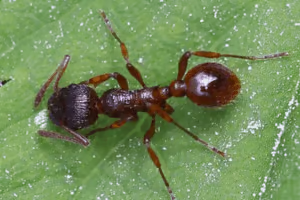
European fire ants are one of the more serious ant problems I encounter in Southern Maine, particularly in coastal communities across Cumberland and York Counties. Unlike most ant species that are primarily a nuisance, European fire ants sting aggressively and repeatedly, and established infestations can make yards and gardens genuinely unusable. They are an invasive species in Maine, and their populations have been expanding along the coast for decades. As an Associate Certified Entomologist (A.C.E.), correct identification before treatment is critical — several native red ant species look similar but serve important ecological roles. Browse the ants pest library for a full overview of ant species in the area, or contact me if you suspect an infestation.
What Are European Fire Ants?
European fire ants (Myrmica rubra), also called European red ants, are a small invasive species native to cold regions of Europe and Asia. Workers are about 3/16 inch long and reddish-brown in color. They have two backward-pointing spines on the thorax and a two-segmented waist, both of which are visible under magnification. Colonies have multiple queens and can range from a few hundred to ten thousand workers, with nests forming dense clusters of 10-12 per 10-square-foot area in heavily infested yards.
According to the University of Maine Cooperative Extension, European fire ants have been established in Maine since at least the 1950s and have been confirmed in Cumberland and York Counties among others. Their spread is driven both by natural colony budding and by people inadvertently moving infested soil, potted plants, mulch, and compost from one property to another.
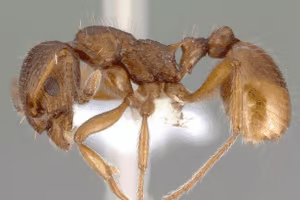
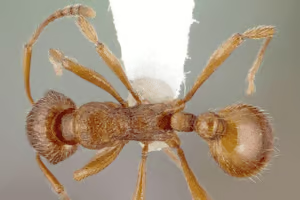
Signs of European Fire Ant Activity
- Sudden painful stings with a burning sensation when walking through lawn or garden areas
- Red inflamed welts on skin, sometimes 1-4 inches in diameter, occasionally with a raised white center
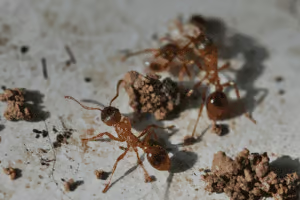
- Dense concentrations of small bright red ants in a yard or garden area
- Multiple flat, low-profile nest openings hidden under rocks, logs, boards, or leaf litter — not large soil mounds
- Ants that aggressively swarm and sting when their territory is disturbed
In coastal Southern Maine towns like Scarborough and Saco, European fire ants have become increasingly common in residential lawns and gardens. Their spread into inland areas is closely tied to the movement of infested landscaping materials.
Risks in Southern Maine
European fire ants are among the more aggressive ant species found in Maine. They will sting humans, pets, and livestock that move through or rest in their foraging areas, and a single disturbed colony can deliver dozens of stings within seconds. The reaction varies by individual — most people experience burning and inflamed red welts lasting hours to a day or more, but sensitive individuals can have more significant reactions. Homeowners with established infestations frequently report being unable to use their yards at all during peak season.
Beyond the human health concern, European fire ants threaten native ant species and beneficial insects by displacing them from food and nesting resources. North American native ants did not co-evolve with this invasive species and have limited ability to defend against it, which is why early identification and treatment matters.
Prevention Tips
- Inspect all potted plants, balled-and-burlapped plants, soil, mulch, compost, and logs carefully before bringing them onto your property
- Never move plants or soil materials from a property known to have European fire ants
- Remove rocks, boards, fallen leaves, logs, and other debris that provide nesting sites in lawns and gardens
- Reduce moisture by improving drainage, mowing regularly, and pruning shrubbery to increase sun exposure
- Keep mulch pulled back from foundations and reduce dense ground-cover vegetation in problem areas
- If you find ants in nursery plants, return them or isolate them until they can be properly identified — this is one of the primary ways new infestations start
Commonly Confused With
European fire ants are most often confused with two other species in Southern Maine.
Pavement ants are darker brown to black and nest under pavement and foundations rather than in open lawn areas. They do not sting aggressively.
Acrobat ants are also reddish and similarly sized, but they raise their heart-shaped abdomen when disturbed and deliver only a mild bite rather than an aggressive sting.
Several native Myrmica species also look very similar to European fire ants and are sometimes misidentified. This is one reason professional identification matters — native red ants provide important ecological services including pollination and pest control, and treating them unnecessarily causes real harm. The University of Maine Cooperative Extension management guide strongly recommends having ants confirmed by a trusted source before beginning any treatment.
Professional European Fire Ant Control in Southern Maine
European fire ant control requires a targeted approach using bait-formulated treatments applied during peak foraging season, typically June through September in Maine. Broadcast baiting is more effective than contact sprays because the bait is carried back to the nest and reaches the queens. I handle identification, nest mapping, and treatment personally, and follow up to assess results since these colonies can require multiple seasonal treatments for full suppression. If European fire ants are making your yard unusable, my ant control services provide identification-first, targeted treatment tailored to your property. Contact me to schedule a free consultation.
Frequently Asked Questions
Size, color, and behavior are the starting points. European fire ants are small at 3/16 inch, bright reddish-brown, and will sting aggressively and repeatedly when their territory is disturbed. Several native red ant species look similar, so I always recommend professional confirmation before any treatment. I am happy to identify them for you at no charge.
They can be. Most people experience painful burning stings and inflamed welts that last hours to more than a day. In sensitive individuals the reaction can be more significant. Established infestations can make outdoor spaces genuinely unsafe for children, pets, and livestock. Early treatment is worth it both for comfort and for preventing the colony from spreading further.
Bait-based treatments are slow-acting by design, allowing workers to carry the product back to the nest and reach the queens. It typically takes several weeks to see significant population reduction. Full suppression may require treatments across more than one season depending on how established the colony is. I follow up after each treatment to evaluate results and adjust as needed.
Ready to Get Started?
I serve homeowners and businesses throughout Cumberland and York Counties. If European fire ants are taking over your yard, reach out for a free consultation.