

American Dog Ticks in Southern Maine:
Identification, Prevention, and Control
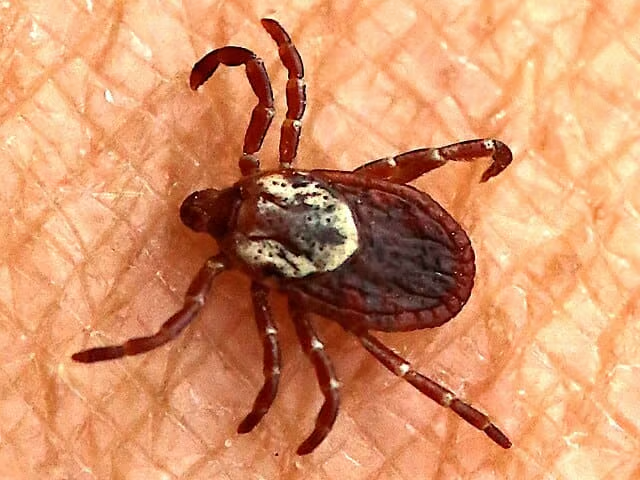
The American dog tick is one of the most commonly encountered ticks in Southern Maine during spring and early summer, and one of the most frequently misidentified. Because it is larger and more visible than a deer tick nymph, finding one often provokes more alarm than a poppy-seed-sized nymph that goes completely unnoticed despite carrying greater disease risk. Understanding the distinction matters: the American dog tick does not transmit Lyme disease, which is the most significant tickborne illness in Maine, though it does carry Rocky Mountain spotted fever and tularemia and should be treated with the same prompt removal protocol as any tick. Properties with open fields, grassy edges, and brushy roadsides throughout Standish, Buxton, Cornish, and Parsonsfield tend to see the heaviest dog tick activity in May and June. As an Associate Certified Entomologist (A.C.E.) with 16 years of experience in the region, accurate tick identification is the starting point for accurate disease risk assessment. Browse the fleas and ticks pest library to see related species, or contact me for help with tick management on your property.
What Are American Dog Ticks?
The American dog tick (Dermacentor variabilis) is a hard tick in the family Ixodidae, native to North America and well established throughout Maine. It is the largest tick commonly encountered in the state, making it immediately distinguishable from deer tick nymphs and generally from adult deer ticks as well.
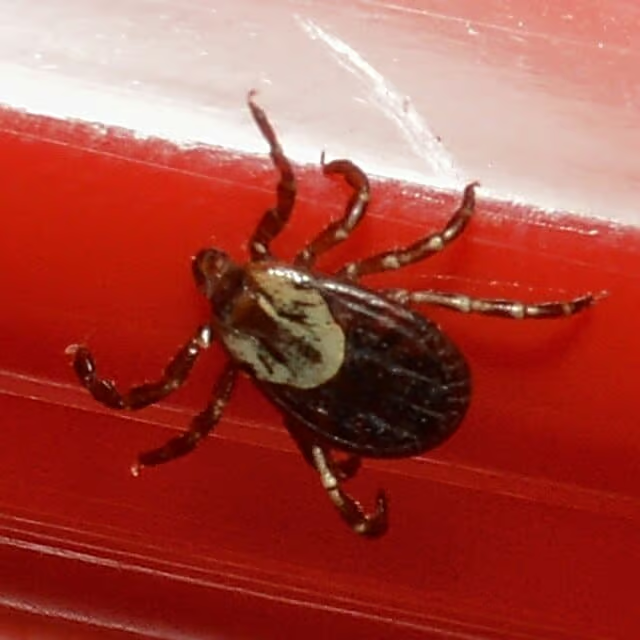
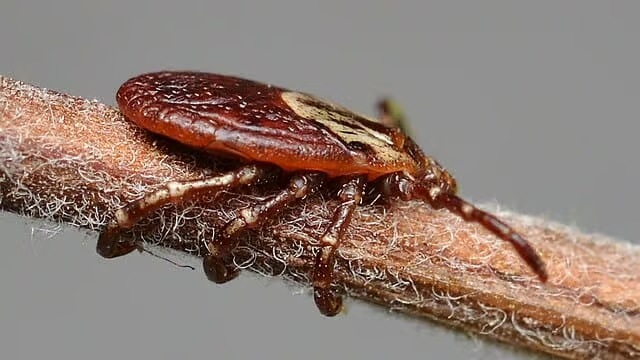
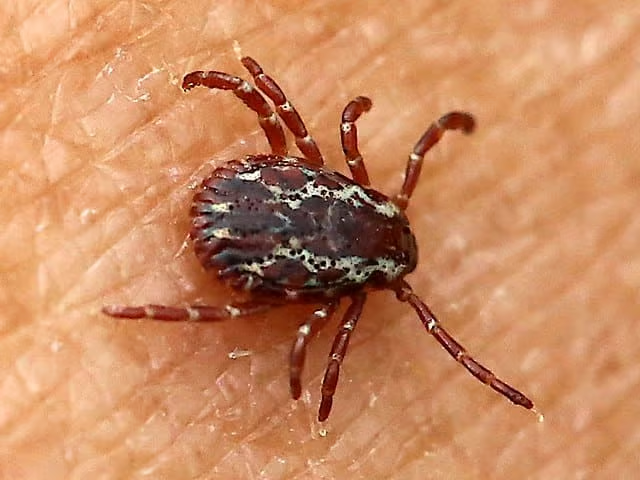
Adult females are three sixteenths of an inch or more when unfed, with a dark brown body and a distinctive white or silver-gray ornate mottled pattern on the scutum, the hard shield located at the front of the back behind the head. The pattern on female dog ticks covers only the scutum, with the remainder of the body dark brown. Adult males are covered almost entirely in the ornate patterning, which makes them look lighter and more heavily marked than females overall. Both sexes have the characteristic mottled markings that are absent from deer ticks, which makes visual distinction reliable for adults. Females engorge to a blue-gray color and can expand substantially in size after feeding.
The American dog tick uses a three-host life cycle over approximately two years. Larvae and nymphs feed on small mammals, primarily meadow voles and mice, and are rarely encountered by people. Adults prefer larger hosts including dogs, deer, cattle, and people, and are active primarily from April through early July in Maine, with peak activity in May and June. They quest from the tips of grasses and low vegetation in open sunny areas, particularly along field edges, roadsides, and trail margins. Unlike deer ticks, dog ticks are largely inactive in late summer and fall and have no significant winter activity above freezing.
According to the Maine DACF Got Pests ticks page, American dog ticks are common throughout Maine and are one of the two tick species most frequently submitted to the UMaine Extension Tick Lab for identification, often by people who have correctly recognized that the tick they found is different from a deer tick.
Signs of American Dog Tick Activity
Dog tick encounters are almost always direct, finding a crawling or attached tick rather than detecting indirect evidence.
Look for:
- Large ticks with distinctive white or silver-gray mottled markings found crawling on clothing, skin, or pets after time in grassy or brushy areas; the ornate patterning is immediately visible to the unaided eye and distinguishes them from deer ticks
- Attached ticks found anywhere on the body but most commonly on the scalp, behind the ears, and around the neckline after walking through tall grass or brushy areas
- Engorged females found attached to pets, particularly dogs that have spent time in fields or along trail edges; fully engorged females turn blue-gray and expand dramatically in size
- Peak activity from late April through June, with adults rare by midsummer; finding a large patterned tick in May or early June on a dog that has been through a field is almost certainly a dog tick
- Ticks carried indoors on clothing, pets, or gear; dog ticks do not establish or breed indoors but can survive for several days after being carried inside
Risks in Southern Maine
The American dog tick does not transmit Lyme disease, which is the most important single fact to communicate accurately since Lyme disease anxiety drives most of the concern about tick bites in Maine. Finding a dog tick attached to yourself or your pet does not carry the same Lyme disease risk as finding a deer tick.
That said, dog ticks are not harmless. They are capable vectors for Rocky Mountain spotted fever (Rickettsia rickettsii), which despite the name occurs in Maine and is a serious bacterial illness requiring prompt antibiotic treatment. Early symptoms include fever, headache, and muscle pain, typically appearing two to fourteen days after a bite, and a characteristic spotted rash usually develops within a few days of fever onset. Rocky Mountain spotted fever can progress rapidly to a life-threatening illness if not treated promptly, making early medical evaluation important when symptoms appear after a tick bite during dog tick season. Tularemia is another disease dog ticks can transmit in Maine, though it is less commonly reported.
Dog ticks can also cause tick paralysis in dogs, particularly in female ticks that have fed for several days. The condition is caused by a neurotoxin in the tick’s saliva and resolves quickly after the tick is removed. A dog showing ascending weakness or paralysis in late spring should prompt a thorough tick check before other diagnoses are pursued.
The Maine CDC ticks page provides current disease surveillance information for all tick species in Maine including reported Rocky Mountain spotted fever cases.
Prevention Tips
Dog tick prevention focuses on the spring season when adults are active and on the specific habitat types where they quest:
- Wear light-colored clothing when walking through fields, brushy edges, and trail margins in May and June, when dog tick adult activity peaks; light colors make crawling ticks easier to spot before they attach
- Tuck pants into socks and shirts into pants when moving through tall grass or brushy vegetation
- Apply EPA-registered repellents containing DEET, picaridin, or IR3535 to exposed skin; treat clothing and gear with permethrin before outings
- Perform a thorough full-body tick check after any outdoor activity in grassy or brushy areas during spring; run fingers through the scalp, check behind the ears, and inspect the neckline and under clothing
- Check dogs thoroughly after time in fields or along trail edges, paying attention to the area around the ears, between the toes, and under the collar
- Keep pets on veterinarian-recommended tick prevention during the spring and summer months
- Keep lawn edges and field borders mowed short adjacent to the property; dog ticks quest from the tips of tall grasses rather than from wooded areas, so maintaining a mowed buffer around high-use outdoor areas reduces exposure
- Shower promptly after returning from outdoor activities to wash off any unattached ticks before they find an attachment site
Commonly Confused With
The American dog tick is most commonly confused with two other tick species encountered in Southern Maine, and the distinction carries different clinical implications for each.
Deer ticks are the most important comparison since the two species share overlapping habitat in Maine. The key distinguishing features are size, color, and scutum markings. Adult deer ticks are smaller, reddish-brown, and have a solid black scutum with no patterning. American dog ticks are larger, brown, and have the distinctive white or silver-gray mottled markings on the scutum that are immediately visible. A large tick found in May with ornate white markings is an American dog tick, not a deer tick. This distinction matters for disease risk assessment: dog ticks do not transmit Lyme disease.
Lone star ticks are expanding into southern Maine and are occasionally found alongside dog ticks in warmer months. Lone star ticks are medium-sized, reddish-brown, and females have a single distinctive white spot at the center of the scutum rather than the extensive mottled patterning of dog ticks. The single spot versus ornate patterning difference makes the two species readily distinguishable with a close look. Lone star ticks are associated with ehrlichiosis and alpha-gal syndrome.
Brown dog ticks (Rhipicephalus sanguineus) are an indoor tick species that infests kennels and homes with dogs. They are uniformly brown with no ornate markings and lack the white patterning of American dog ticks. Brown dog ticks are primarily a problem in southern states but can establish indoors in Maine kennels and homes with heavy dog traffic.
Professional American Dog Tick Control in Southern Maine
Dog ticks are managed through the same sustained yard-level treatment program that addresses deer ticks, targeting the field edges, brushy borders, and transition zones where adults quest. Because dog tick activity is concentrated in spring, this is also the period when the most meaningful population reduction can be achieved through property-level management alongside personal protection practices.
As an A.C.E.-credentialed pest professional I can confirm tick identification to distinguish dog ticks from deer ticks and lone star ticks, assess the specific habitat features on your property driving exposure, and maintain treatment coverage through the active season. Learn more about my background and credentials on the about page, or visit the mosquito and tick control service page for detail on what yard tick programs cover. Contact me to schedule a free inspection.
Frequently Asked Questions
No. American dog ticks do not transmit Lyme disease under any circumstances. The Lyme disease bacterium (Borrelia burgdorferi) is transmitted exclusively by deer ticks (Ixodes scapularis) in Maine. Finding a dog tick attached to you is not a Lyme disease exposure event. You should still remove it promptly and monitor for symptoms of the diseases dog ticks do carry, particularly Rocky Mountain spotted fever, but Lyme disease is not among them.
Size and scutum markings are the two most reliable features. Dog ticks are noticeably larger than adult deer ticks, three sixteenths of an inch or more unfed, and have distinctive white or silver-gray mottled ornate patterning on the scutum that is visible to the unaided eye. Deer ticks are smaller and have a solid black scutum with no patterning. If you found a large tick with obvious white markings in May or June after walking through a field, it is almost certainly a dog tick. If you are uncertain, the tick can be preserved in a sealed bag and submitted to the UMaine Extension Tick Lab for free identification.
American dog tick adults are most active in April through June, with peak activity in May in southern Maine. The adults become largely inactive by midsummer as temperatures rise and humidity conditions in the vegetation they quest from become less suitable. Larval and nymphal dog ticks are active in summer but are tiny and prefer small mammal hosts rather than people or dogs. If you are finding large ticks with white markings in spring but not in July and August, the absence is normal seasonal behavior. Conversely, if you find a small dark tick without white markings in summer, that is more likely a deer tick nymph than any stage of dog tick.
Ready to Get Started?
If dog ticks are a consistent problem on your property during spring, reach out for a free inspection and I will assess the habitat features driving exposure and maintain treatment coverage through the active season.